
Floor control in multimedia push-to-talk
a push-to-talk and multimedia technology, applied in the field of push-to-talk, can solve the problems of limiting the number of users at a time, limiting the number of floors, and insufficient current systems of providing a floor to users for such use cases, etc., and consuming a lot of resources
- Summary
- Abstract
- Description
- Claims
- Application Information
AI Technical Summary
Benefits of technology
Problems solved by technology
Method used
Image

Examples
Embodiment Construction
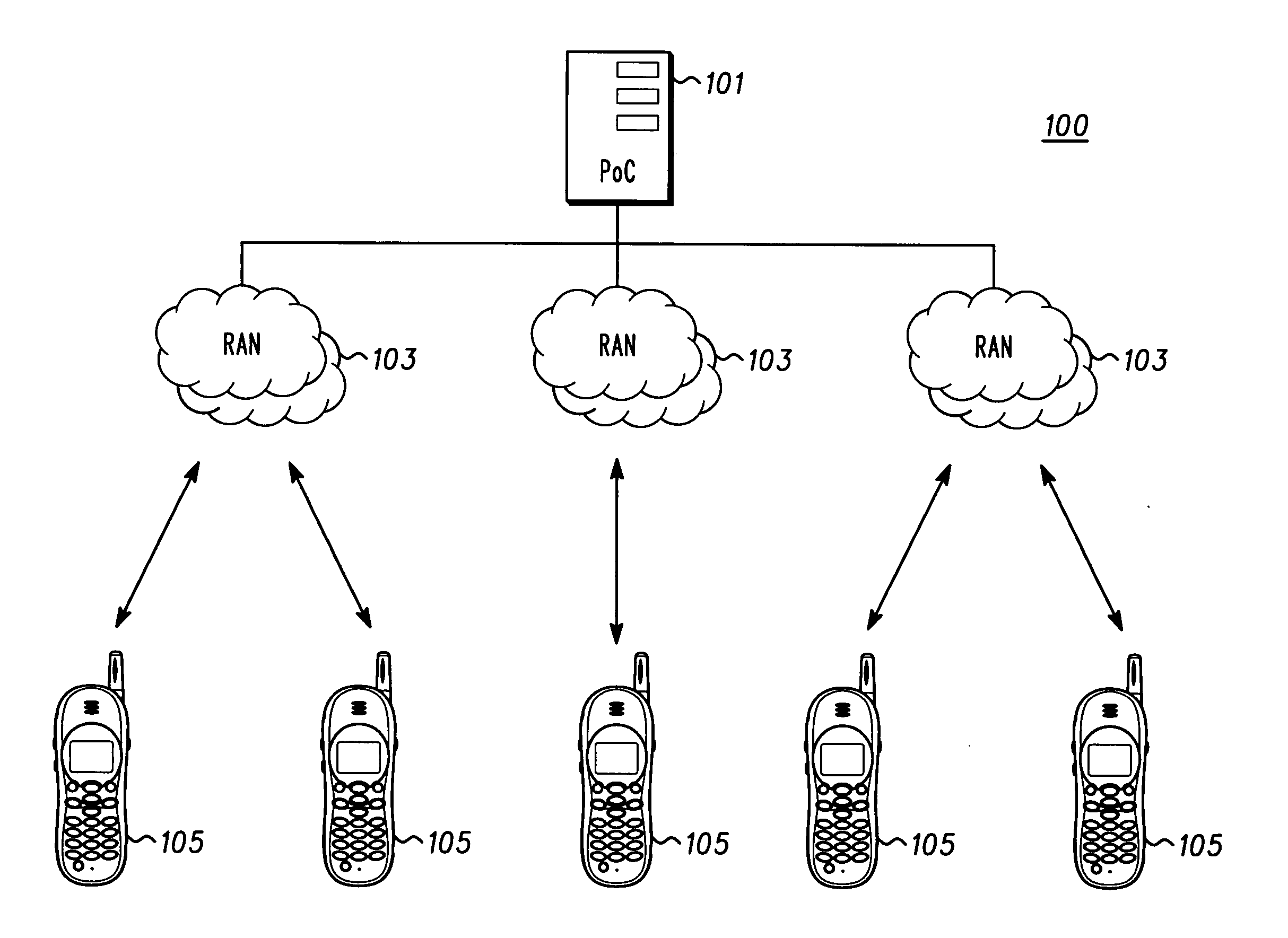
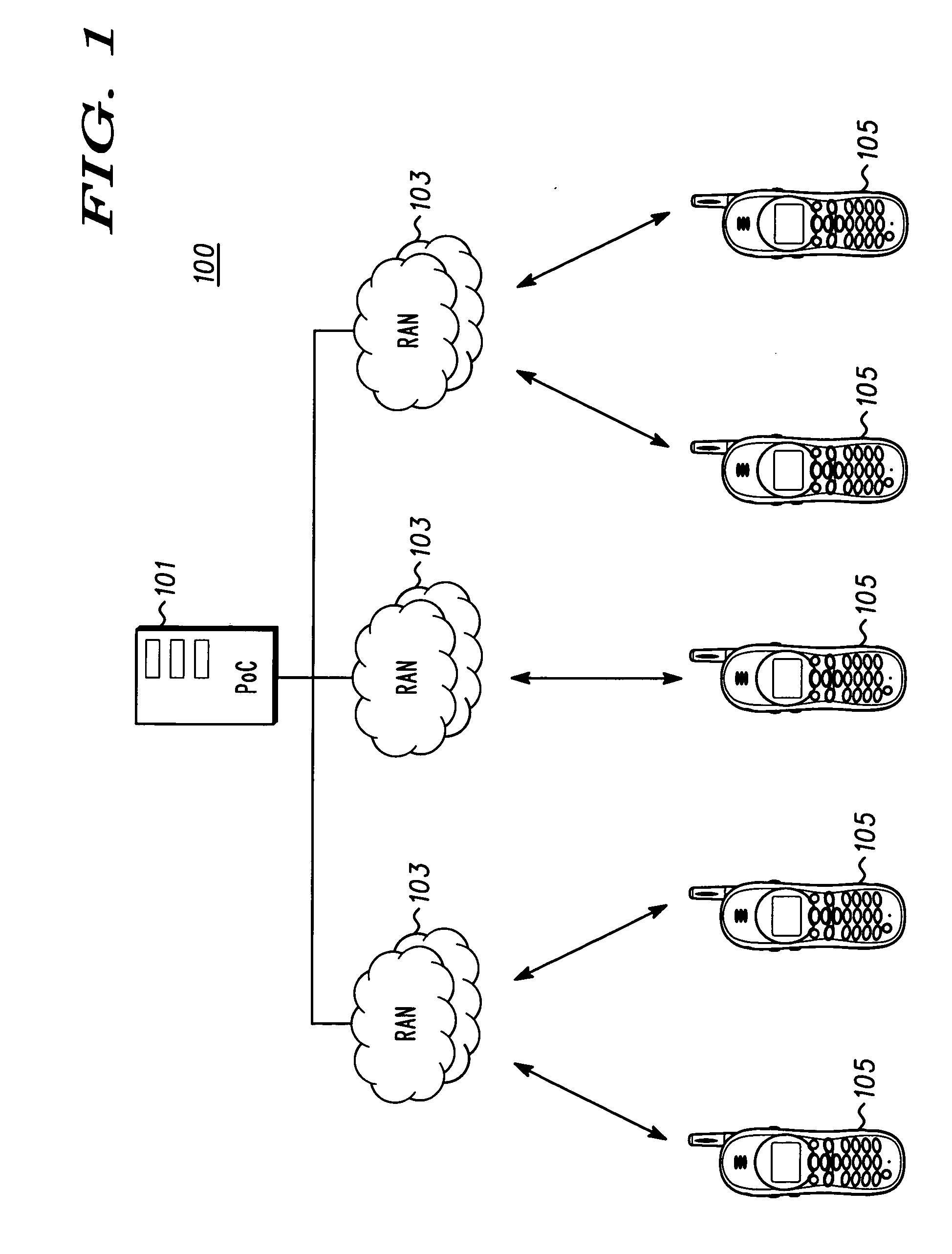
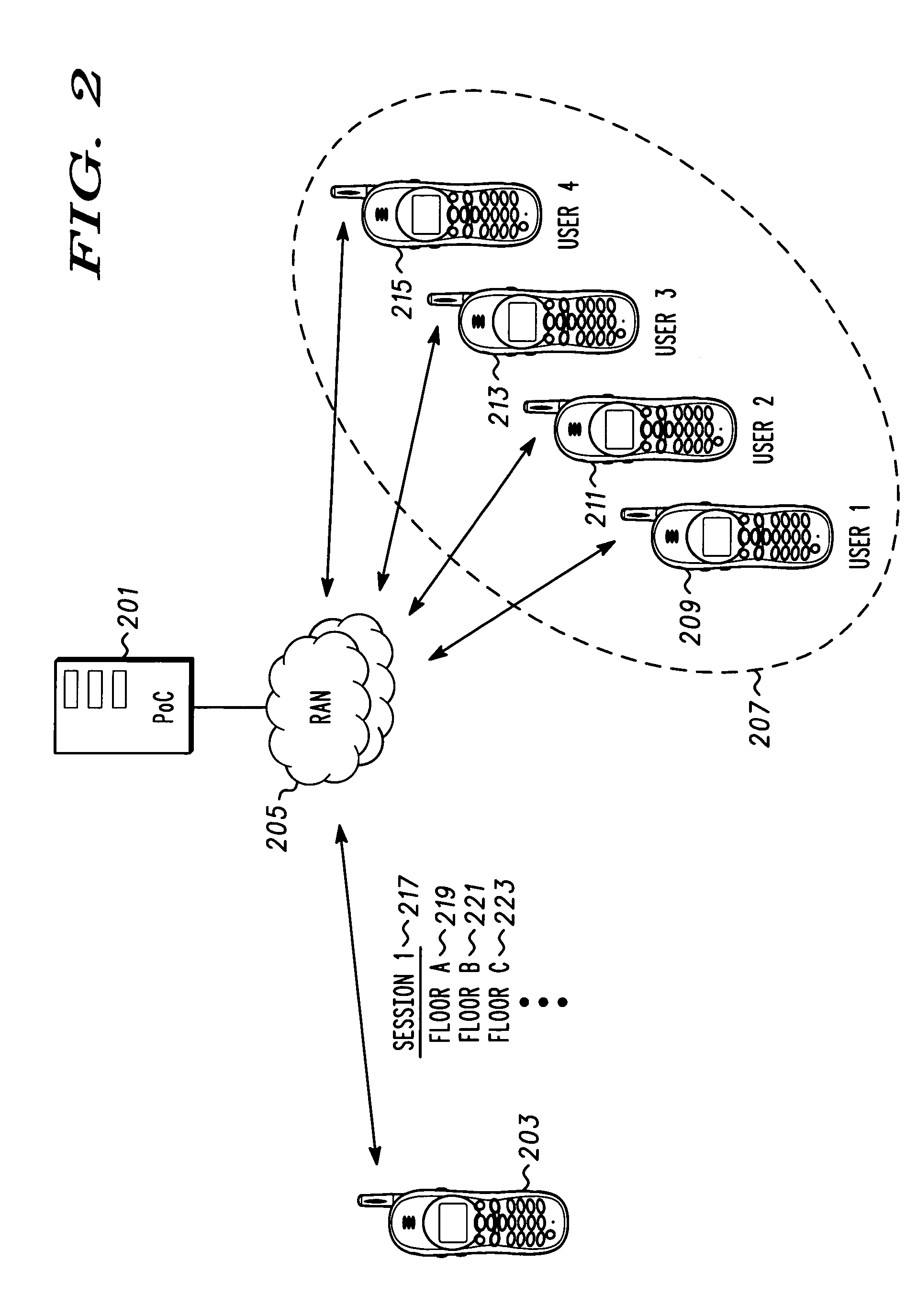
[0013] To address the above-mentioned need, a system and method for enabling PTT communications with multiple floors is provided herein.
[0014] In a first embodiment of the present invention, a single PTT session is established having multiple floors. Each media resource may have a floor in which a media resource comprises multiple media streams. Further, the PTT system of the present invention allows multiple users to simultaneously have a floor for the purpose of transmitting a particular media type. Each floor can be requested, released, and controlled separately with respect to a given user mobile station (MS). Additional floors, and media resources and streams associated with the floors, may be added and removed as participants join and leave the communication, respectively. Different floors using an identical media type are also assigned different priority levels by the PTT server. For example, voice audio may have a higher priority assignment than the audio from a media file....
PUM
 Login to View More
 Abstract
Description
Claims
Application Information
 Login to View More