
Cardiac rhythm management system with maximum tracking rate (MTR) hysteresis
a technology of cardiac rhythm and management system, applied in the direction of electrotherapy, heart stimulators, therapy, etc., can solve the problems of decreased blood circulation, abnormal cardiac electrical conduction patterns, irregular cardiac rhythms, etc., and achieve the effect of benevolent to the patien
- Summary
- Abstract
- Description
- Claims
- Application Information
AI Technical Summary
Benefits of technology
Problems solved by technology
Method used
Image

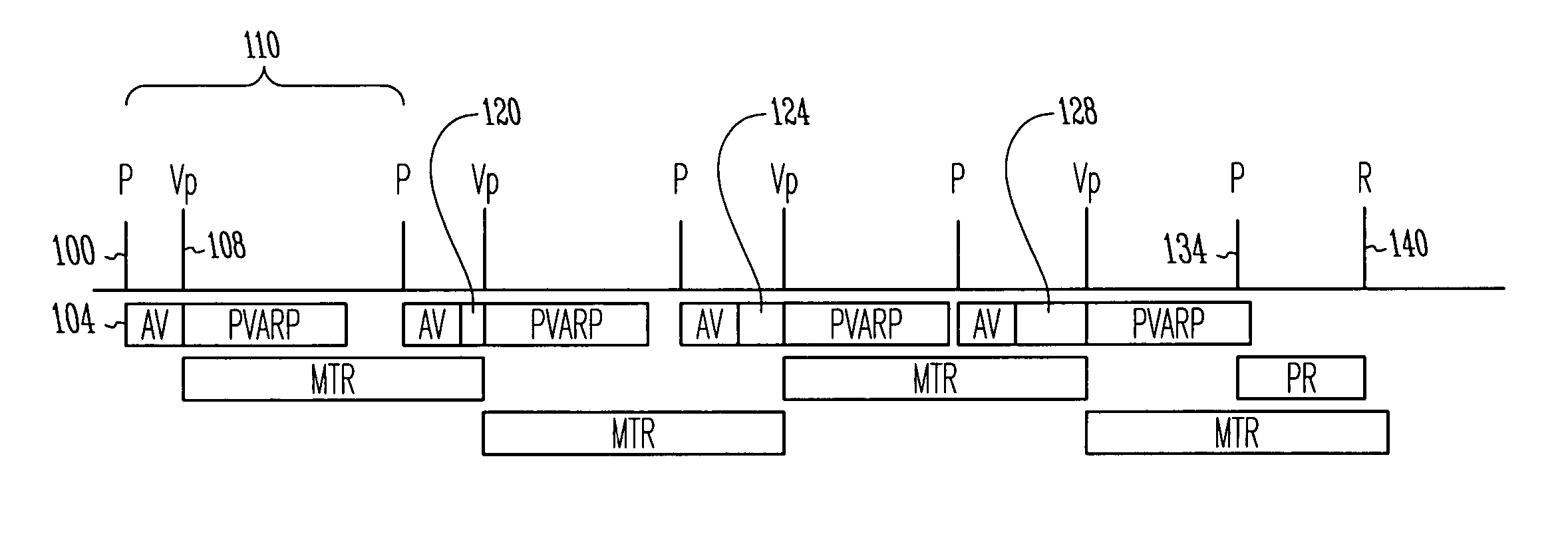
Examples
Embodiment Construction
[0019] In the following detailed description of the preferred embodiments, reference is made to the accompanying drawings that form a part hereof, and in which are shown by way of illustration specific embodiments in which the invention may be practiced. It is understood that other embodiments may be utilized, and structural changes may be made without departing from the scope of the present subject matter.
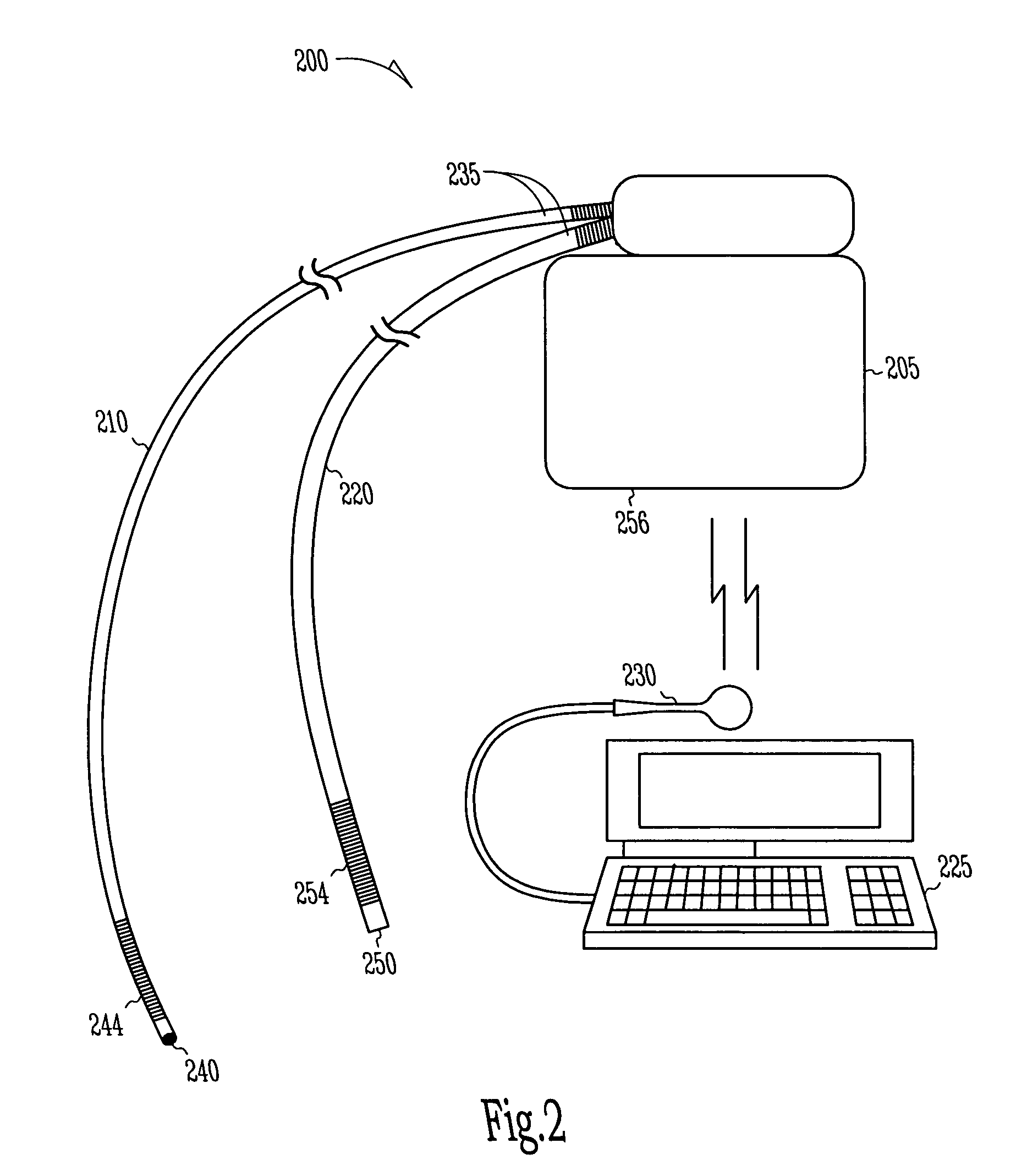
[0020] The present subject matter is described in applications involving implantable cardiac rhythm management systems including, but not limited to, pacemakers, cardioverter / defibrillators, pacemaker / defibrillators, and biventricular or other multi-site cardiac resynchronization therapy (CRT) devices. However, it is understood that the present methods and apparatus may be employed in unimplanted devices, including, but not limited to, external pacemakers, cardioverter / defibrillators, pacemaker / defibrillators, biventricular or other multi-site CRT devices, monitors, programmers a...
PUM
 Login to View More
 Abstract
Description
Claims
Application Information
 Login to View More