
Vacuum chamber for plasma electric generation system
a plasma electric generation and vacuum chamber technology, applied in nuclear reactors, nuclear engineering, greenhouse gas reduction, etc., can solve the problems of low efficiency (less than 30%), high radioactivity, and damage to the structure of the reactor walls, so as to facilitate controlled fusion, reduce or eliminate anomalous ions transport, and high efficiency
- Summary
- Abstract
- Description
- Claims
- Application Information
AI Technical Summary
Benefits of technology
Problems solved by technology
Method used
Image

Examples
Embodiment Construction
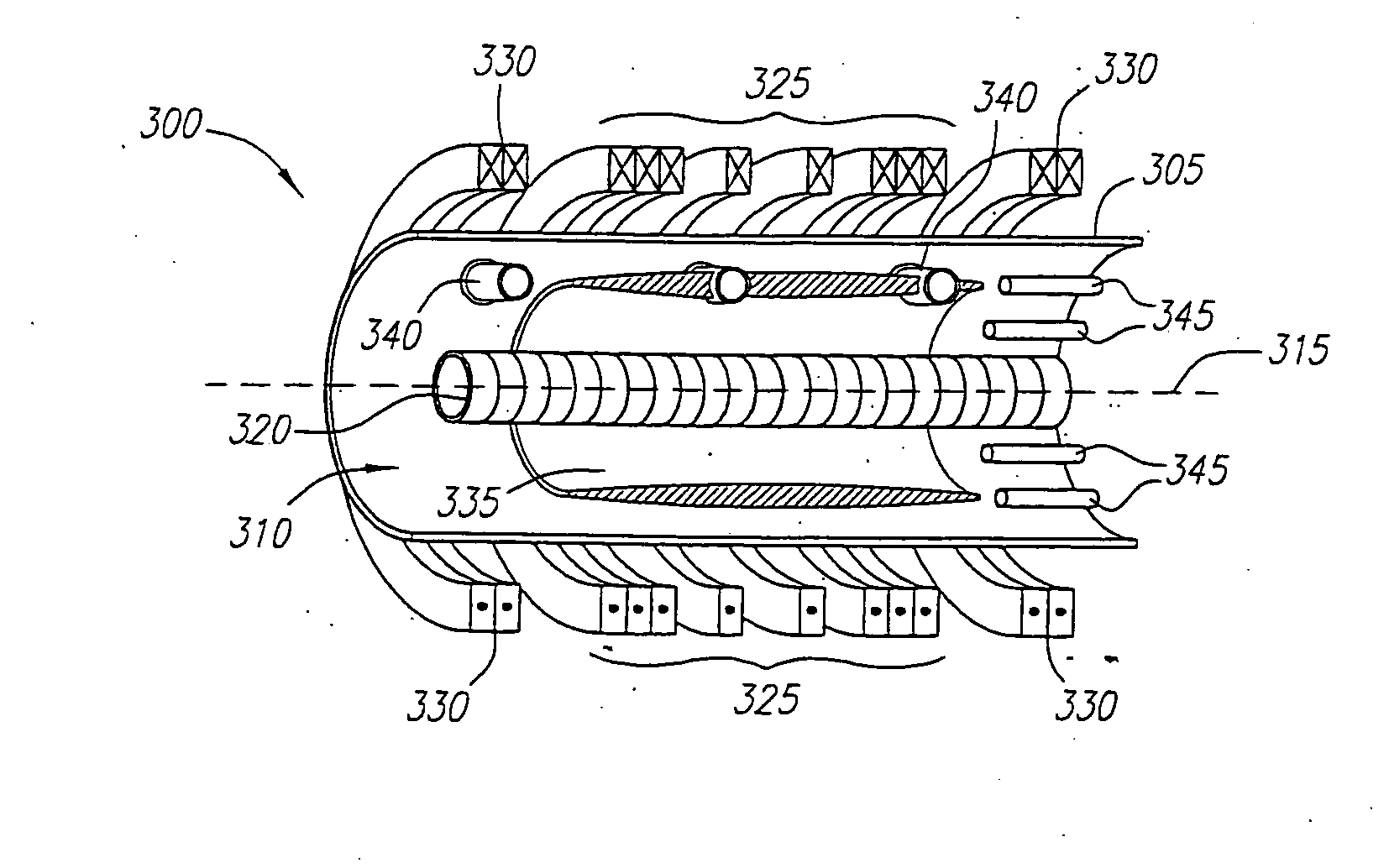
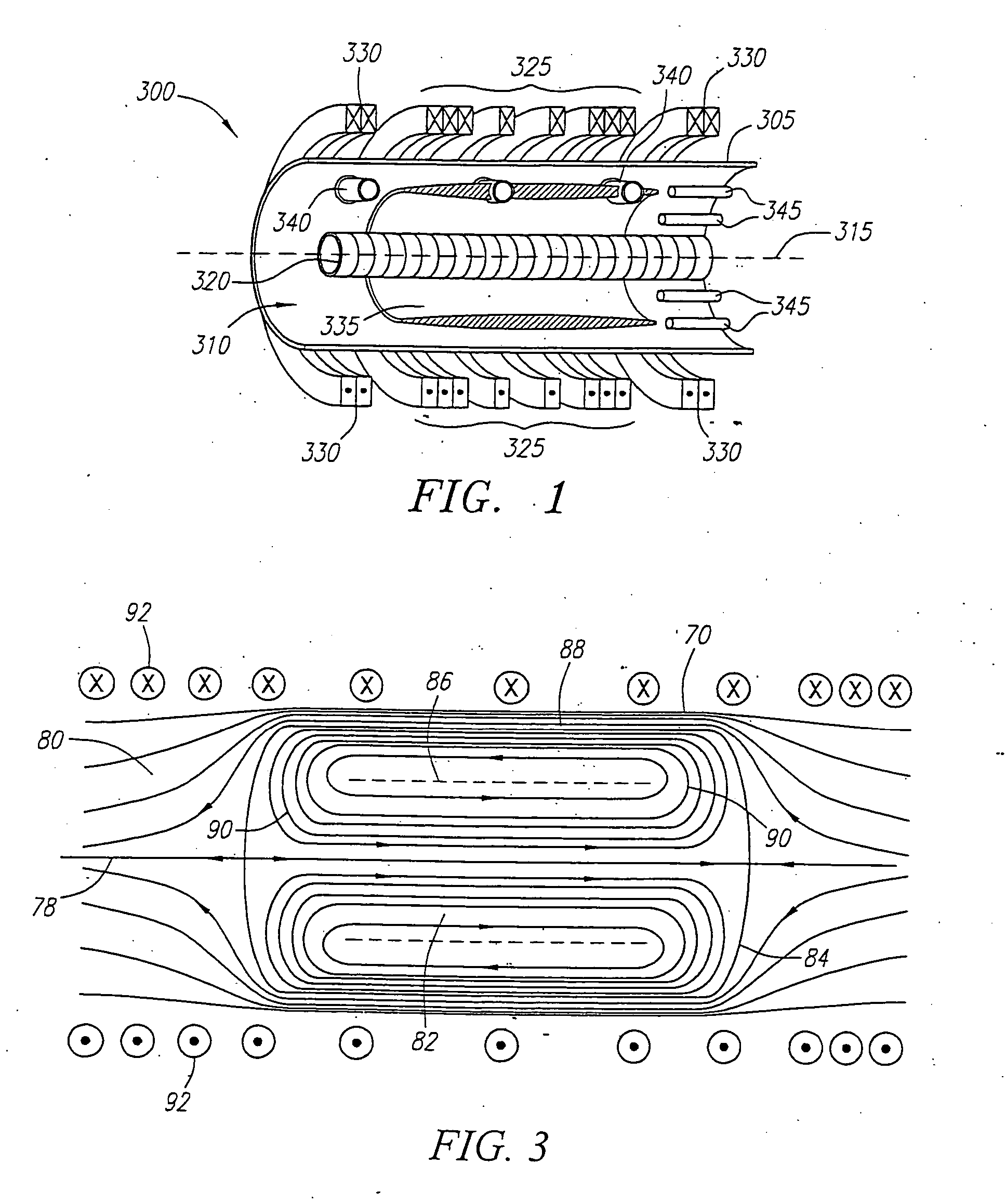
[0071] As illustrated in the figures, a plasma-electric power generation (PEG) system of the present invention preferably includes a colliding beam fusion reactor (CBFR) coupled to a direct energy conversion system. As alluded to above, an ideal fusion reactor solves the problem of anomalous transport for both ions and electrons. The solution to the problem of anomalous transport found herein makes use of a containment system with a magnetic field having a field reversed configuration (FRC). The anomalous transport of ions is avoided by magnetic confinement in the FRC in such a way that the majority of the ions have large, non-adiabatic orbits, making them insensitive to short-wavelength fluctuations that cause anomalous transport of adiabatic ions. In particular, the existence of a region in the FRC where the magnetic field vanishes makes it possible to have a plasma comprising a majority of non-adiabatic ions. For electrons, the anomalous transport of energy is avoided by tuning t...
PUM
 Login to View More
 Abstract
Description
Claims
Application Information
 Login to View More