
Surgical instrument
a surgical instrument and a technology for manipulating instruments, applied in the field of medical instruments, can solve the problems of difficult operation and use of endoscopic and laparoscopic instruments, difficult to master common tasks such as suturing, knotting and fine dissection, and still not providing enough dexterity to allow the surgeon
- Summary
- Abstract
- Description
- Claims
- Application Information
AI Technical Summary
Benefits of technology
Problems solved by technology
Method used
Image

Examples
Embodiment Construction
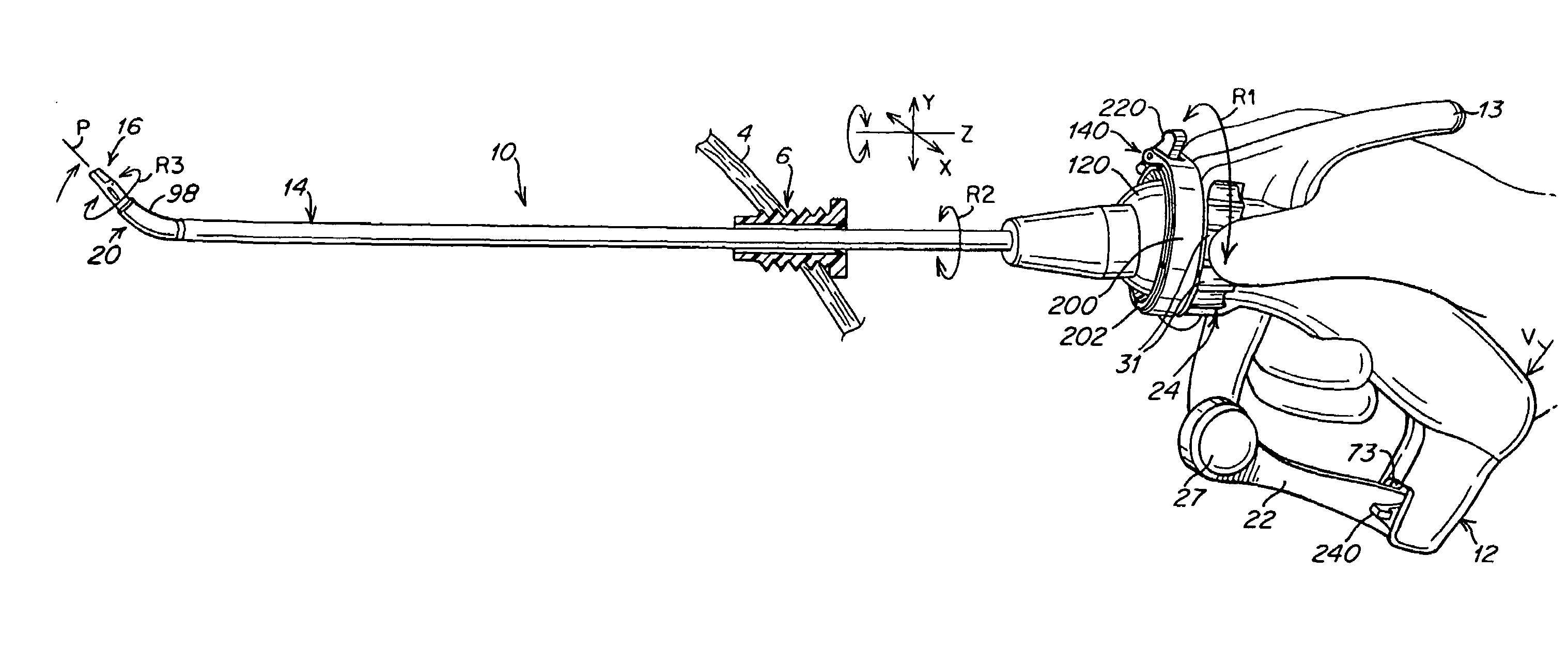
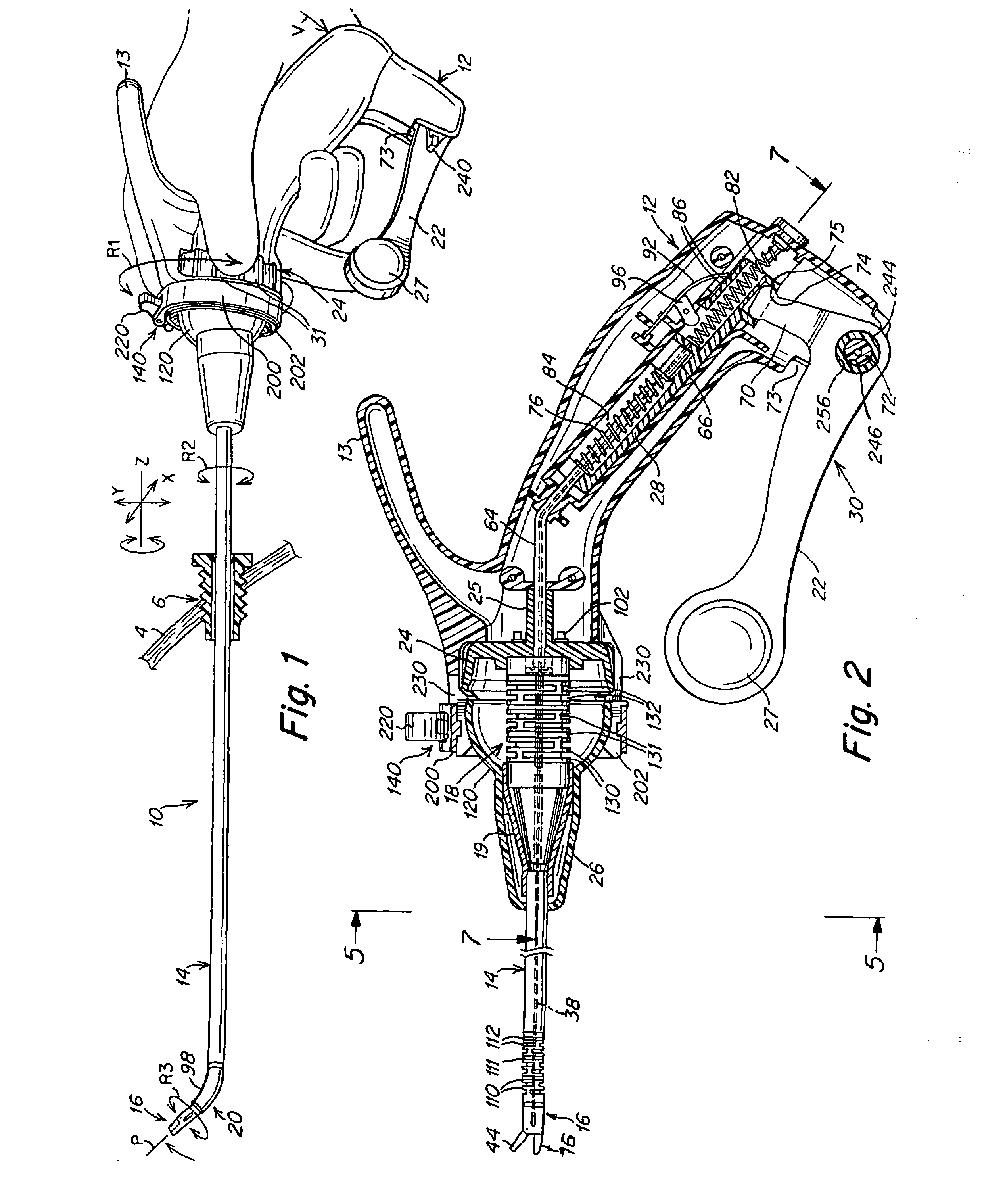
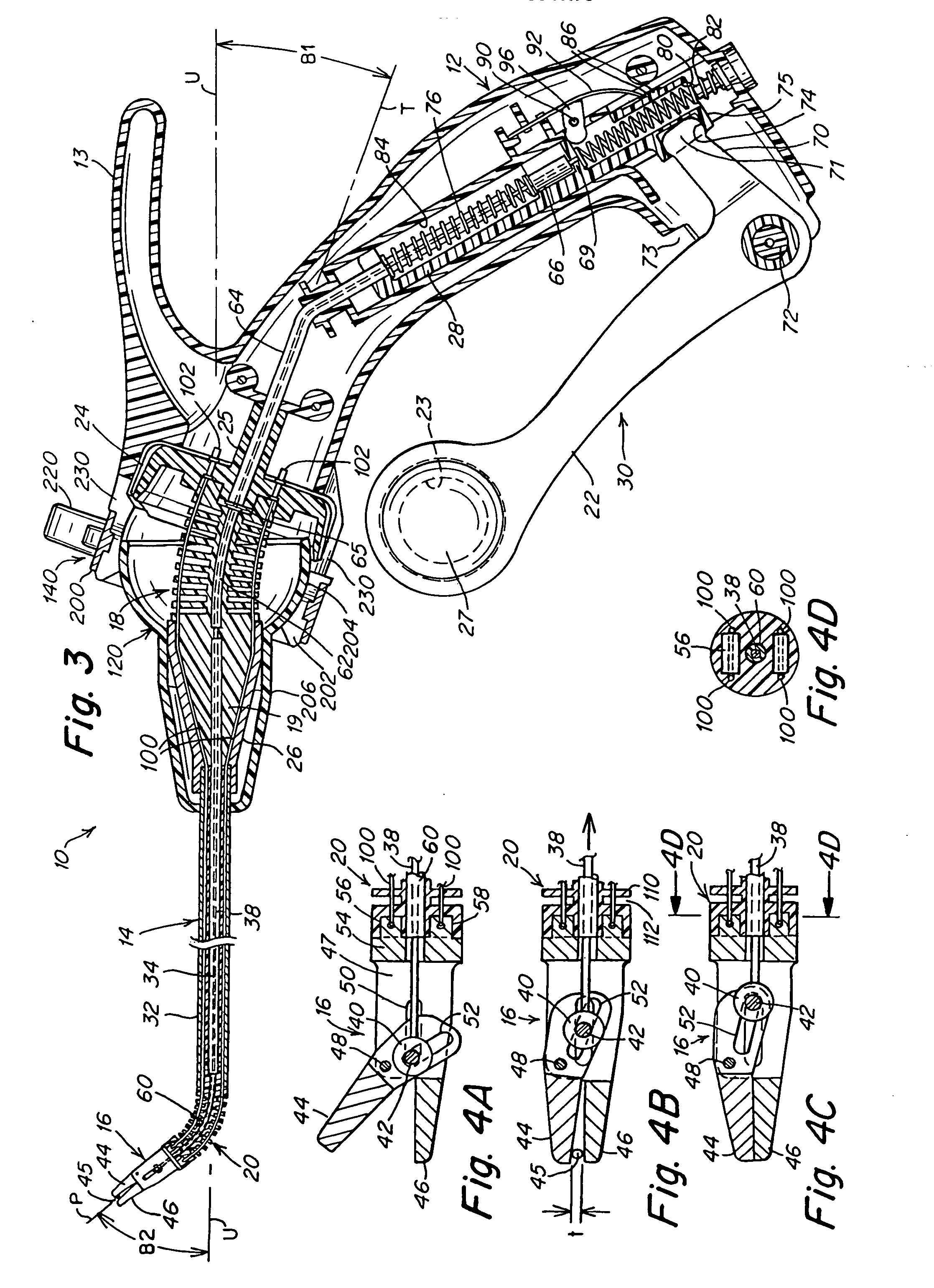
[0034]The instrument of the present invention may be used to perform minimally invasive procedures. “Minimally invasive procedure,” refers herein to a surgical procedure in which a surgeon operates through a small cut or incision, the small incision being used to access the operative site. In one embodiment, the incision length ranges from 1 mm to 20 mm in diameter, preferably from 5 mm to 10 mm in diameter. This procedure contrasts those procedures requiring a large cut to access the operative site. Thus, the flexible instrument is preferably used for insertion through such small incisions and / or through a natural body lumen or cavity, so as to locate the instrument at an internal target site for a particular surgical or medical procedure. The introduction of the surgical instrument into the anatomy may also be by percutaneous or surgical access to a lumen, vessel or cavity, or by introduction through a natural orifice in the anatomy.
[0035]In addition to use in a laparoscopic proce...
PUM
 Login to View More
 Abstract
Description
Claims
Application Information
 Login to View More