
Furniture hinge with a damping device
- Summary
- Abstract
- Description
- Claims
- Application Information
AI Technical Summary
Benefits of technology
Problems solved by technology
Method used
Image

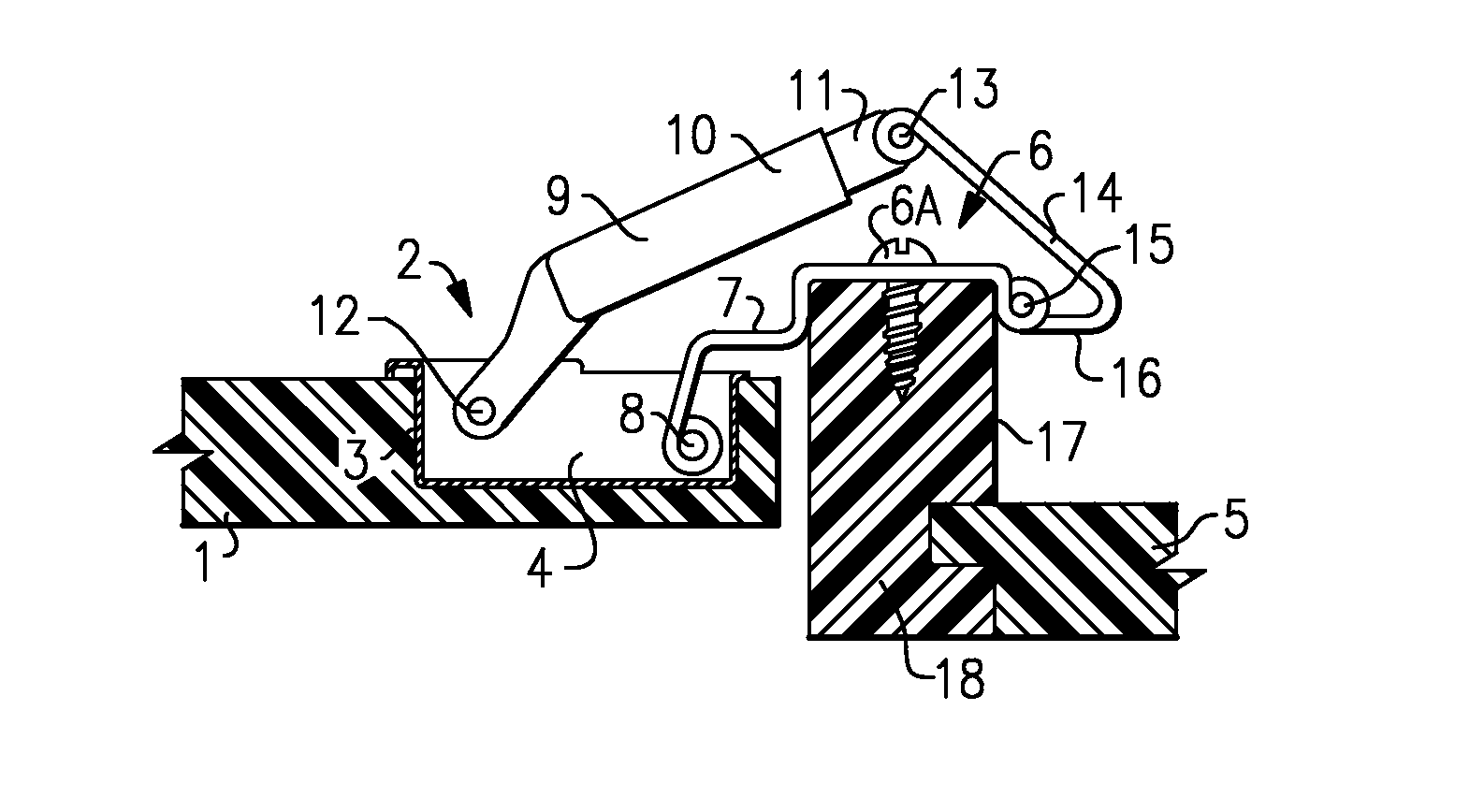
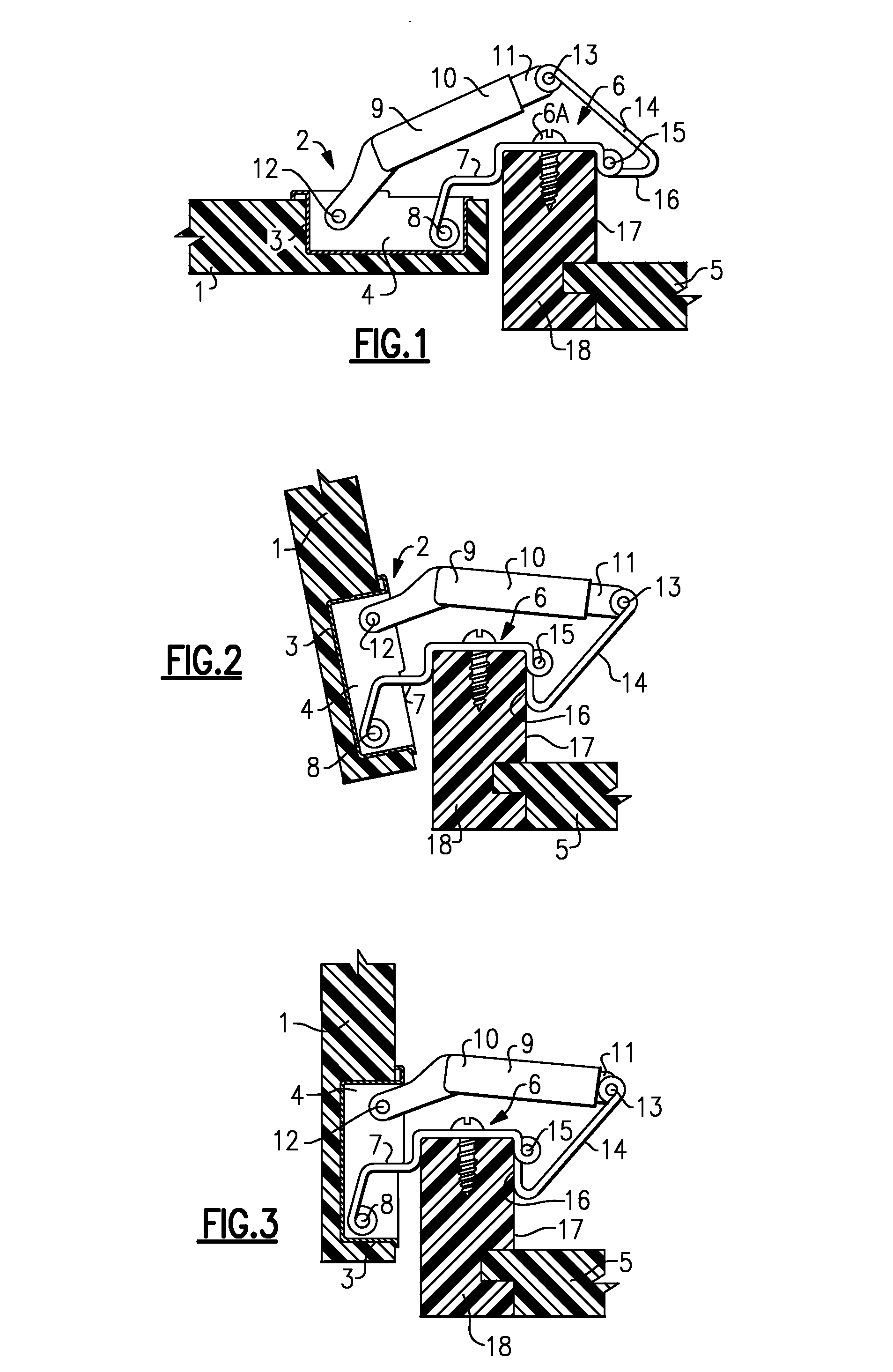
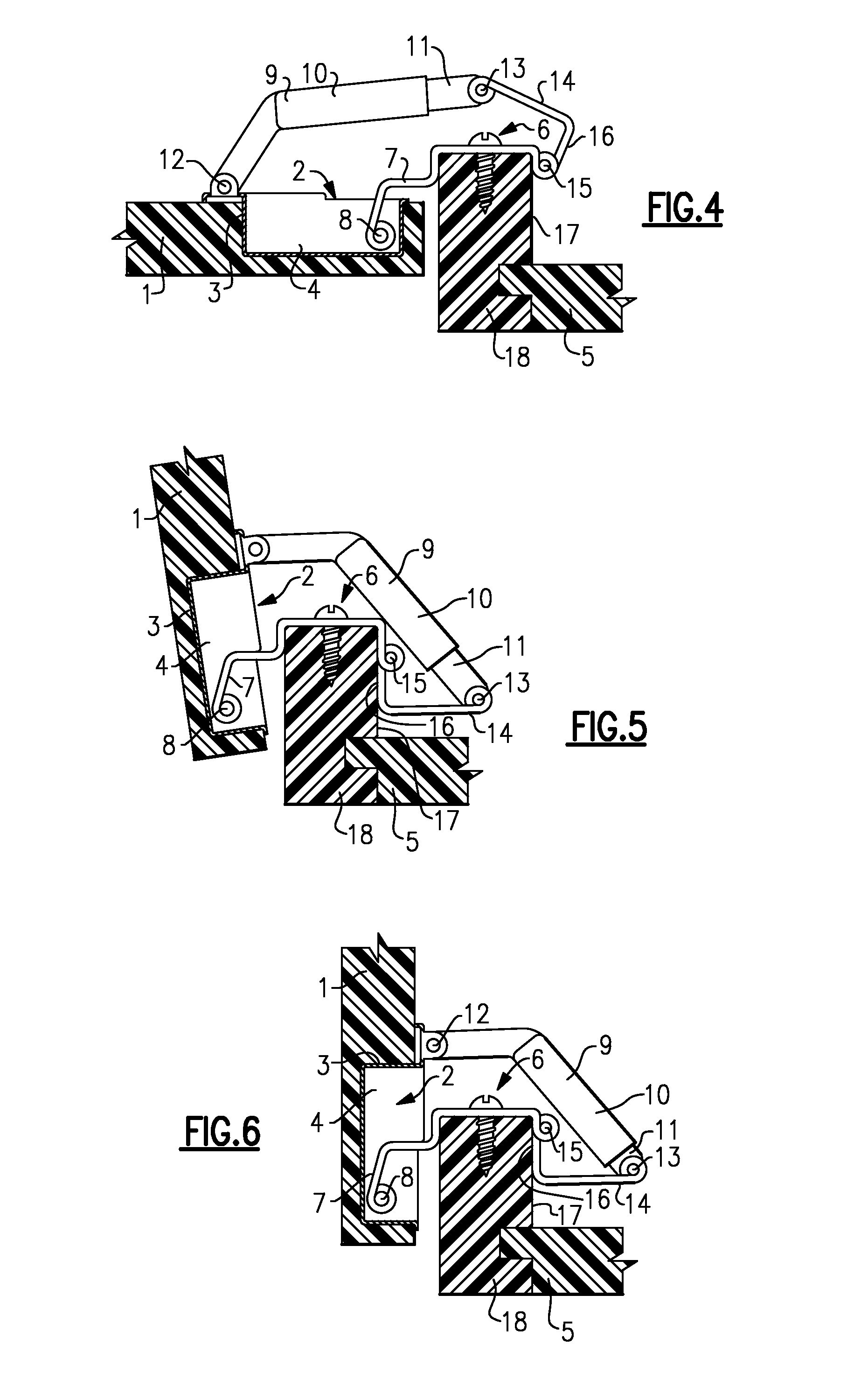
Examples
Embodiment Construction
[0029]Referring to FIGS. 1 to 3, an example furniture hinge includes a door fastening element 2 secured to a furniture door 1 through an insertion cup 4, which can be introduced into a cup bore 3 of the furniture door 1.
[0030]A body fastening element 6 secures to a furniture body 5 with a fastening screw 6a. In this example, the body fastening element 6 is arranged relative the furniture body 5 in a “face-frame” type of construction. A support arm 7, a type of pivot arm, rigidly fastens to the furniture body 5, and is seated on the door fastening element 2 on a joint 8 inside the insertion cup 4.
[0031]An example damping device includes a linearly movable damping cylinder 9 having a damping piston received in a linearly movable manner within a cylinder housing 10. A damping medium (such as a fluid or gas) flowing between damping bores in the course of the piston movement, causes damping of the piston movement. The piston (not shown) connects to a piston rod 11 extending from the cyli...
PUM
 Login to View More
 Abstract
Description
Claims
Application Information
 Login to View More