
Flush syringe having compressible plunger
a plunger and syringe technology, applied in the field of syringe assemblies, to achieve the effect of reducing or eliminating distal end compression, reducing or eliminating blood reflux, and reducing or eliminating the compression of stoppers
- Summary
- Abstract
- Description
- Claims
- Application Information
AI Technical Summary
Benefits of technology
Problems solved by technology
Method used
Image

Examples
Embodiment Construction
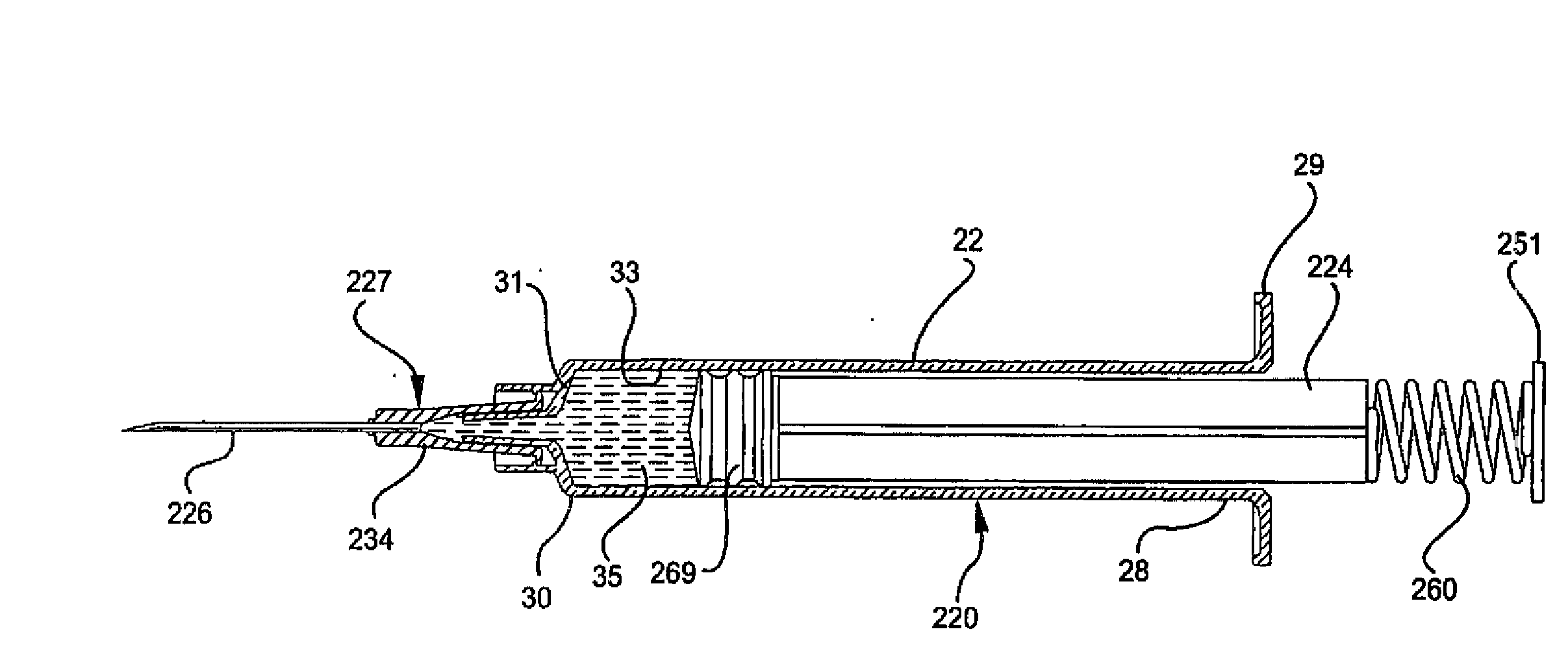
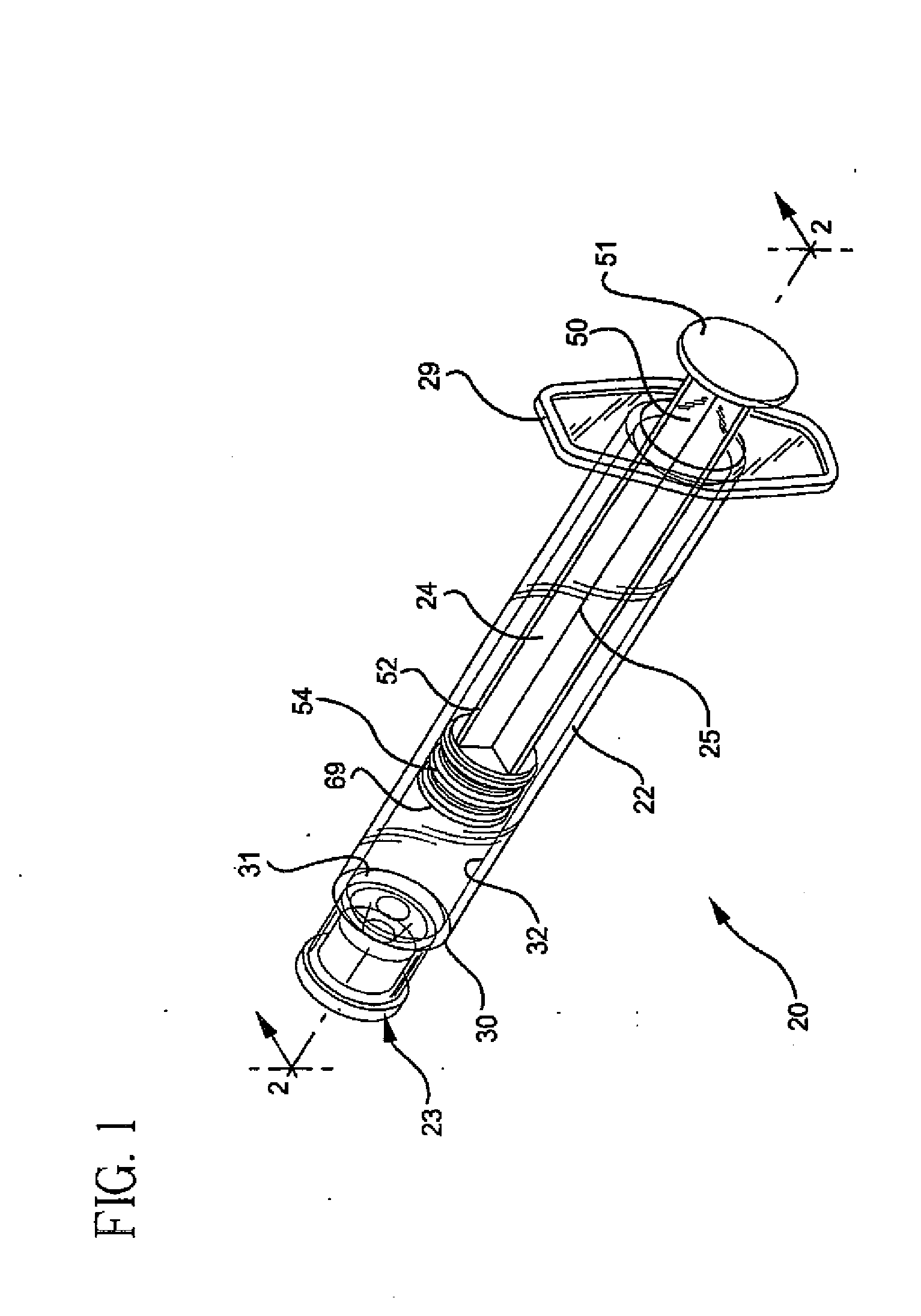
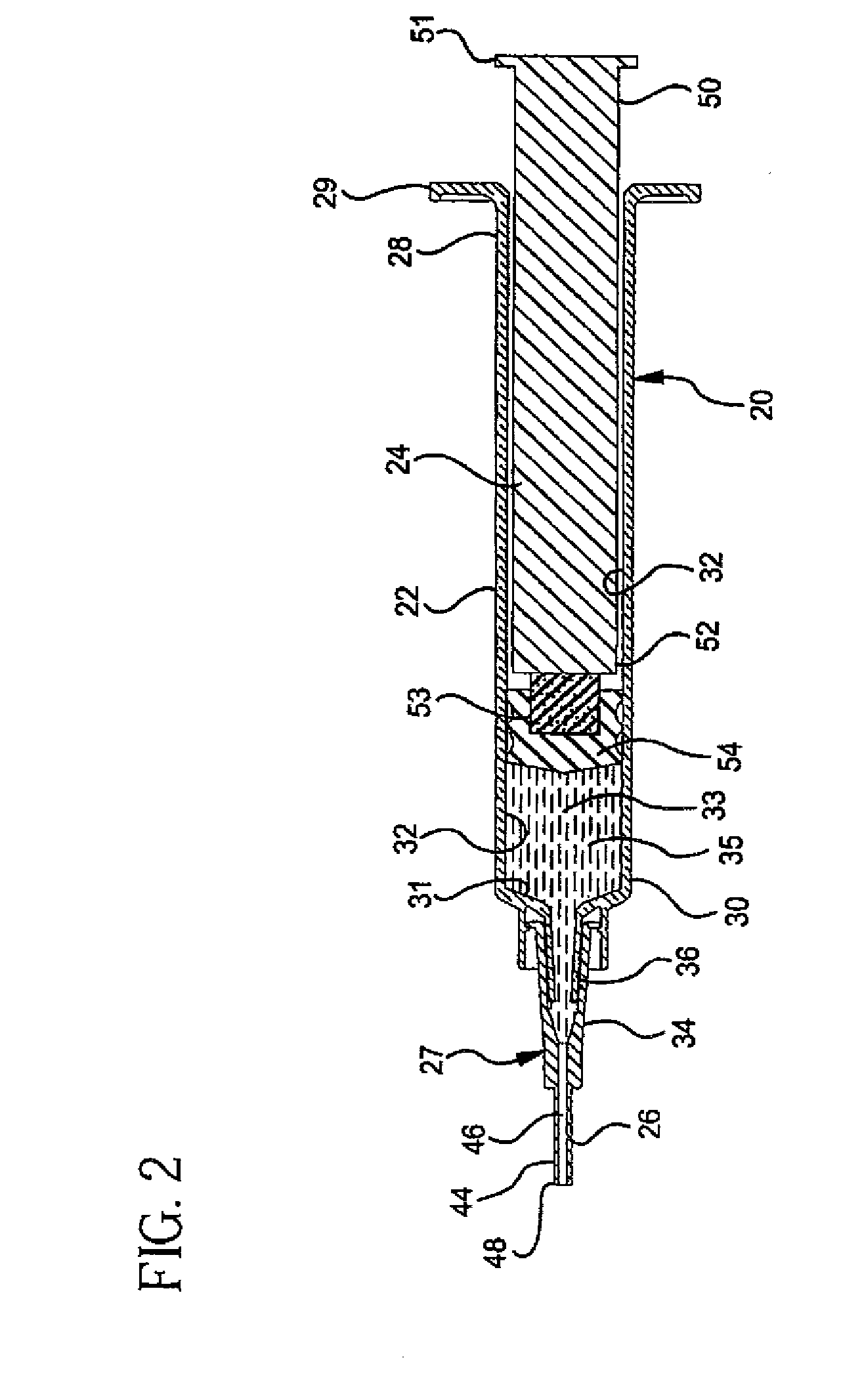
[0025]FIG. 1 shows a syringe 20 according to the present invention generally comprising a barrel 22 and a plunger 24. The barrel 22 has a generally elongate body including an open proximal end 28 having finger grips 29, a distal end 30 having a distal wall 31 and an inside surface 32 defining a chamber 33 for retaining fluid. The distal end 30 further includes a tip 36 having a passageway 38 in fluid communication with the chamber. The distal end of barrel 22 preferably, but not necessarily includes a locking luer type collar 40 concentrically surrounding tip 36. The inside surface of the collar includes at least one thread 43. A cannula 26 includes a proximal end 42, a distal end 44 and a lumen 46 therethrough. The distal end may include a sharp tip or a blunt tip 48 as shown. The cannula may be connected directly to the tip of the syringe barrel to establish fluid communication between the lumen and the chamber. Also, the cannula may be part of a needle assembly 27 including a hub...
PUM
 Login to View More
 Abstract
Description
Claims
Application Information
 Login to View More