
Data Adaptive Vibratory Source Acquisition Method
a vibratory source and data technology, applied in the field of geophysical prospecting, can solve the problems of harmonic ghosts, affecting the accuracy of final processed data, and many problems known to exist with conventional vibrator technology,
- Summary
- Abstract
- Description
- Claims
- Application Information
AI Technical Summary
Benefits of technology
Problems solved by technology
Method used
Image

Examples
Embodiment Construction
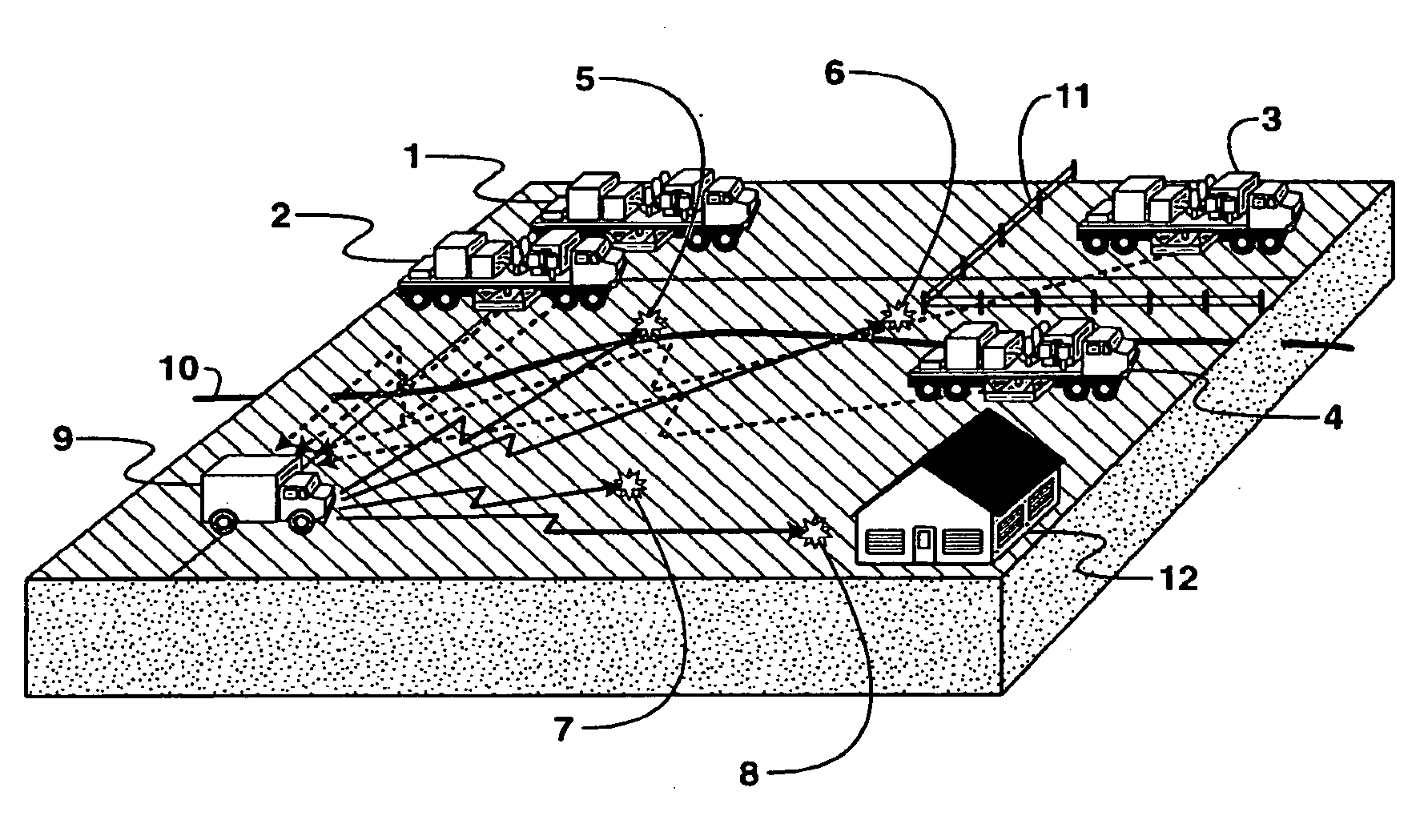
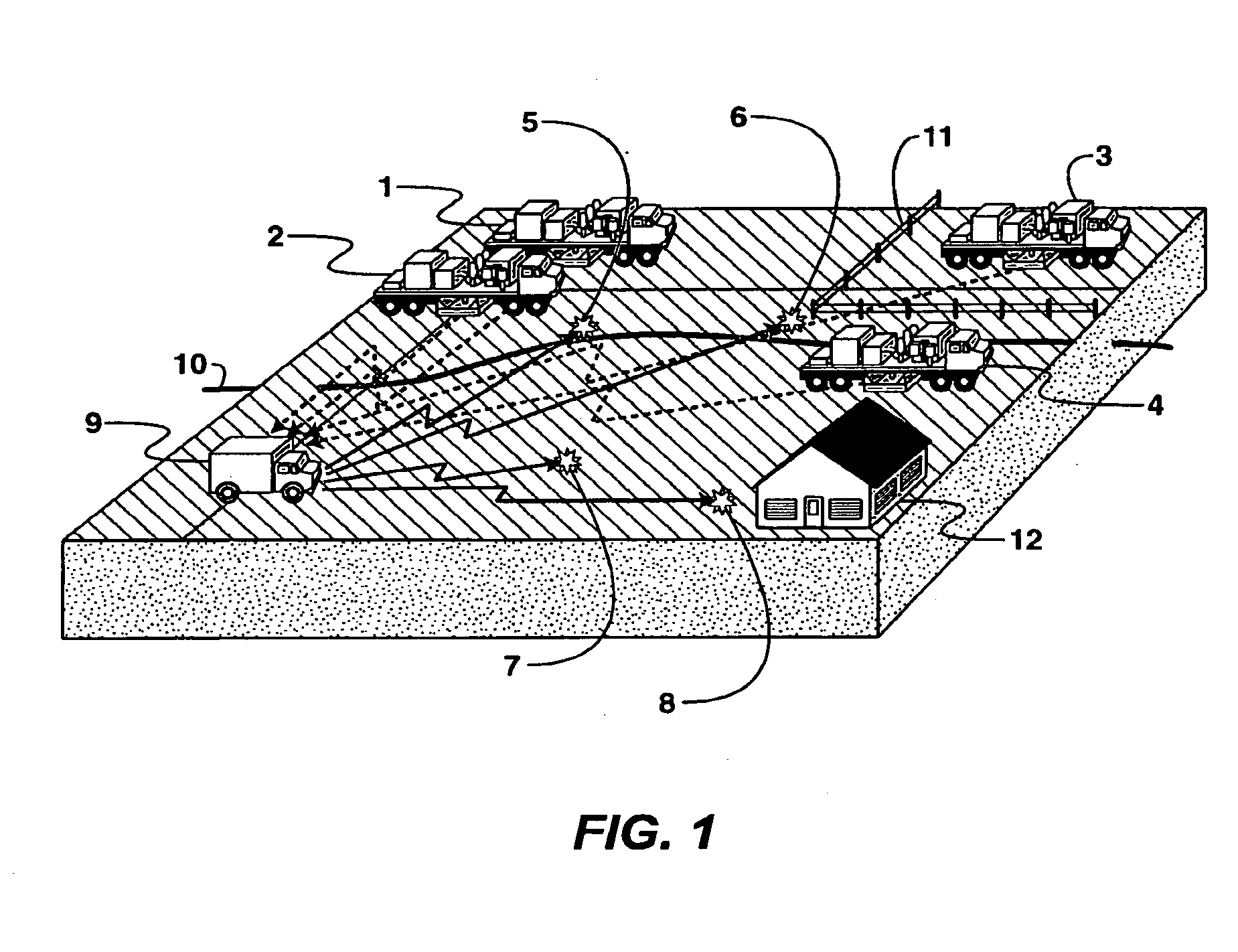
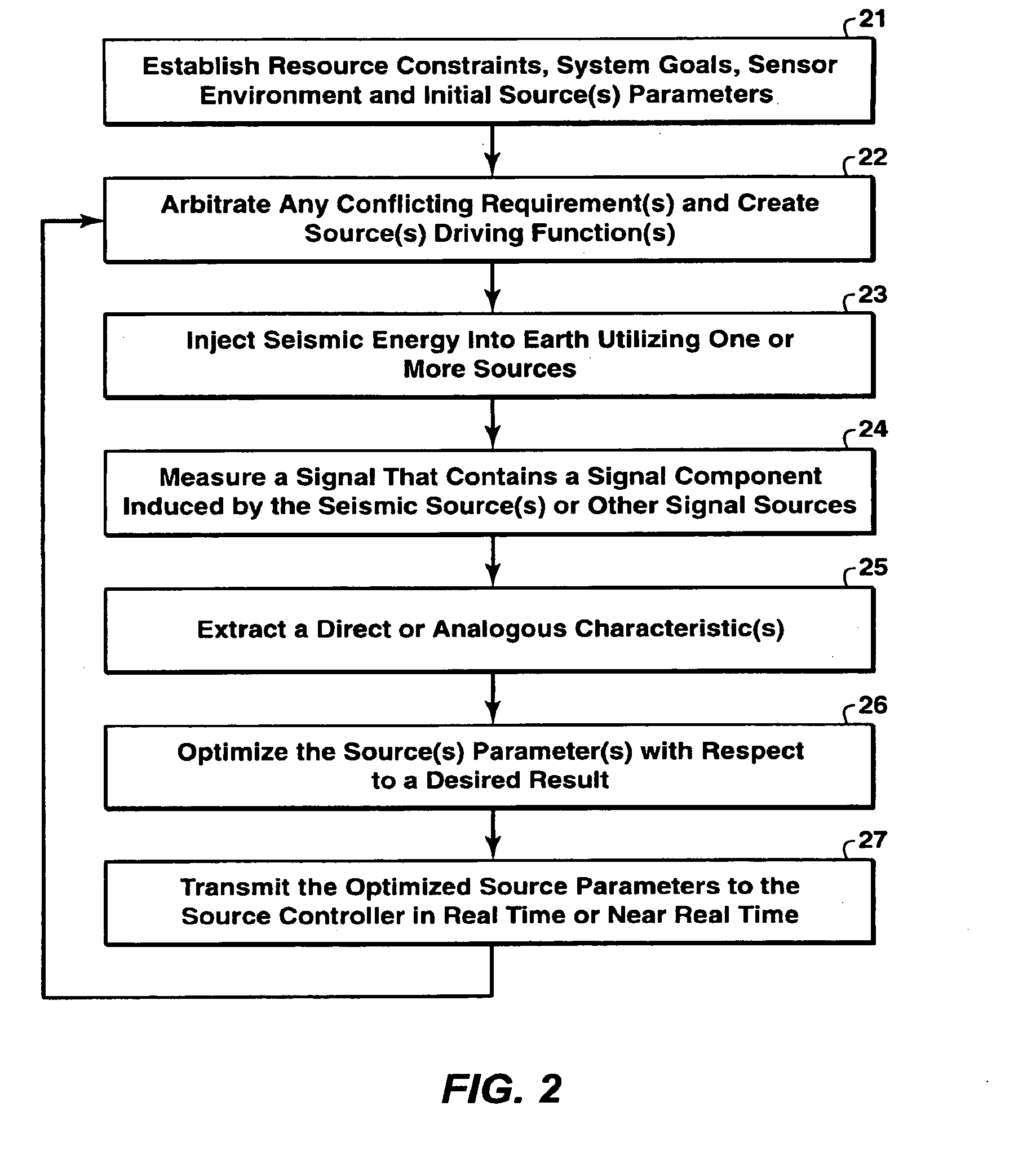
[0038]The method adaptively alters the temporal and / or spectral and / or force and / or operational characteristics of the pilot and / or drive signal(s) and / or unit scheduling based on local and / or remote estimates of the outgoing source or source's effects and signal. In practice, the method will (1) generate an estimation of the effects of the energy source (i.e. via measurements of displacement, velocity, acceleration, angular momentum, pressure and / or pressure gradient) at points local to the energy source(s) and / or at selected remote location(s), (2) determine the variance in the characteristics between the estimated effects and a predetermined effect, (3) compute an updated pilot and / or drive signal and / or unit schedule based on that variance, and (4) use the updated pilot and / or drive signal and / or unit schedule to generate subsequent source signal(s). The temporal / spectral / force / scheduling characteristics of the outgoing source signal can be controlled by instantaneously adjustin...
PUM
 Login to View More
 Abstract
Description
Claims
Application Information
 Login to View More