
Method and system for multi-currency escrow service for web-based transactions
a multi-currency, escrow service technology, applied in the field of electronic commerce, can solve the problem of effectively disrupting the physical nature of business transactions, and achieve the effect of limiting navigation capabilities
- Summary
- Abstract
- Description
- Claims
- Application Information
AI Technical Summary
Benefits of technology
Problems solved by technology
Method used
Image

Examples
Embodiment Construction
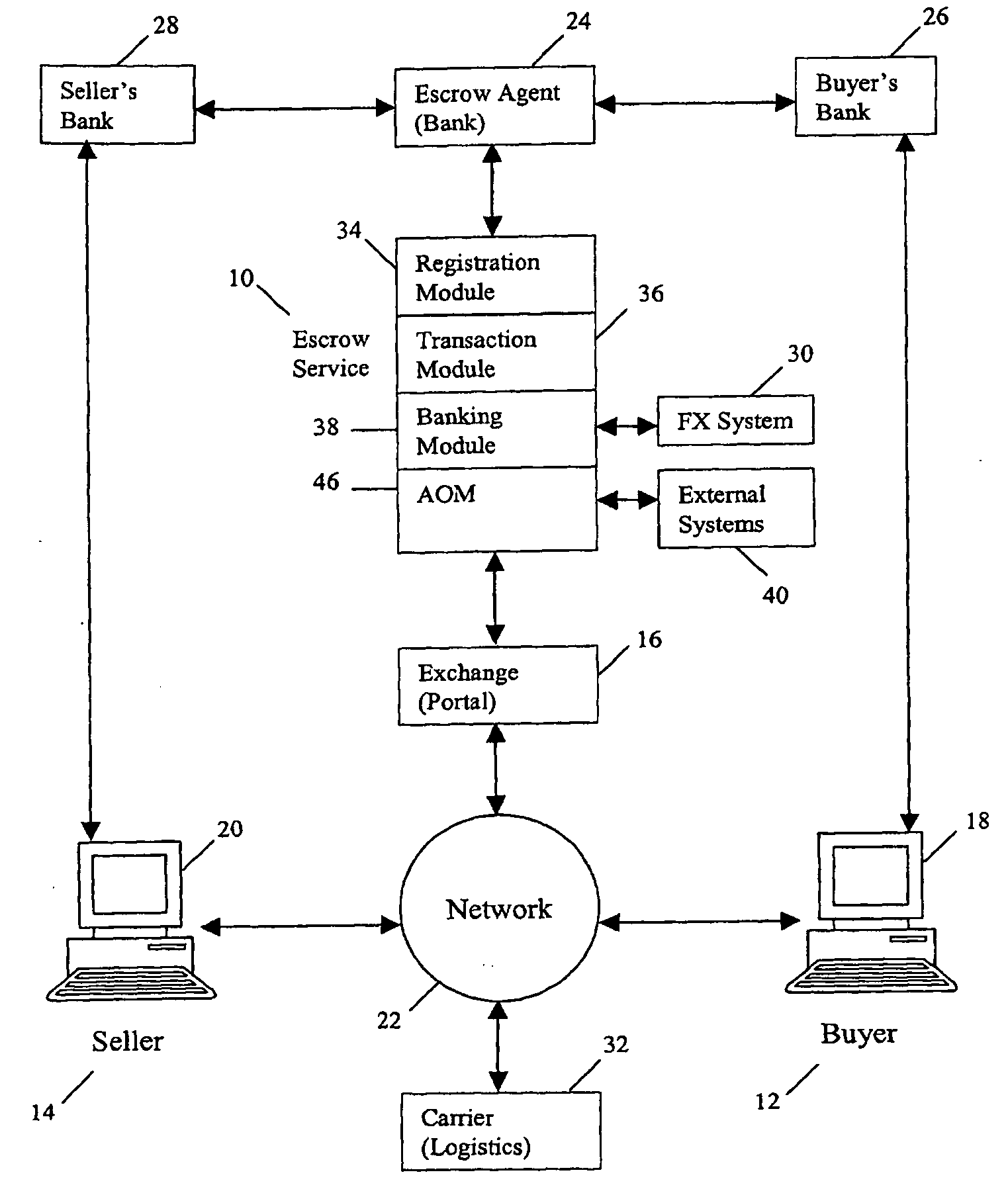
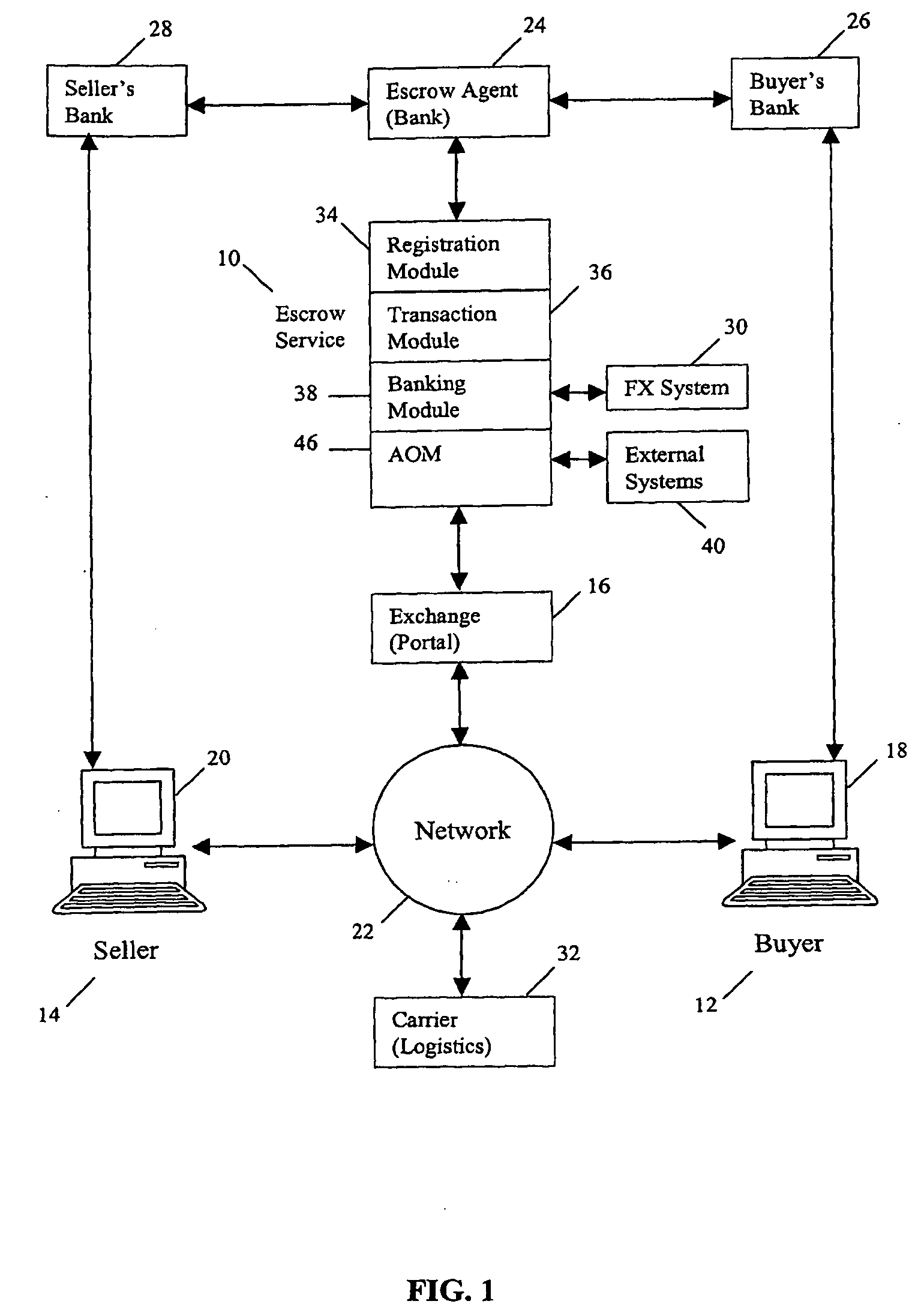
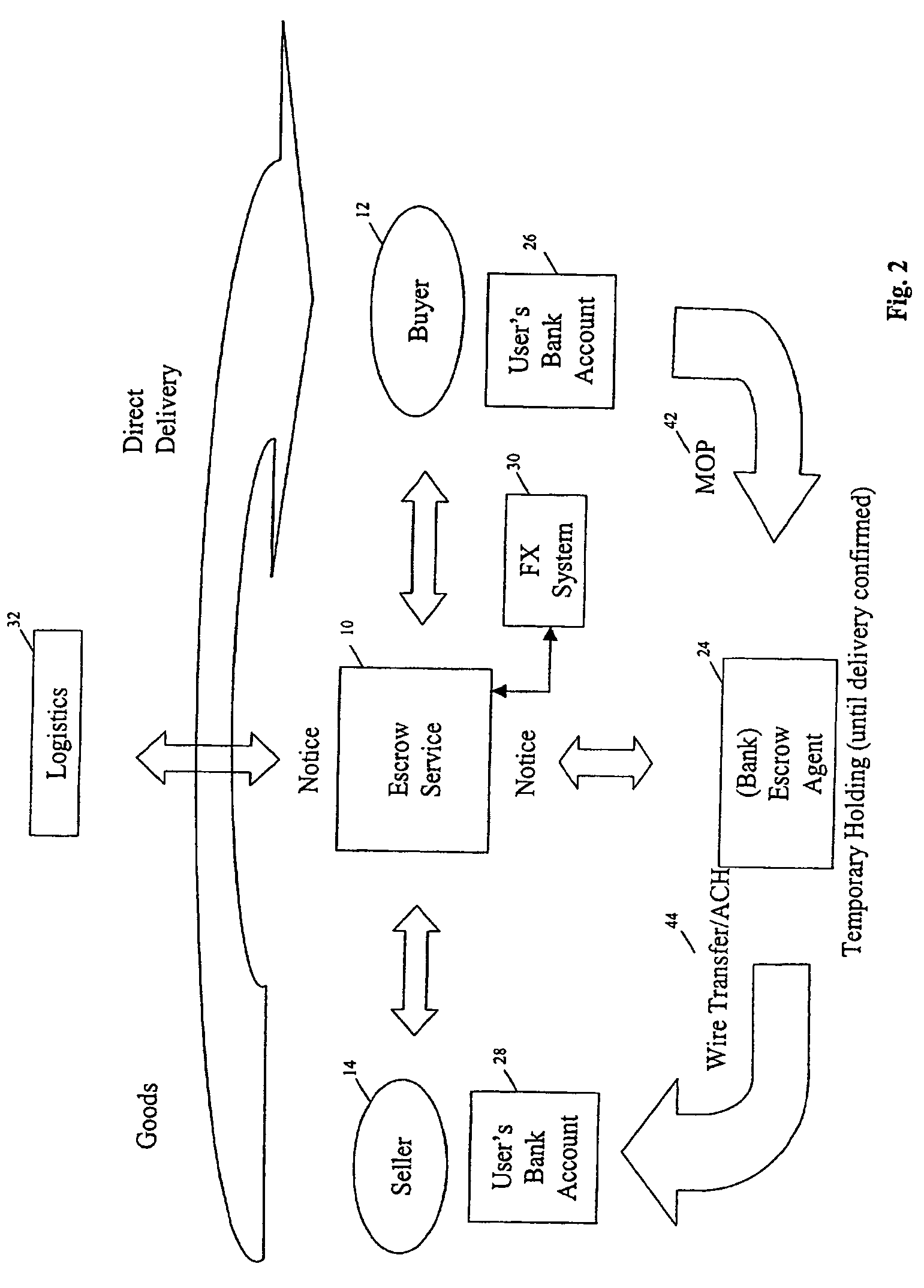
[0058]Referring now in detail to an embodiment of the invention, an example of which is illustrated in the accompanying drawings, the present invention provides a method and system for escrow service for web-based transactions, such as multi-currency web-based transactions, that alleviates some of the business issues that make e-commerce business among strangers less certain. The method and system of the present invention utilizes a bank's point of view, in that it is not an open system. All users of the system, whether they are buyers or sellers, or whether they are in fact a combination of buyer and seller, must be registered in the system. The importance of this feature is that the process initiates a series of know-your-customer (“KYC”) and anti-money laundering (“AML”) questions, such that customers are vetted before they become active customers on the system. In other words it is not simply a “Hello; how are you; give us your name and address; and send us your money.” While th...
PUM
 Login to View More
 Abstract
Description
Claims
Application Information
 Login to View More