
Post-extraction dental implant
a dental implant and post-extraction technology, applied in the field of post-extraction dental implants, can solve the problems of not being able to respond to the increasingly greater need for quick aesthetic solutions, unable to provide primary and secondary stability, and unable to provide gripping capacity, so as to achieve the effect of ensuring the stability of the implan
- Summary
- Abstract
- Description
- Claims
- Application Information
AI Technical Summary
Benefits of technology
Problems solved by technology
Method used
Image

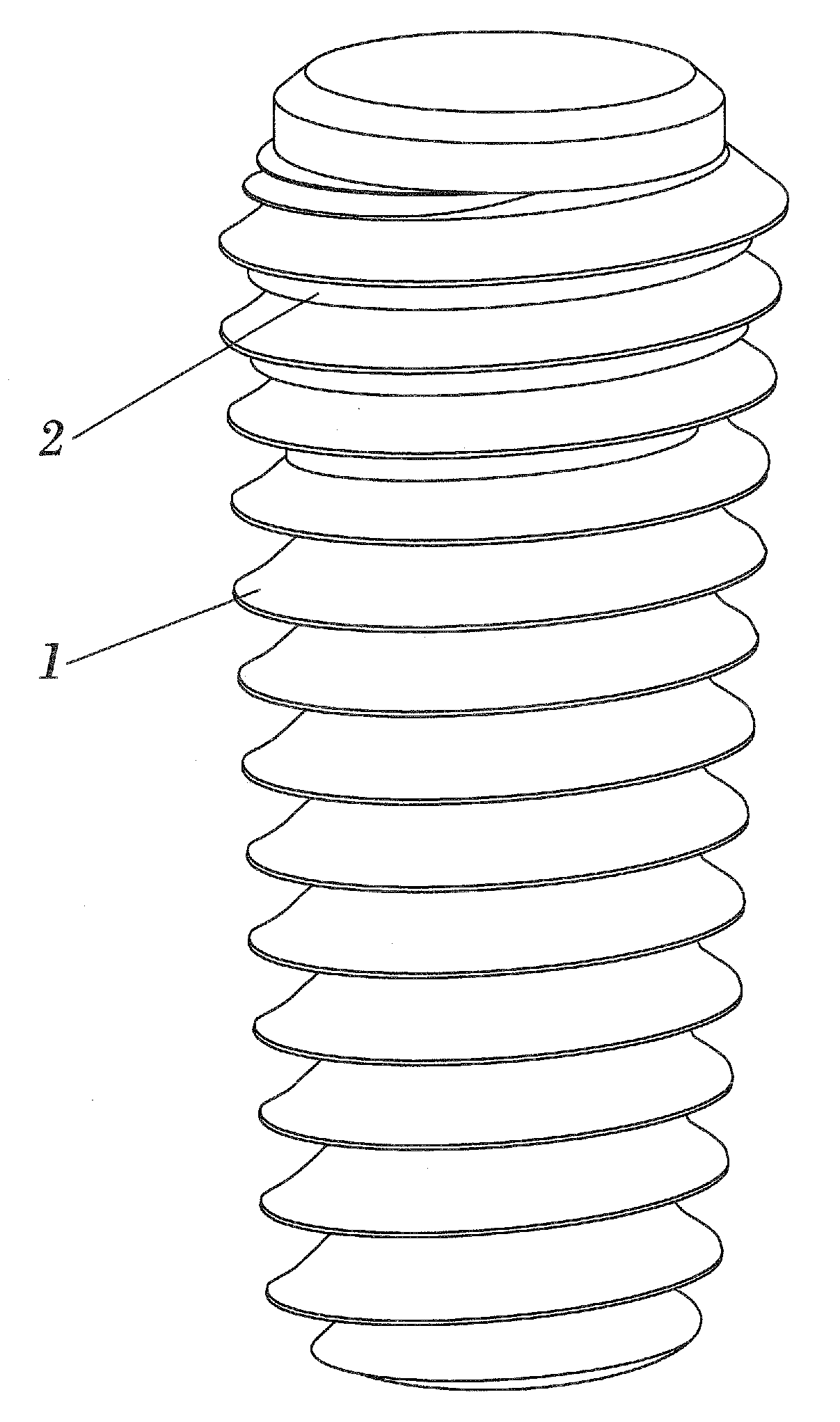
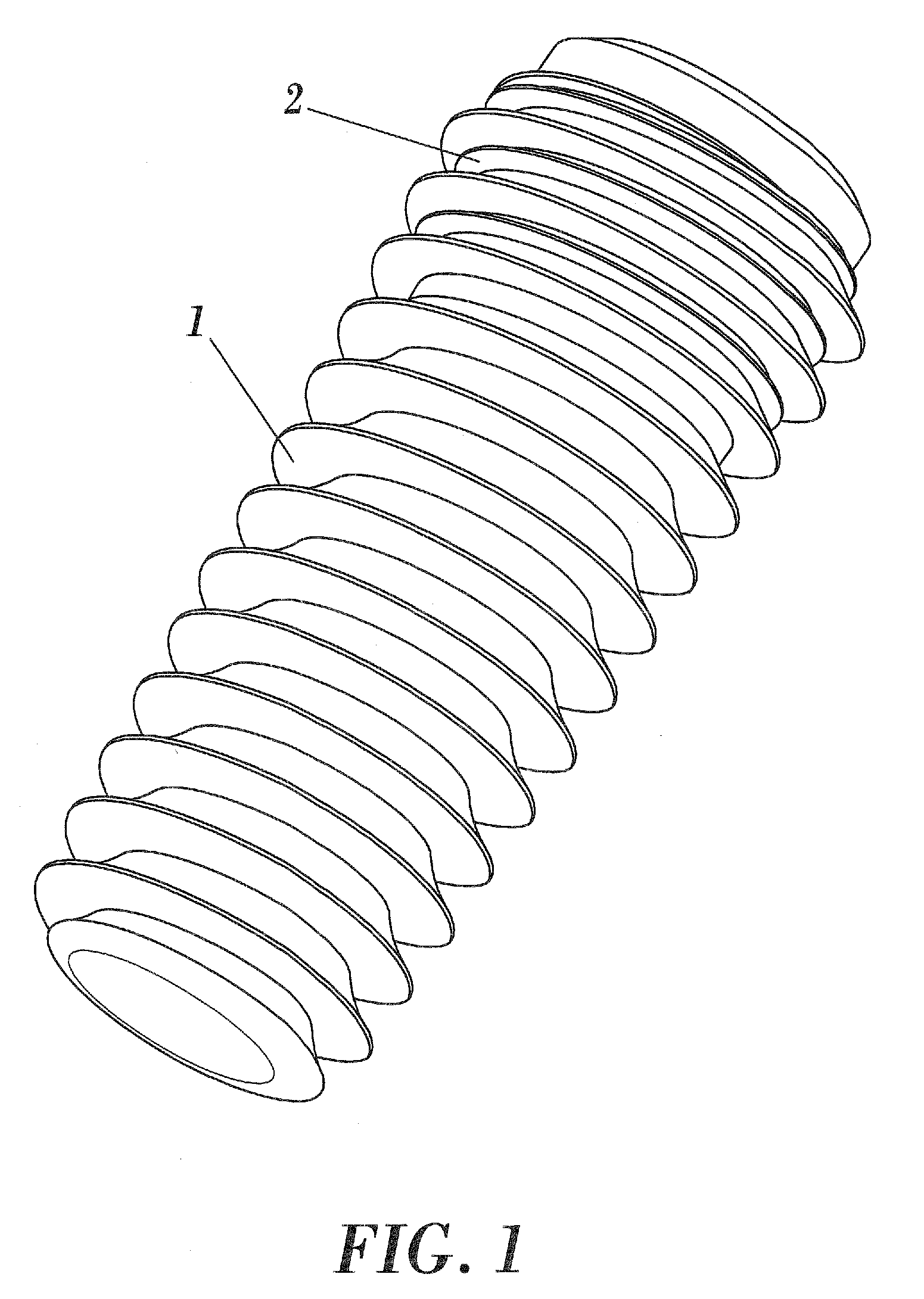
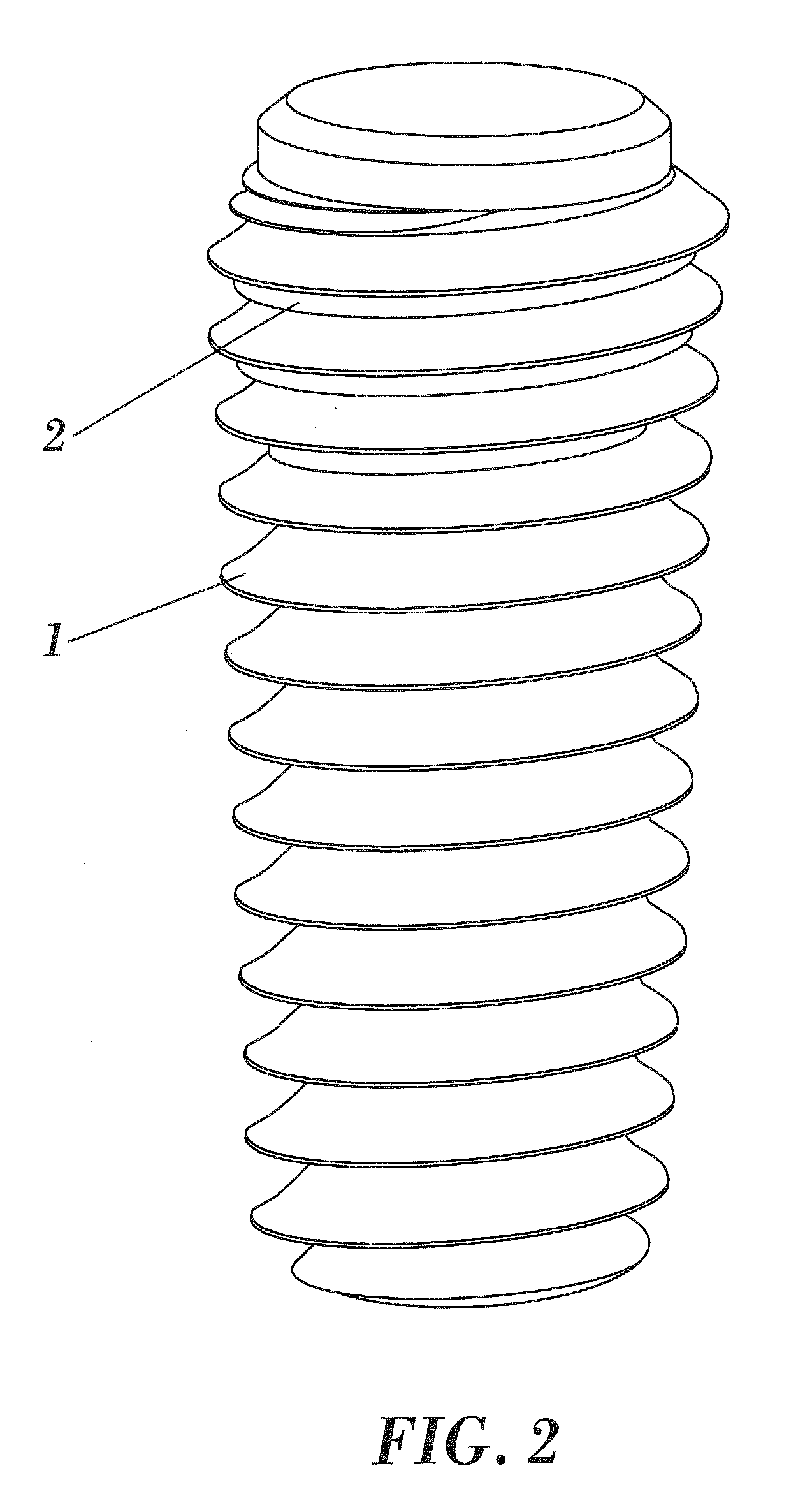
Examples
Embodiment Construction
[0012]The post-extraction implant of the invention described below solves the previously mentioned drawbacks because it provides a high primary and secondary stability, generally improving the anchorage to the bone thereof and providing a suitable response to all the requirements demanded for it in each of the steps of its implantation, furthermore being able to be implanted in conditions of little available bone structure and / or considerable closeness of the adjacent teeth.
[0013]To that end, the threaded implant of the invention is structured from a body with a general conical geometry in the upper area of which with a larger diameter there is defined a head allowing its use after the extraction, i.e., allowing its insertion in the space left in the bone by the root of a recently extracted tooth.
[0014]Furthermore, as an essential element, the implant of the invention has its entire length, also including its upper area or head, threaded, which allows said implant to be screwed not ...
PUM
 Login to View More
 Abstract
Description
Claims
Application Information
 Login to View More