
Methods and Devices for Assisting Birth
a technology of assisting devices and abdominal muscles, applied in the field of assisting birth, can solve the problems of patient's inability to fully control her legs, unplanned cesarean section or vacuum extraction, and device placement that may not provide an efficient position for utilizing correct abdominal muscles
- Summary
- Abstract
- Description
- Claims
- Application Information
AI Technical Summary
Benefits of technology
Problems solved by technology
Method used
Image

Examples
Embodiment Construction
[0037]Embodiments of the invention include a device to provide an effective body position during the second stage of labor. The device utilizes specific muscles to increase effective pushing strength during labor, and thus reducing labor time. The device can also be used for low impact exercises that target the abdominal muscles used in the birthing process.
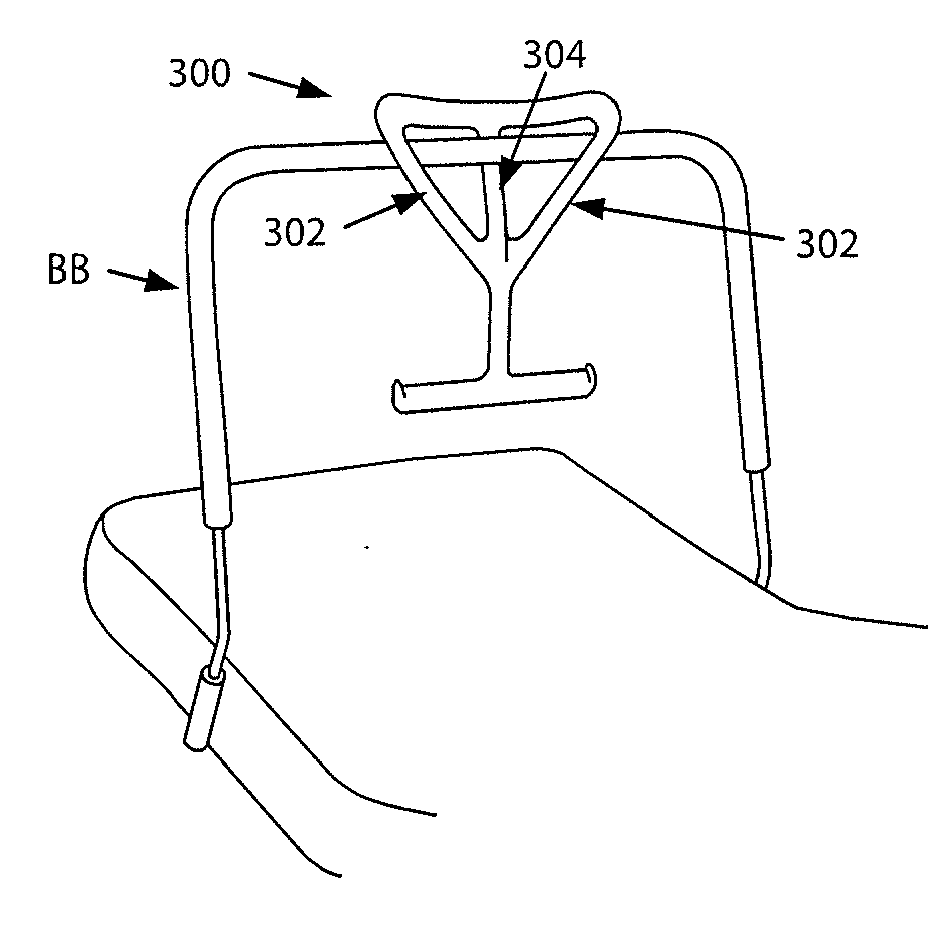
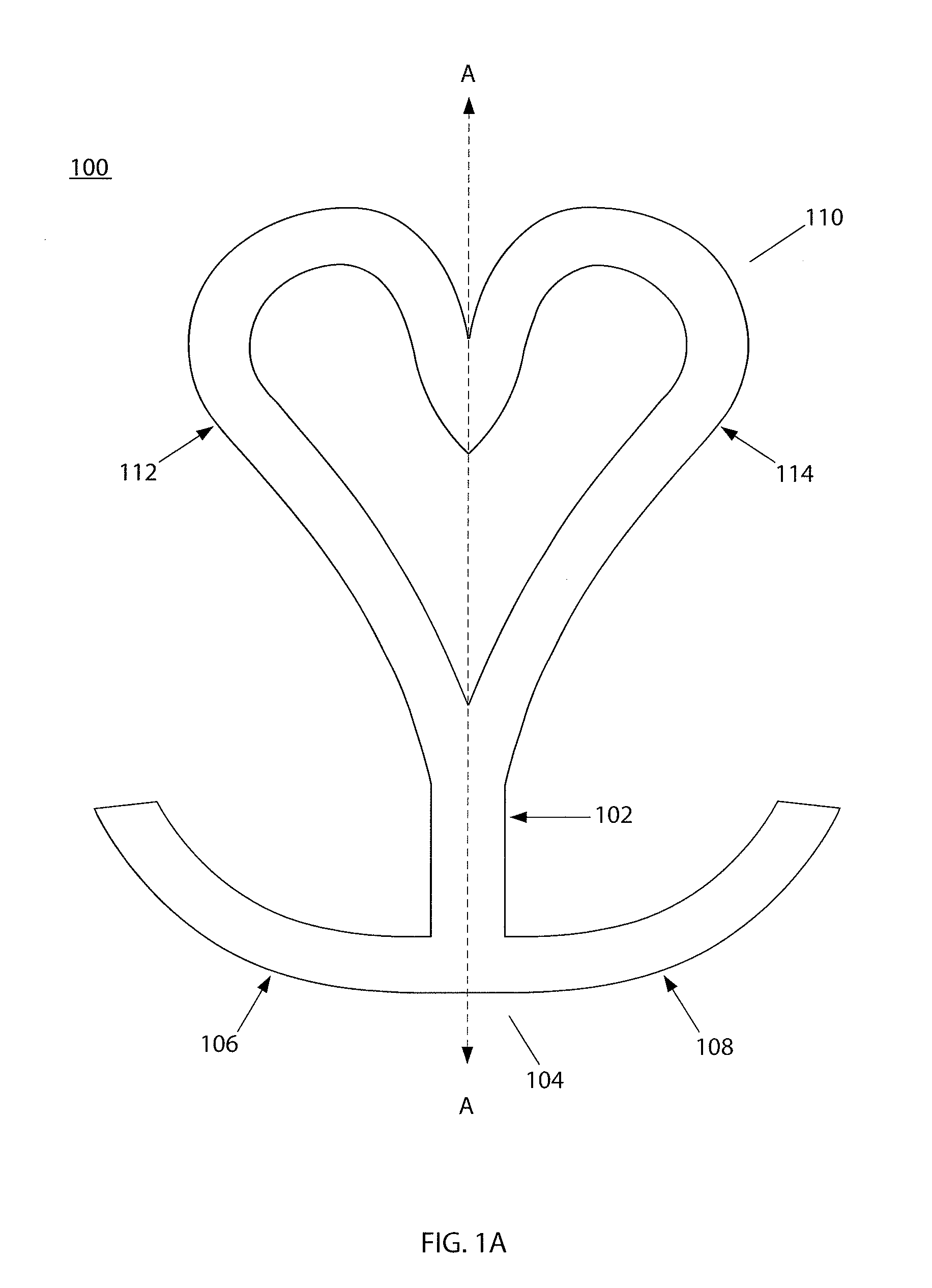
[0038]The device is made of flexible and elastic polymer (e.g., rubber) that stretches during use. The device includes a non-enclosed handle bar for grasping by a pregnant patient. A center portion extends from the handle bar to an enclosed loop, which can be used for anchoring the device to a non-moveable object (e.g., a bed, squatting bar), or for grasping by another person.
[0039]In use, a patient would be in a semi to high-fowlers position with her feet placed on a squatting bar or stirrups. The patient grasps the device at the handle bar, with her arms fully extended, and with the device extending between her legs at a downwa...
PUM
 Login to View More
 Abstract
Description
Claims
Application Information
 Login to View More