
Method of using a surgical tissue retractor
a tissue retractor and tissue technology, applied in the field of surgery, can solve the problems of large aperture, long healing time, and large incision size, and achieve the effect of easy return to the initial short length, excellent field of view, and ample spa
- Summary
- Abstract
- Description
- Claims
- Application Information
AI Technical Summary
Benefits of technology
Problems solved by technology
Method used
Image

Examples
Embodiment Construction
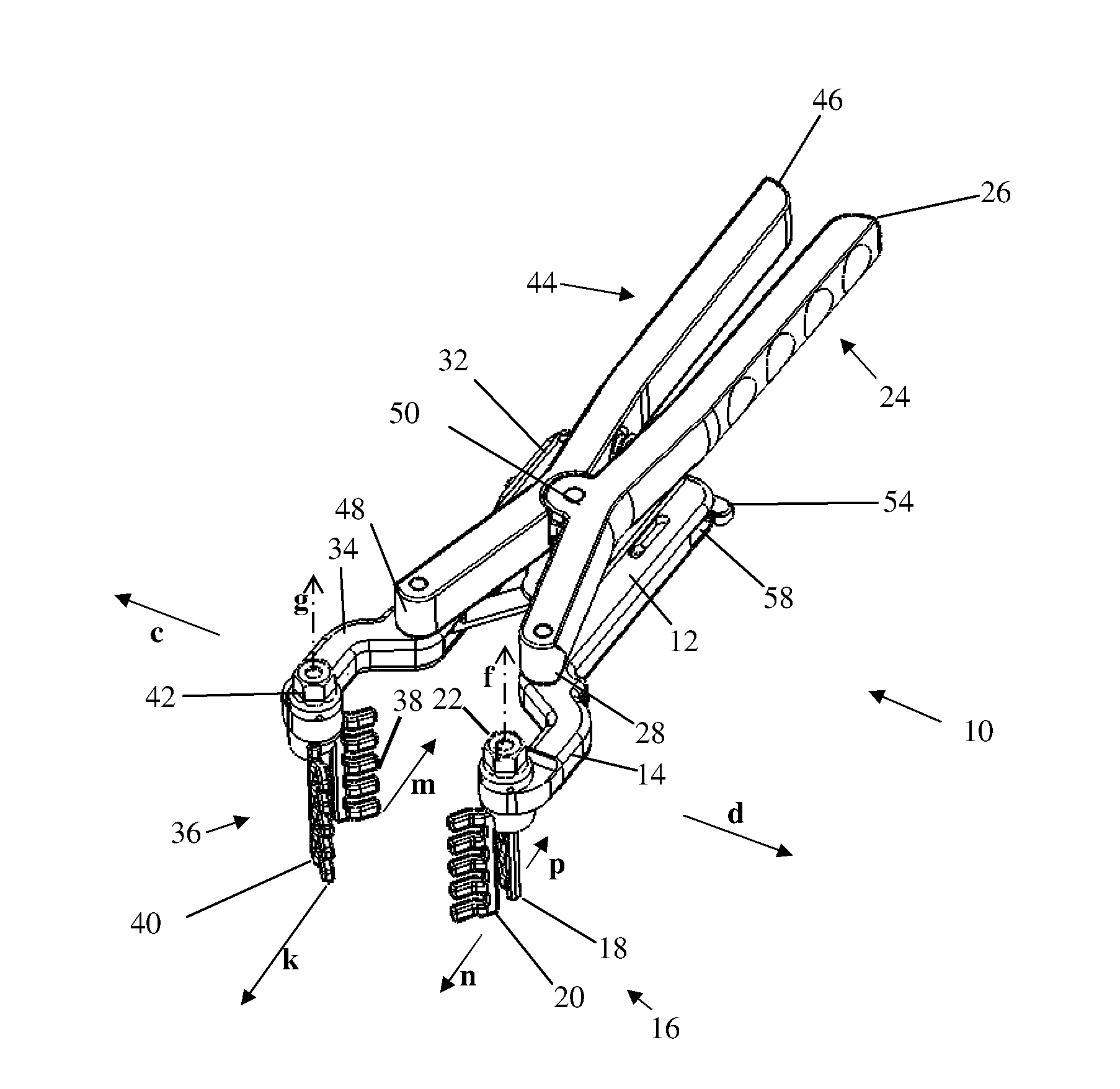
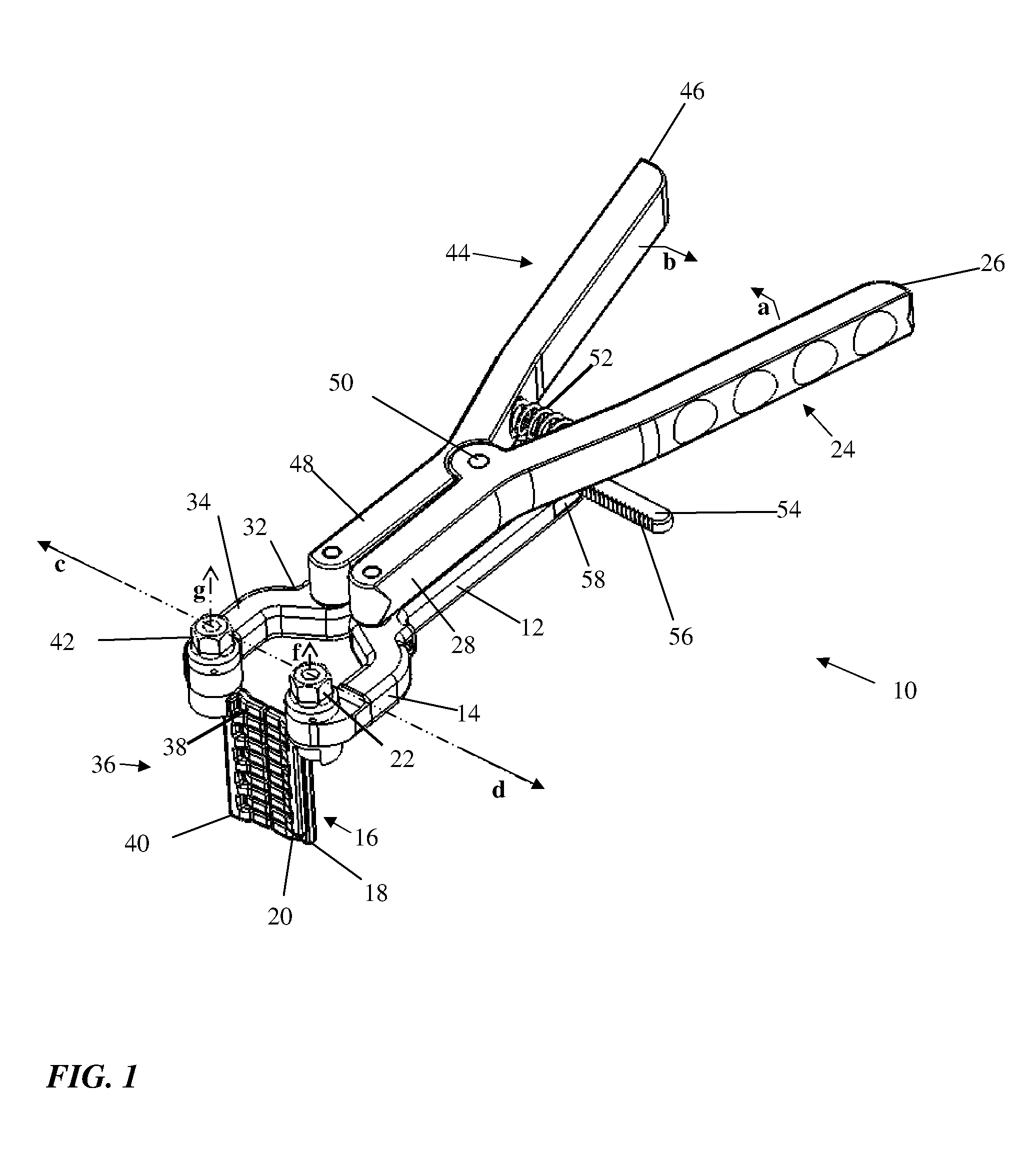
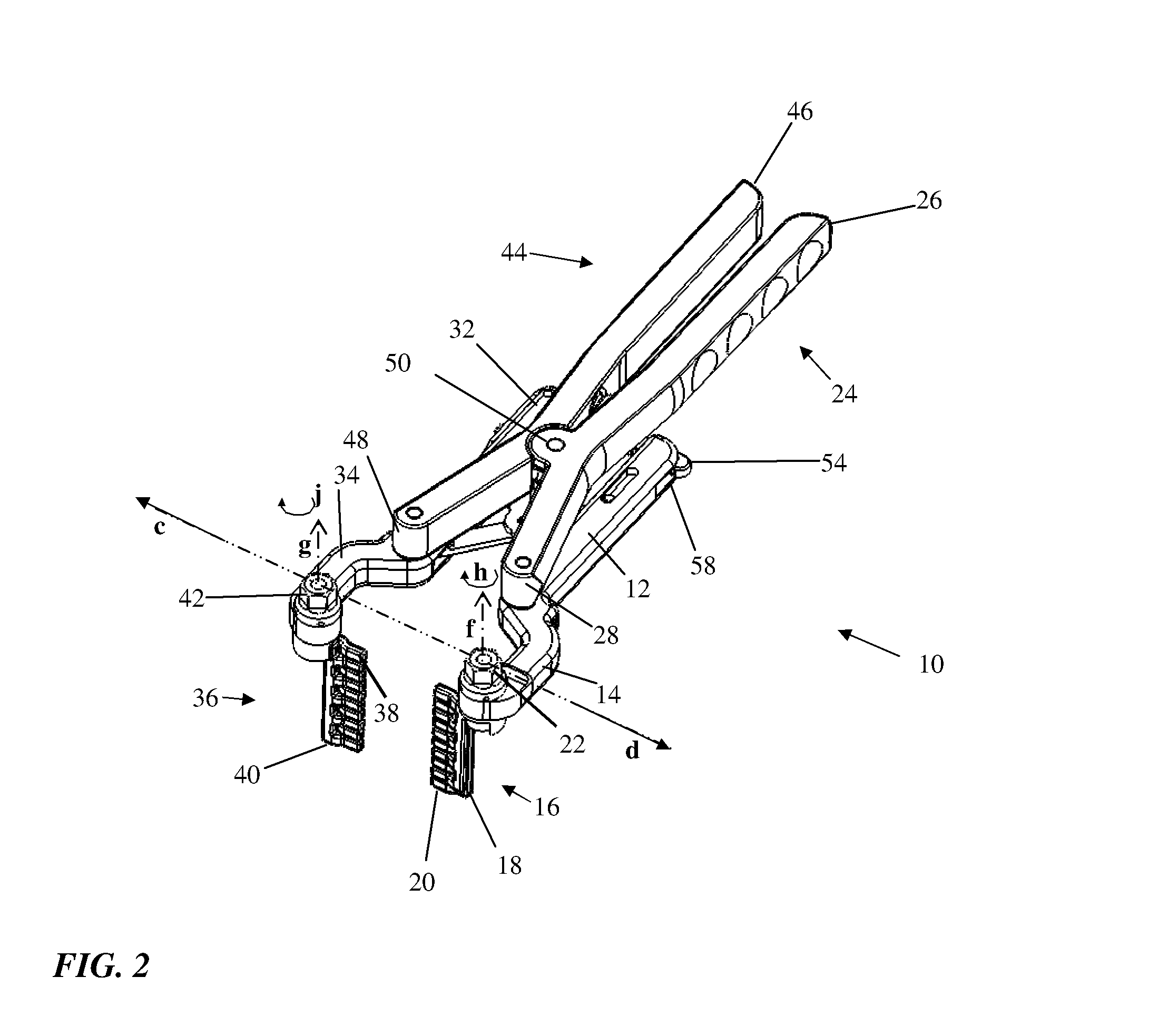
[0029]The retractor of the invention provides advantages over the prior art retractors comprising a set of blades and an actuator, such as a set of scissor arms. The retractor of the invention allows the person skilled in the art to insert a relatively compact set of retractor blades into an incision having a short length. In some embodiments, the compact set of retractor blades are of such a size that they can be inserted within the incision so that they are snugly embraced by the side walls of the incision. Activation of an actuator causes the blades to move apart in a direction that is essentially parallel to the length of the incision. This causes the tissue to stretch in one direction, creating an opening having a length in that direction that is substantially longer than the incision. Once the retractor is opened in the first direction, the actuator may be locked open. Then a pair of adjusters on the blade assemblies may be manipulated to open the blade assemblies, thus pullin...
PUM
 Login to View More
 Abstract
Description
Claims
Application Information
 Login to View More