Coaxial Coil Lock

US20130023923A1Active Publication Date: 2013-01-24TYCO HEALTHCARE GRP LP
6 Cites 43 Cited by

Patent Information

Authority / Receiving Office
US · United States
Current Assignee / Owner
Publication Date
2013-01-24

Smart Images

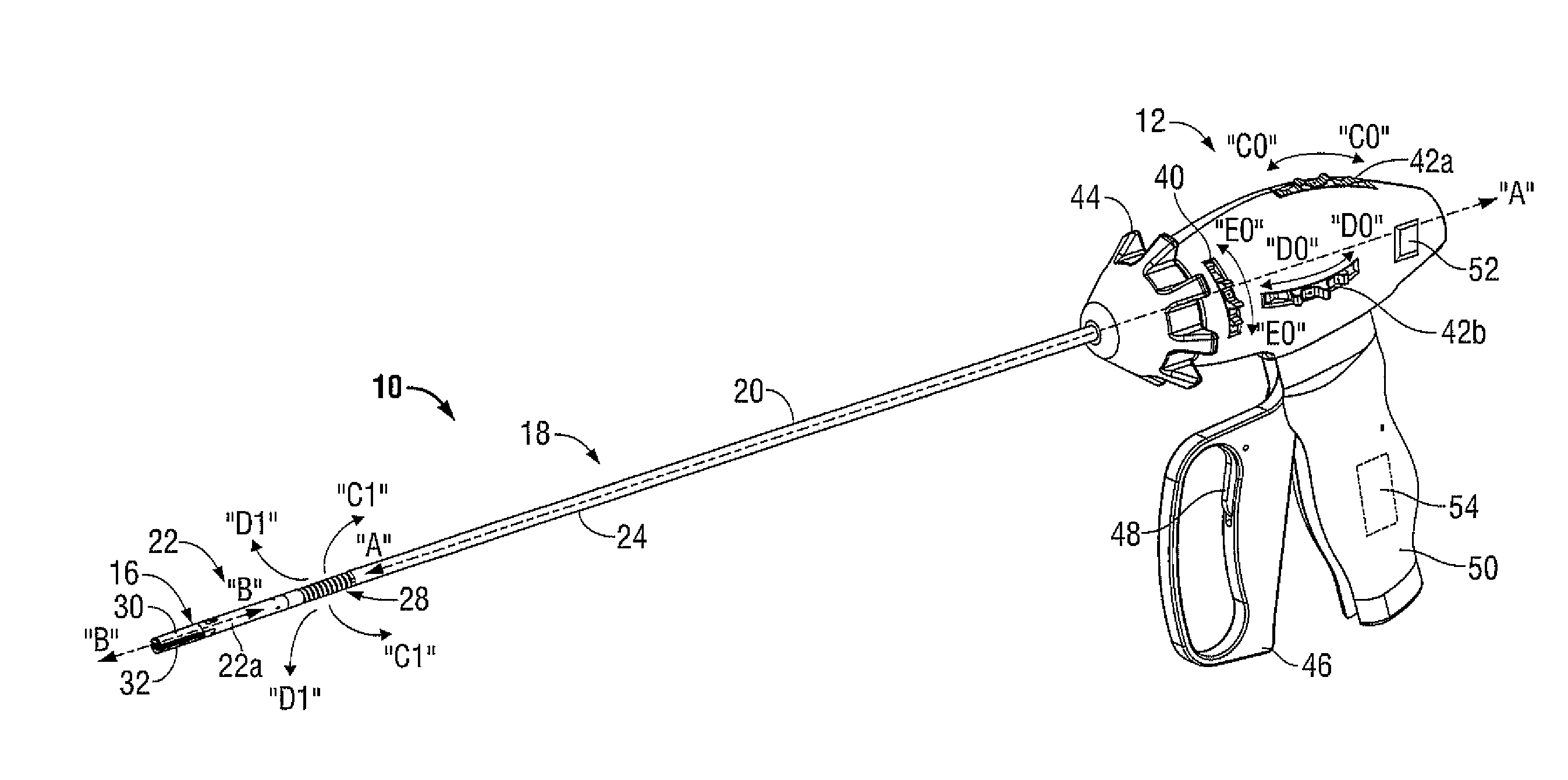
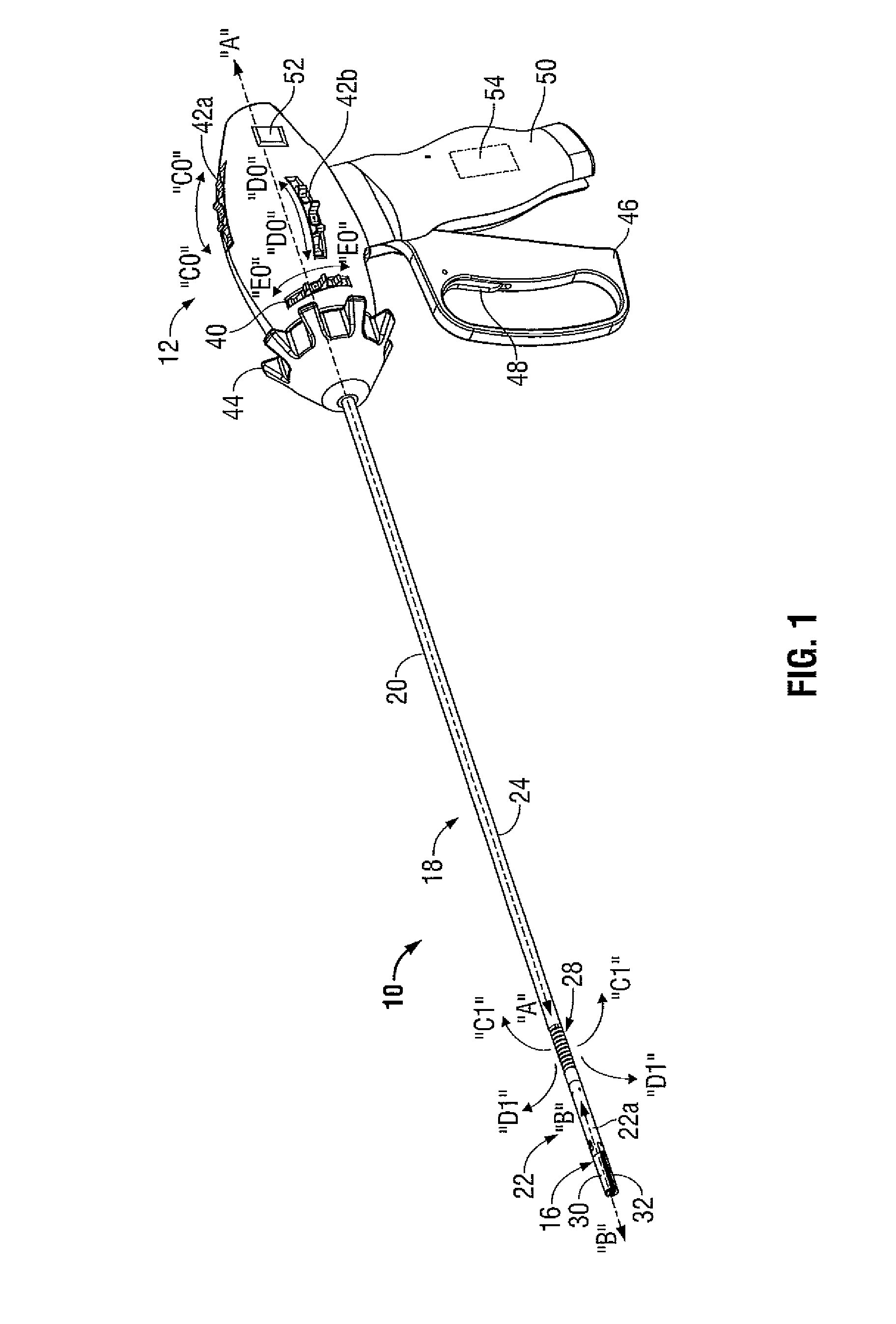
  • Figure 1
    Figure 1
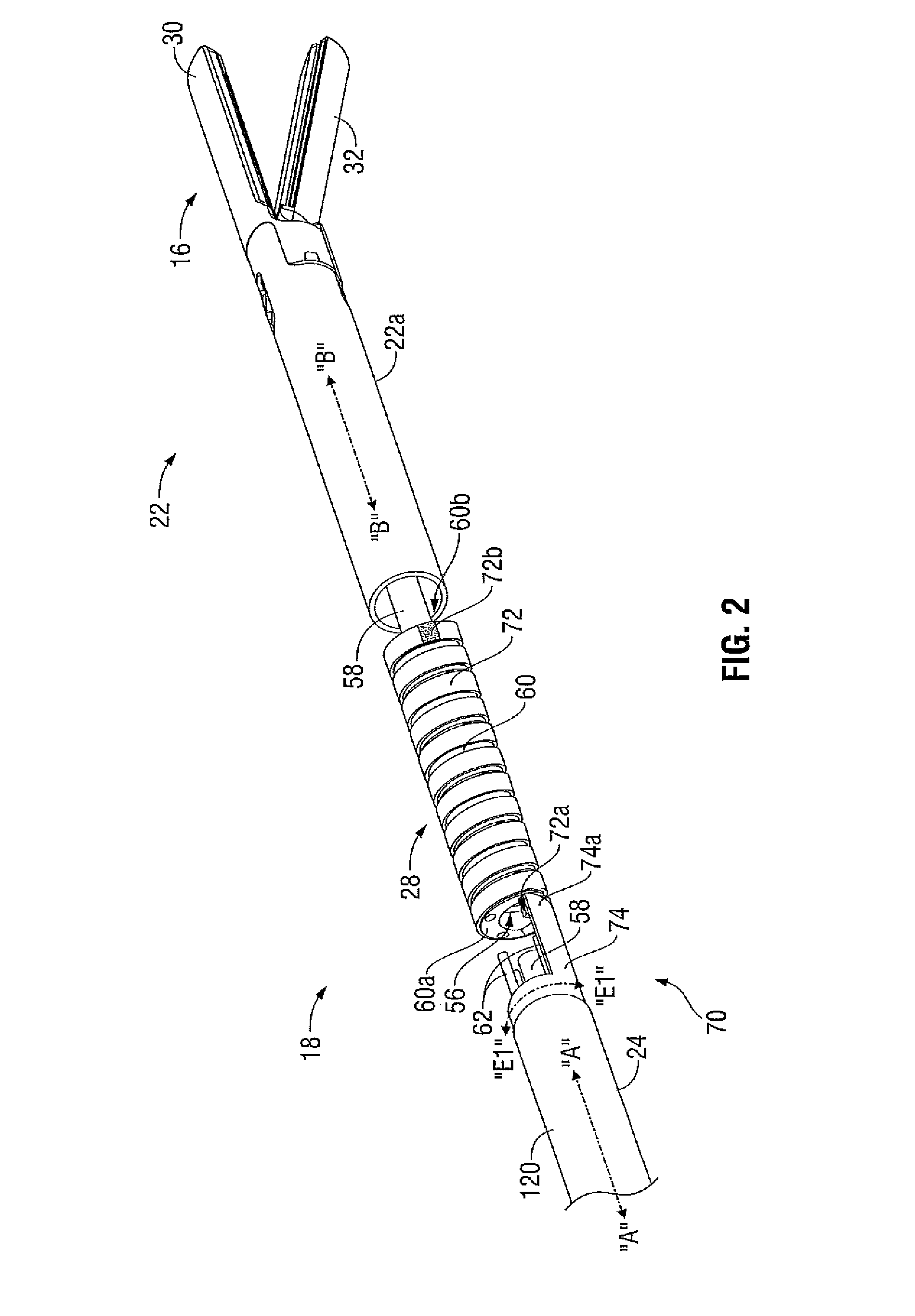
  • Figure 2
    Figure 2
  • Figure 3
    Figure 3
Patent Text Reader

Abstract

A surgical instrument includes a housing and an elongated shaft extending distally therefrom. The elongated shaft includes a proximal portion, a distal portion and a flexible portion supported therebetween. The flexible portion permits pivotal movement of the distal portion of the elongated shaft and an end effector supported thereon. A locking mechanism is operatively associated with the flexible portion of the elongated shaft to selectively impede pivotal motion of the distal portion. The locking mechanism includes a locking coil disposed about an axis defined by the flexible portion of the elongated shaft. A distal end of the locking coil is coupled to the distal portion of the elongated shaft, and a proximal end of the locking coil is rotatable about the longitudinal axis to laterally approximate the locking coil to flexible portion, and thus frictionally engage the flexible portion of the elongated shaft to selectively impede articulating motion thereof.
Need to check novelty before this filing date? Find Prior Art

Description

BACKGROUND

[0001] 1. Technical Field

[0002] The present disclosure relates to a surgical apparatus for laparoscopic and endoscopic procedures. In particular, the disclosure relates to a surgical apparatus having a locking mechanism for maintaining a remotely-actuated component of the instrument at a particular position or orientation.

[0003] 2. Background of Related Art

[0004] Typically in a laparoscopic, endoscopic, or other minimally invasive surgical procedure, a small incision or puncture is made in a patient's body. A cannula is then inserted into a body cavity through the incision, which provides a passageway for inserting various surgical devices such as scissors, dissectors, retractors, or similar instruments. To facilitate operability through the cannula, instruments adapted for laparoscopic or endoscopic surgery typically include a relatively narrow, elongated shaft extending distally from a housing, and supporting an end effector at its distal end. Arranging the shaft of such an ...

Examples

Embodiment Construction

[0021]Referring initially to FIG. 1, a steerable endoscopic instrument 10 is depicted in a “home” or neutral configuration. Instrument 10 includes a housing 12 near a proximal end, an end effector 16 near a distal end and an elongated shaft 18 therebetween. Elongated shaft 18 includes a proximal portion 20 extending distally from the housing 12 and an articulating distal portion 22 supporting the end effector 16. The articulating distal portion 22 includes end effector support tube 22a defining an outer surface of the distal portion 22. The proximal portion 20 defines a longitudinal axis A-A, and is sufficiently long to position the end effector 16 through a cannula (not shown) at an operative site. An outer tubular member 24 is provided over the proximal portion 20, and together with the end effector support tube 22a, provides protection and support to the interior mechanisms therein (see, e.g., FIG. 2). At least one joint or flexible portion 28 is established between the proximal ...