Use of cannabidiol in the treatment of nocturnal snoring

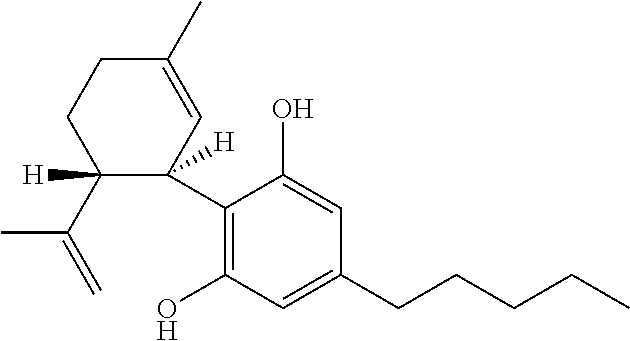
a technology of cannabidiol and snoring, which is applied in the direction of nervous disorders, drug compositions, medical preparations, etc., can solve the problems of muscle weakening, snoring getting worse, and changing the air pressure of the airway,

a technology of cannabidiol and snoring, which is applied in the direction of nervous disorders, drug compositions, medical preparations, etc., can solve the problems of muscle weakening, snoring getting worse, and changing the air pressure of the airway,

US20170239193A1Inactive Publication Date: 2017-08-24GW RES LTD

Image

Smart Image Click on the blue labels to locate them in the text.
Viewing Examples
Smart Image
  • Use of cannabidiol in the treatment of nocturnal snoring
  • Use of cannabidiol in the treatment of nocturnal snoring
  • Use of cannabidiol in the treatment of nocturnal snoring

Examples

Experimental program
Comparison scheme
Effect test

example 1

Efficacy of Cannabidiol Reducing Seizure Frequency in Children and Young Adults with Doose Syndrome

Materials and Methods

[0056]Of 137 children and young adults with severe, childhood onset treatment-resistant epilepsy (TRE), six suffered from Doose Syndrome. These subjects were tested with a highly purified extract of cannabidiol (CBD) obtained from a cannabis plant. The participants in the study were part of an expanded access compassionate use program for CBD.

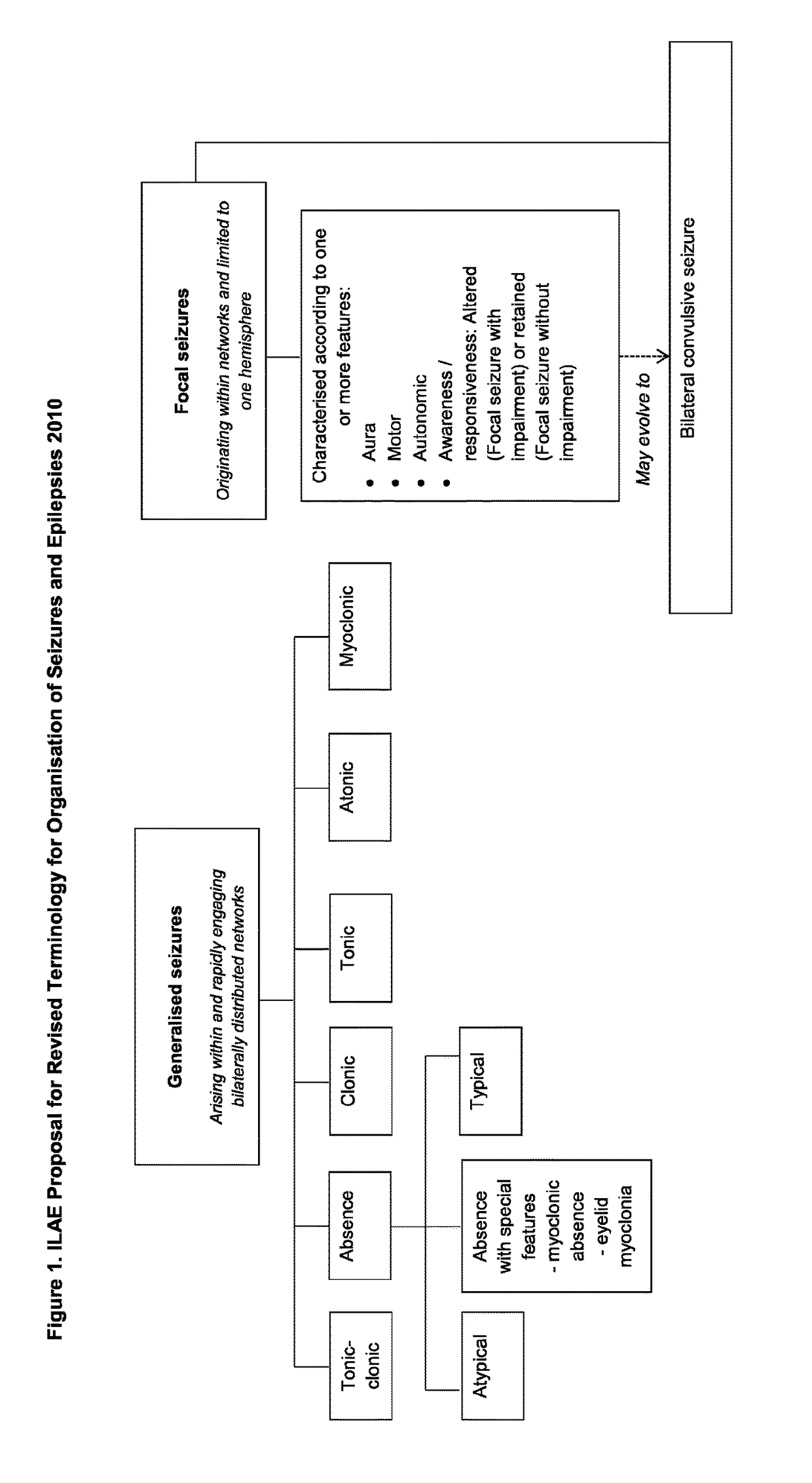
[0057]All of these patients with a diagnosis of Doose Syndrome presented with multiple seizure types which included tonic-clonic seizures; myoclonic seizures; atonic seizures; absence seizures; myoclonic-absence seizures; and tonic seizures. In addition nocturnal snoring was encountered by one of the patients in the study.

[0058]Both patients entered a baseline period of 4 weeks when parents / caregivers kept prospective seizure diaries, noting all countable motor seizure types.

[0059]The patients then received a highly purified C...

the structure of the environmentally friendly knitted fabric provided by the present invention; figure 2 Flow chart of the yarn wrapping machine for environmentally friendly knitted fabrics and storage devices; image 3 Is the parameter map of the yarn covering machine
Login to View More

PUM

PropertyMeasurementUnit
Fractionaaaaaaaaaa
Fractionaaaaaaaaaa
Fractionaaaaaaaaaa
Login to View More

Abstract

The present disclosure relates to the use of cannabidiol (CBD) for the treatment of of nocturnal snoring. In particular the CBD appears particularly effective in treating nocturnal snoring in children and young adults with epilepsy the disclosure further relates to the use of CBD in combination with one or more anti-epileptic drugs (AEDs).

Description

[0001]The present invention relates to the use of cannabidiol (CBD) for the treatment of nocturnal snoring. In one embodiment the patients suffering nocturnal snoring are children and young adults. CBD appears particularly effective in treating nocturnal snoring in patients with epilepsy.[0002]Preferably the CBD used is in the form of a highly purified extract of cannabis such that the CBD is present at greater than 98% of the total extract (w / w) and the other components of the extract are characterised. In particular the cannabinoid tetrahydrocannabinol (THC) has been substantially removed, to a level of not more than 0.15% (w / w) and the propyl analogue of CBD, cannabidivarin, (CBDV) is present in amounts of up to 1%. Alternatively, the CBD may be a synthetically produced CBD.BACKGROUND TO THE INVENTION[0003]Nocturnal snoring is caused by the vibration of the soft tissue in the head and neck as a person breathes in. It can affect many areas of the head and neck including the nasal ...

Claims

the structure of the environmentally friendly knitted fabric provided by the present invention; figure 2 Flow chart of the yarn wrapping machine for environmentally friendly knitted fabrics and storage devices; image 3 Is the parameter map of the yarn covering machine
Login to View More

Application Information

Patent Timeline
24 Aug 2017
Publication
US20170239193A1
IPC
A61K31/05
CPC
A61K31/05; A61K36/185; A61P25/08; A61K45/06; A61K2300/00; A61K31/352
Inventors
GUY, GEOFFREY; WRIGHT, STEPHEN