
Absorbent structures with high strength and low md stretch
- Summary
- Abstract
- Description
- Claims
- Application Information
AI Technical Summary
Benefits of technology
Problems solved by technology
Method used
Image

Examples
example 1
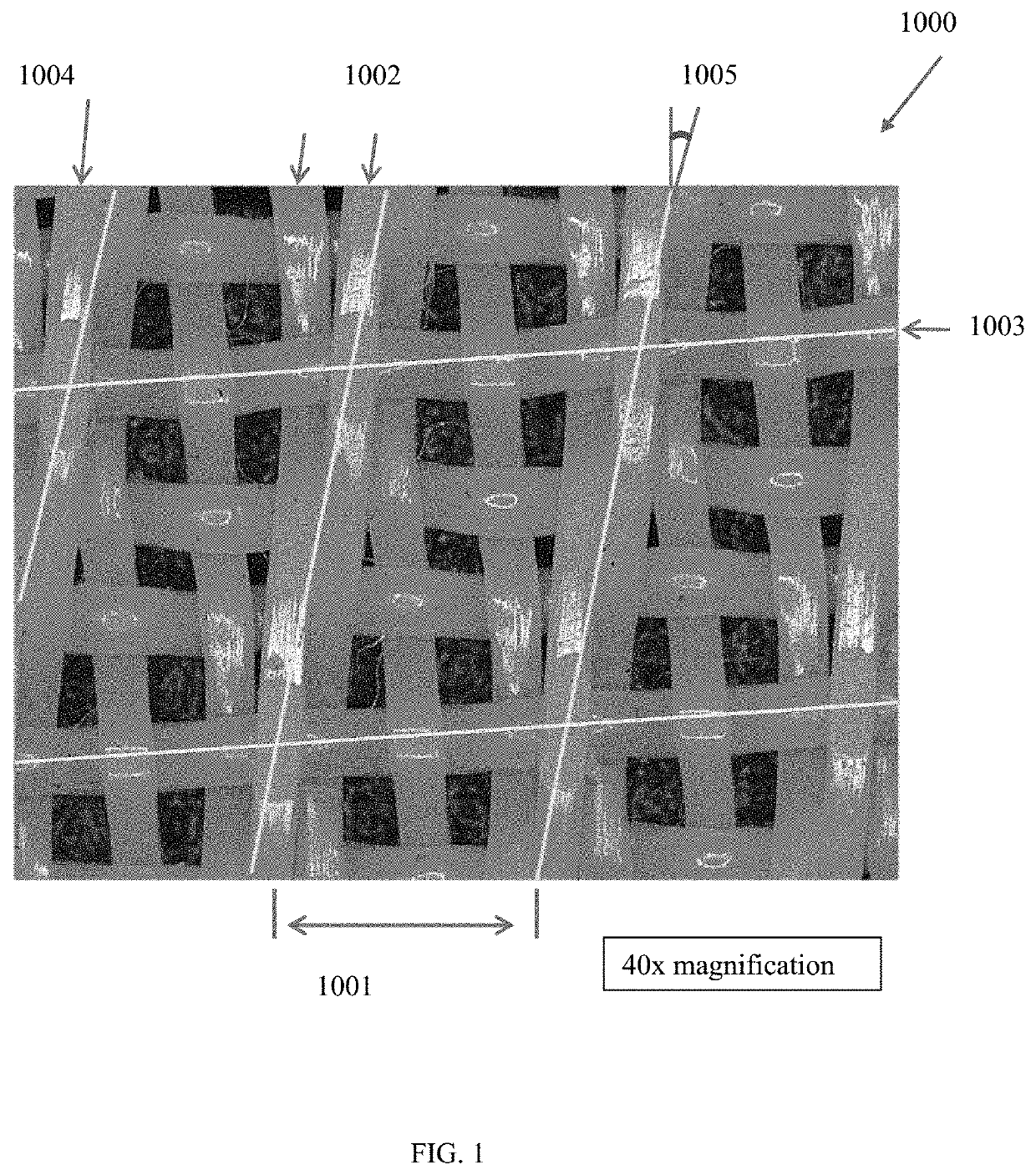
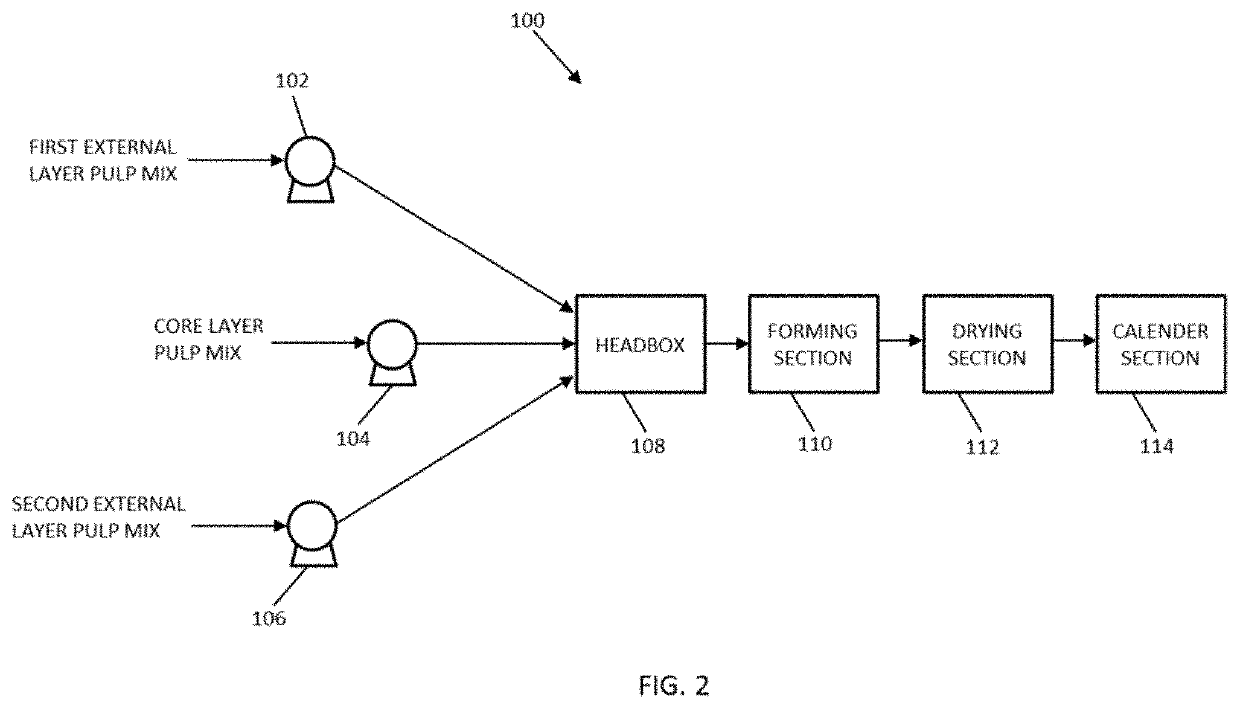
[0188]Paper towel made on a wet-laid asset with a three layer headbox was produced using the through air drying method. The imprinting or structuring fabric had a warp monofilament of 0.35 mm diameter with a weft monofilament of 0.50 mm diameter with the weave pattern described herein. The mesh was 16 filaments / cm while the count was 12 filaments / cm. The Air Permeability was 650 cfm, 1.14 mm in caliper, with a knuckle surface that was sanded to impart 16% contact area with the Yankee dryer. The flow to each layer of the headbox was about 33% of the total sheet. The three layers of the finished tissue from top to bottom were labeled as air, core and dry. The air layer is the outer layer that is placed on the TAD fabric, the dry layer is the outer layer that is closest to the surface of the Yankee dryer and the core is the center section of the tissue. The tissue was produced with 50% NBSK and 50% eucalyptus in the Yankee layer with 80% NBSK, 20% eucalyptus in the core and air layer. ...
example 2
[0190]Paper towel made on a wet-laid asset with a three layer headbox was produced using the through air drying method. The imprinting or structuring fabric used a weave pattern described herein, 12.0 yarn / cm Mesh and Count, 0.35 mm diameter warp monofilament, 0.50 mm diameter weft monofilament, 1.29 mm caliper, 670 cfm and a knuckle surface that was sanded to impart 12% contact area with the Yankee dryer. The flow to each layer of the headbox was about 33% of the total sheet. The three layers of the finished tissue from top to bottom were labeled as air, core and dry. The air layer is the outer layer that is placed on the TAD fabric, the dry layer is the outer layer that is closest to the surface of the Yankee dryer and the core is the center section of the tissue. The tissue was produced with 16.7% eucalyptus, 50% northern bleached softwood kraft (NBSK) fibers, and 33% re-pulped “broke” fibers which are a combination of eucalyptus and NBSK fibers reused from off-grade towel parent...
PUM
| Property | Measurement | Unit |
|---|---|---|
| Length | aaaaa | aaaaa |
| Angle | aaaaa | aaaaa |
| Angle | aaaaa | aaaaa |
Abstract
Description
Claims
Application Information
 Login to View More