Braking system for a vehicle

US6019438AInactive Publication Date: 2000-02-01DENSO CORP
15 Cites 18 Cited by

Patent Information

Authority / Receiving Office
US · United States
Current Assignee / Owner
Publication Date
2000-02-01
Estimated Expiration
Not applicable · inactive patent

Smart Images

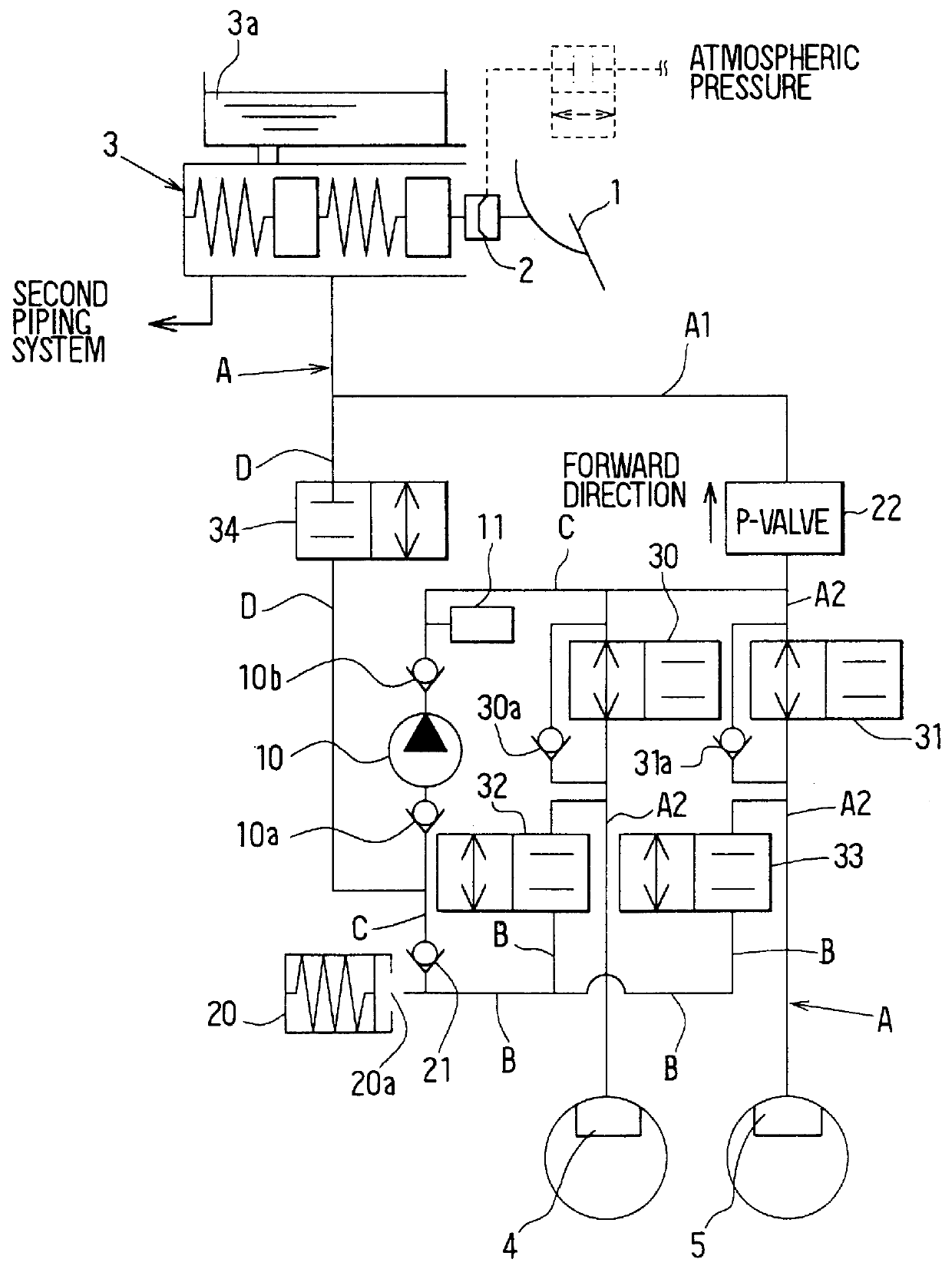
  • Figure 1
    Figure 1
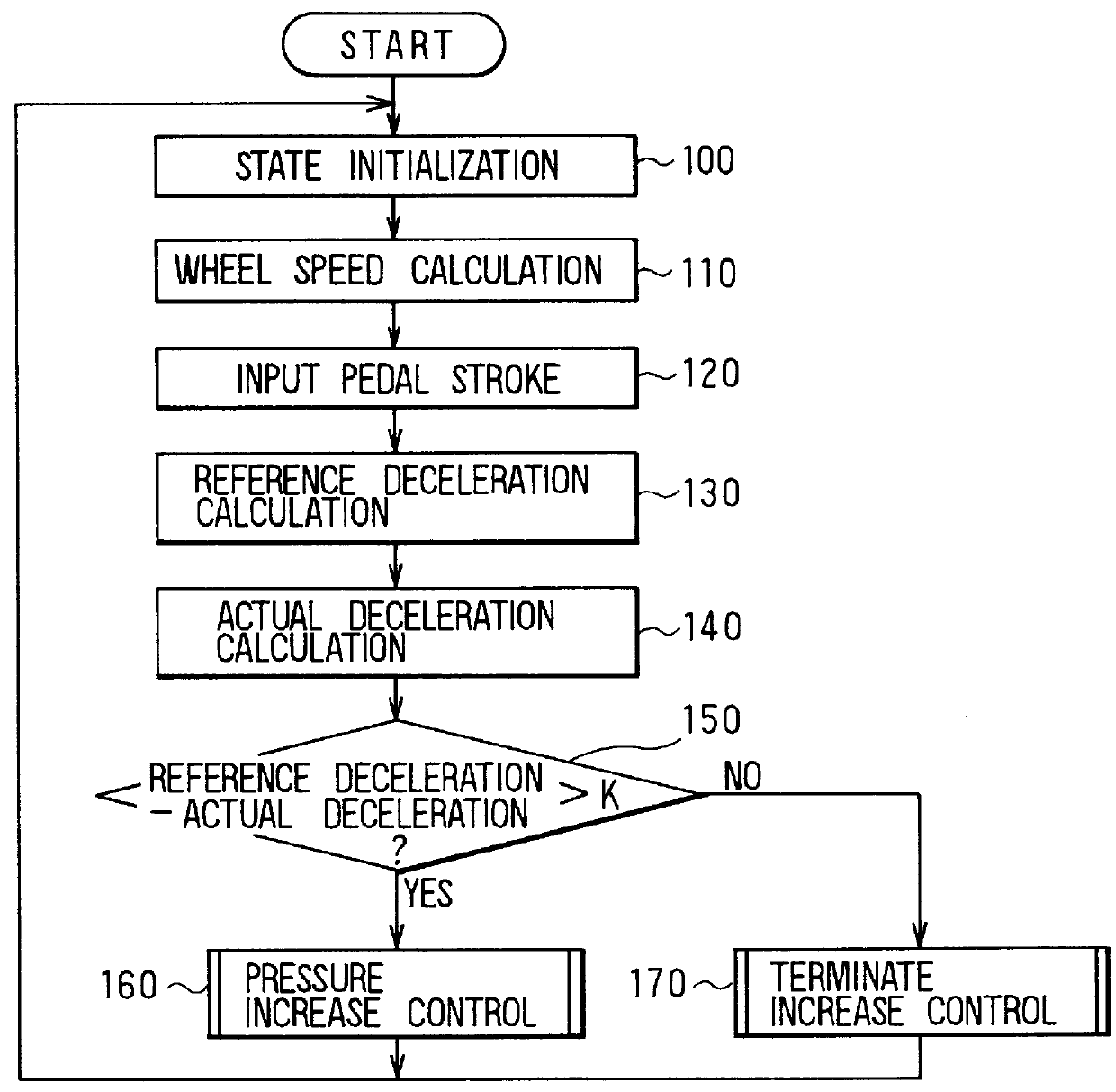
  • Figure 2
    Figure 2
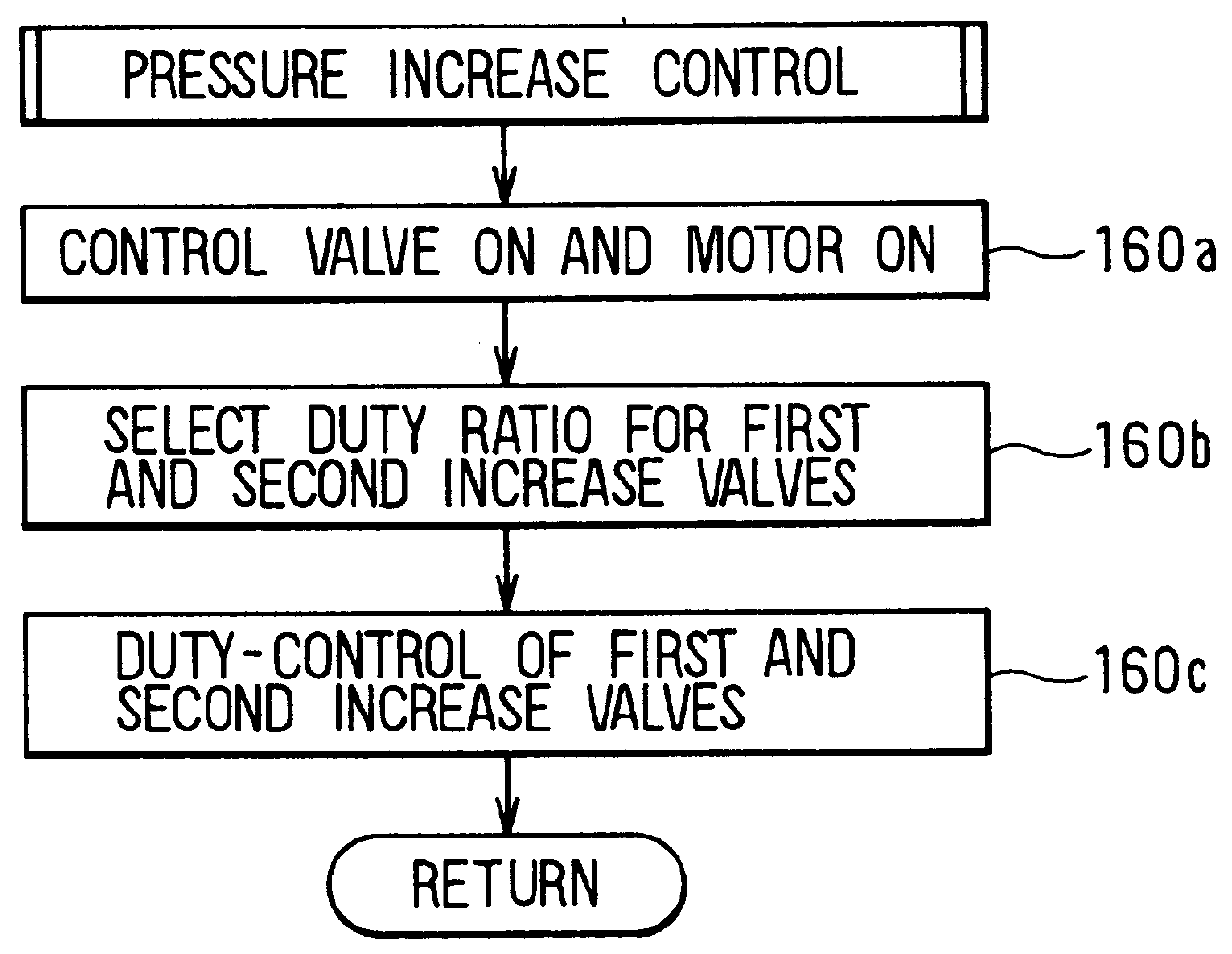
  • Figure 3
    Figure 3
Patent Text Reader

Abstract

A vehicle braking system can, for example when the performance of a booster has deteriorated, reduce a brake pedal depressing force required to obtain a sufficient braking force and thereby lighten the burden on the driver. A booster and a master cylinder generate a brake fluid pressure in correspondence with an operation of a brake pedal. Wheel cylinders connected to the master cylinder generate wheel braking forces in wheels of the vehicle. It is determined if a vehicle braking state corresponds to a state of operation of the brake pedal, and when it is determined that the vehicle braking state does not correspond to the brake pedal operation brake fluid pressure in the wheel cylinders is increased with a pump. In this way, it is possible to obtain a predetermined braking force corresponding to the brake pedal operation at all times.
Need to check novelty before this filing date? Find Prior Art

Description

This application is based upon and claims the benefit of priority of the prior Japanese Patent Applications No. H.8-239595 filed Sep. 10, 1996, No. H.9-24146 filed Feb. 6, 1997, and No. H. 9-192933 filed Jul. 17, 1997, the contents of which are incorporated herein by reference.1. Field of the InventionThis invention relates to a braking system for a vehicle, and particularly to a braking system for a vehicle which adjusts a braking force of the vehicle when a high braking force is needed, for example, when the performance of a booster has deteriorated, when the vehicle is traveling downhill or when the vehicle is heavily loaded.2. Description of Related ArtConventionally, a vehicle braking system has been made up of a brake pedal, a booster, a master cylinder, wheel cylinders, and conduits carrying brake fluid. When applying a braking force to the vehicle, a driver depresses the brake pedal. That is, a depressing force applied to the brake pedal is boosted by the booster and transmi...

Examples

Embodiment Construction

[1] Although in the fourth preferred embodiment described above pressure increase control was carried out by the same processing as in the first preferred embodiment, alternatively pressure increase control may be carried out by the same processing as in the second and third preferred embodiments.

Also, in the first through third preferred embodiments, to prevent the fluid pressure in the conduit A2 from becoming excessive as a result of pressure increase control and prevent damage to the conduit A2, a two-position valve having a differential pressure regulating valve may be disposed in parallel with the proportioning control valve 22.

Also, although as shown in FIG. 1 a proportioning control valve 22 was used to carry out pressure increase control, alternatively this proportional control valve 22 may be dispensed with and just a two-position valve may be used instead. In this case, in place of the control valve 34 this two-position valve may be duty-controlled.

[2] The brake pedal ope...