
Apparatus and method for locating electronic job site plan features at a job site
a technology for job sites and features, applied in wave based measurement systems, speed measurement using gyroscopic effects, instruments, etc., can solve problems such as insufficient detail of excavation plans, human error in applying excavation plans to the ground at job sites, and job site feature characteristics
- Summary
- Abstract
- Description
- Claims
- Application Information
AI Technical Summary
Benefits of technology
Problems solved by technology
Method used
Image

Examples
Embodiment Construction
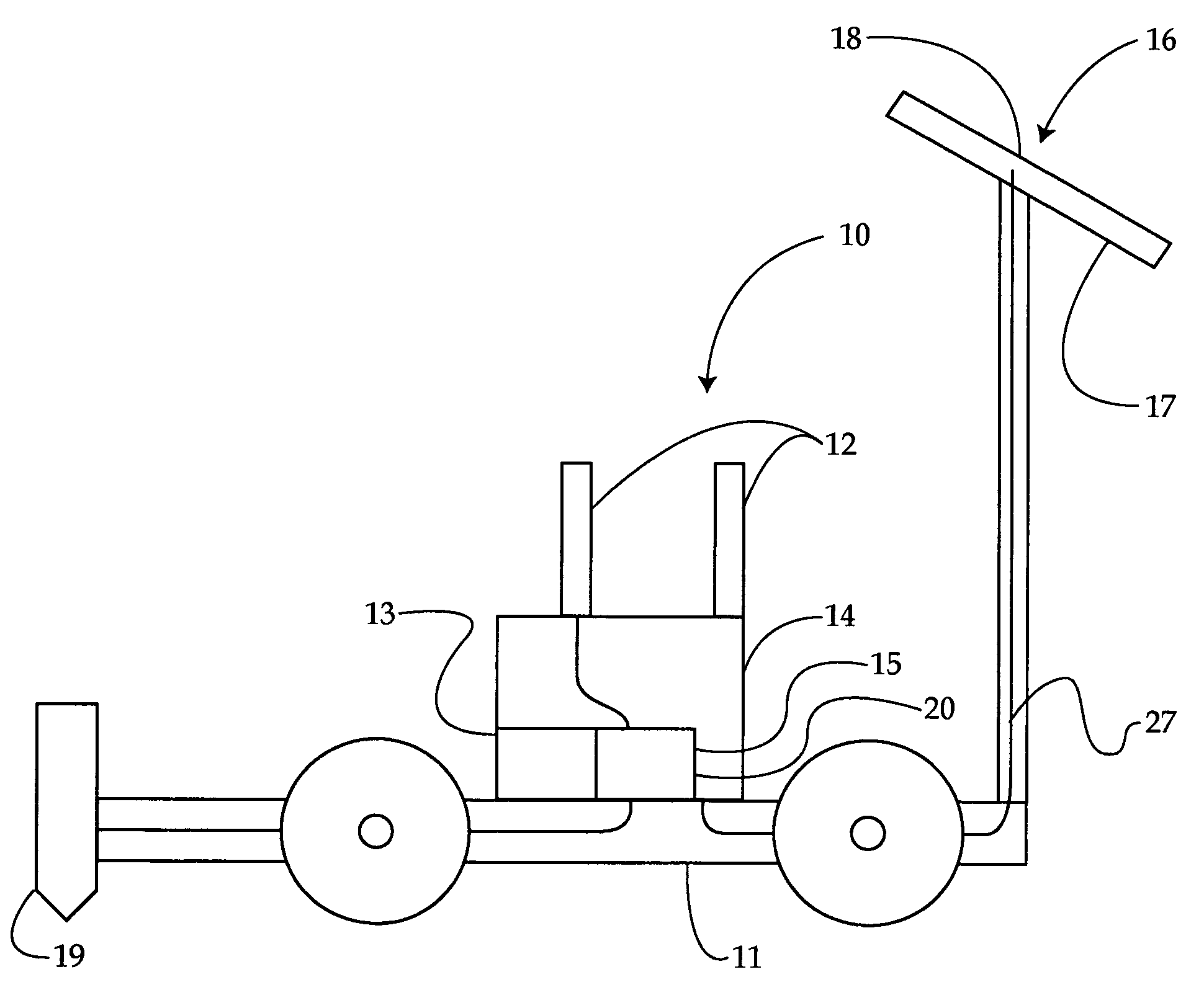
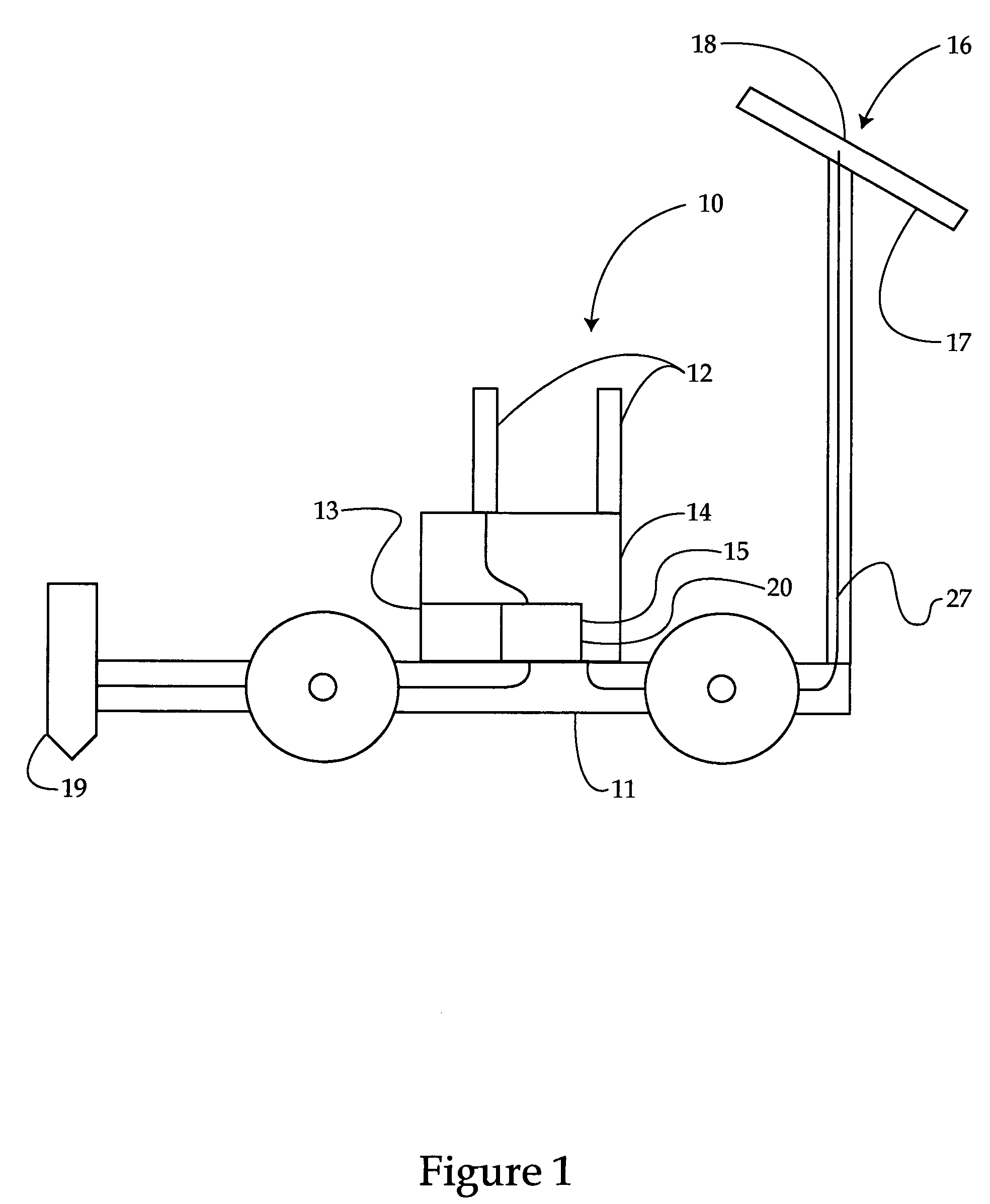
[0010]Referring to FIG. 1, there is shown a diagrammatic representation of a job site feature locating apparatus 10, according to the present invention. The locating apparatus 10 includes an apparatus body 11 to which a ground engaging component, illustrated as a set of wheels, is attached. However, the present disclosure contemplates the locating apparatus without wheels and being sufficiently sized to be carried by an operator. At least one location sensor 12 that is operable to sense an apparatus location 12a (referenced in FIG. 2) is attached the apparatus body 11. Preferably, there are, at least, two location sensors 12 so that the locating apparatus 10 can indicate both the apparatus position 12a and an apparatus orientation at the job site. Although the job site location sensors 12 can include any type of sensors that together are operable to sense the location and orientation of the apparatus 10, such as a positioning system used in conjunction with an electric compass, pref...
PUM
 Login to View More
 Abstract
Description
Claims
Application Information
 Login to View More