
Rough hew planer
a rough hewn and planer technology, applied in the direction of mechanical surface treatment, metal sawing apparatus, sawing apparatus, etc., can solve the problems of plurality of random hew or adz marks distributed across and along the log, less desirable techniques for some purchasers, and inability to preserve the look of rough hewn logs
- Summary
- Abstract
- Description
- Claims
- Application Information
AI Technical Summary
Benefits of technology
Problems solved by technology
Method used
Image

Examples
Embodiment Construction
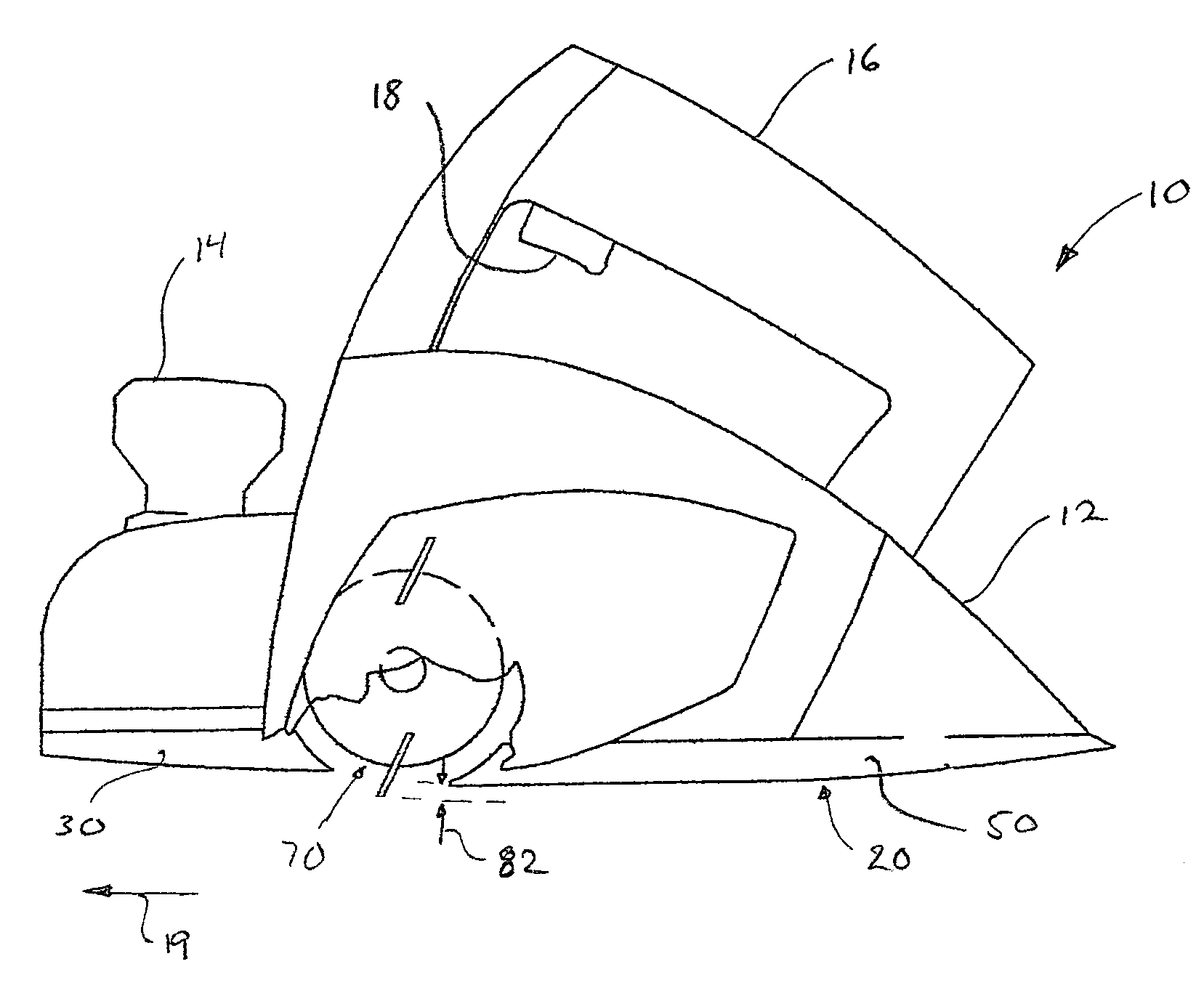
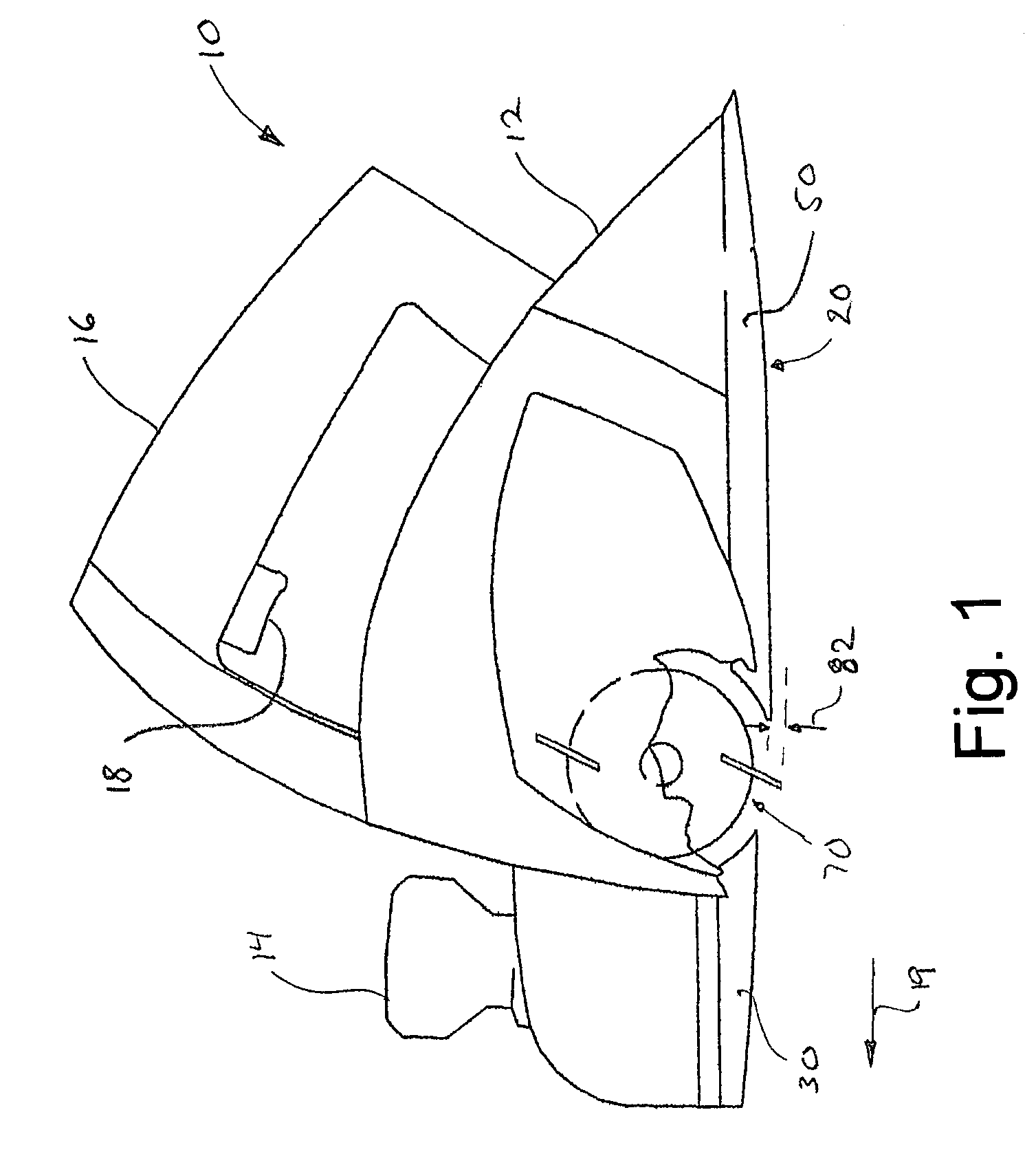
[0022]Referring to FIG. 1, an apparatus according to a first embodiment of the invention is shown generally at 10. The apparatus comprises a hand planer 12 having a curved bottom 20 and a rotatable transverse cutter rotor 70 therein. The hand planer 12 is of a conventional type and includes an electric motor (not shown) and first and second handles 14 and 16, respectively. The second handle includes a power button or trigger 18 for energizing the motor so as to rotate the cutter rotor 70. The hand planer 12 is translatable in a forward direction indicated generally at 19 so as to finish the surface of a wood workpiece.
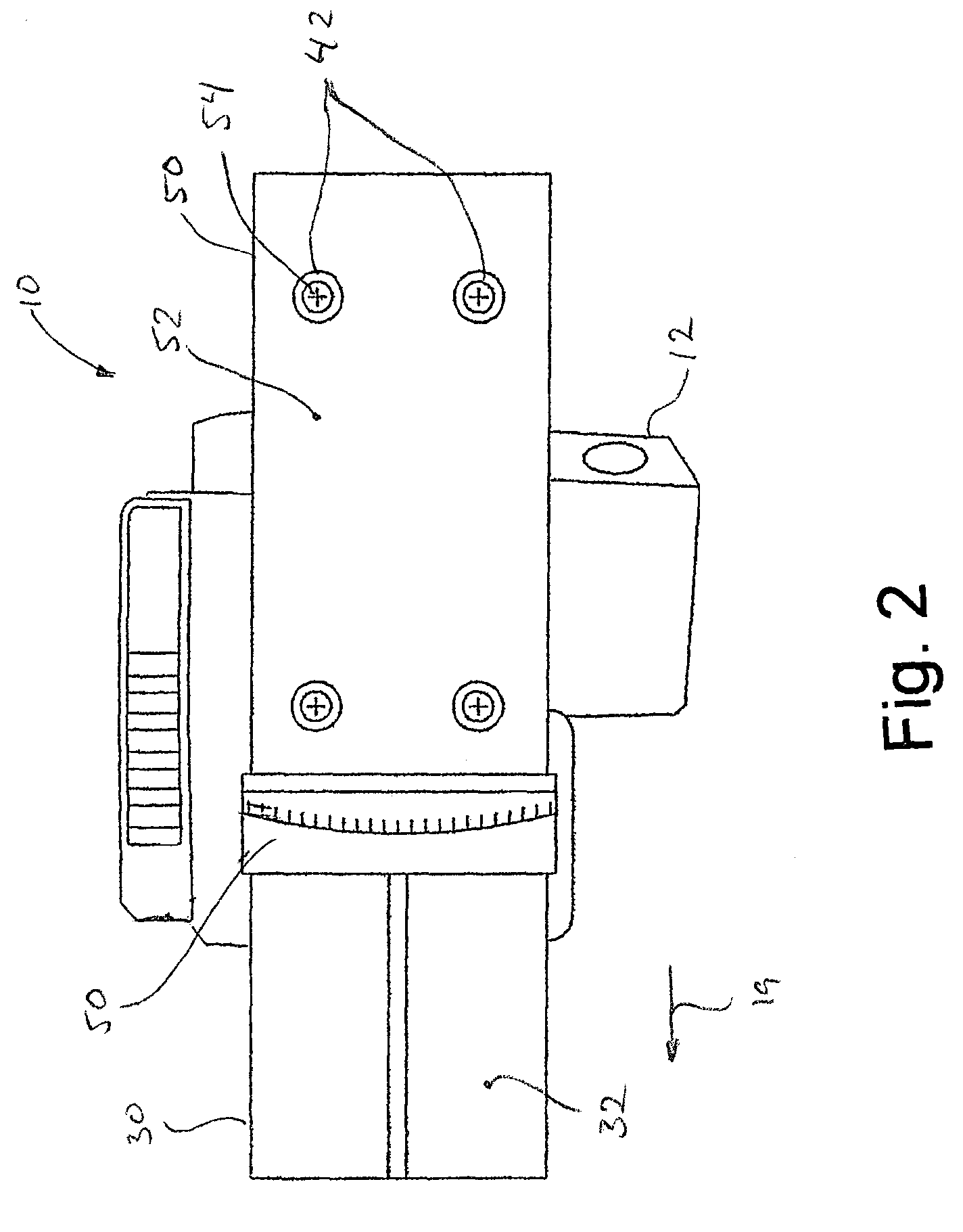
[0023]The hand planer 12 includes a front bottom shoe 30 and a rear bottom shoe 50 attached to the bottom thereof. The front and rear bottom shoes 30 and 50 may be formed integrally with the hand planer 12 or may optionally be securable to the bottom of the hand planer 12 by means of screws 54 or other suitable fasteners as are known in the art. It will be appreciated ...
PUM
| Property | Measurement | Unit |
|---|---|---|
| length | aaaaa | aaaaa |
| shape | aaaaa | aaaaa |
| depth | aaaaa | aaaaa |
Abstract
Description
Claims
Application Information
 Login to View More