
Helmet
a technology for helmets and helmet covers, applied in the field of helmets, can solve problems such as head or face injuries, and achieve the effects of less risk of injury, less impact force, and improved comfort for wearers
- Summary
- Abstract
- Description
- Claims
- Application Information
AI Technical Summary
Benefits of technology
Problems solved by technology
Method used
Image

Examples
Embodiment Construction
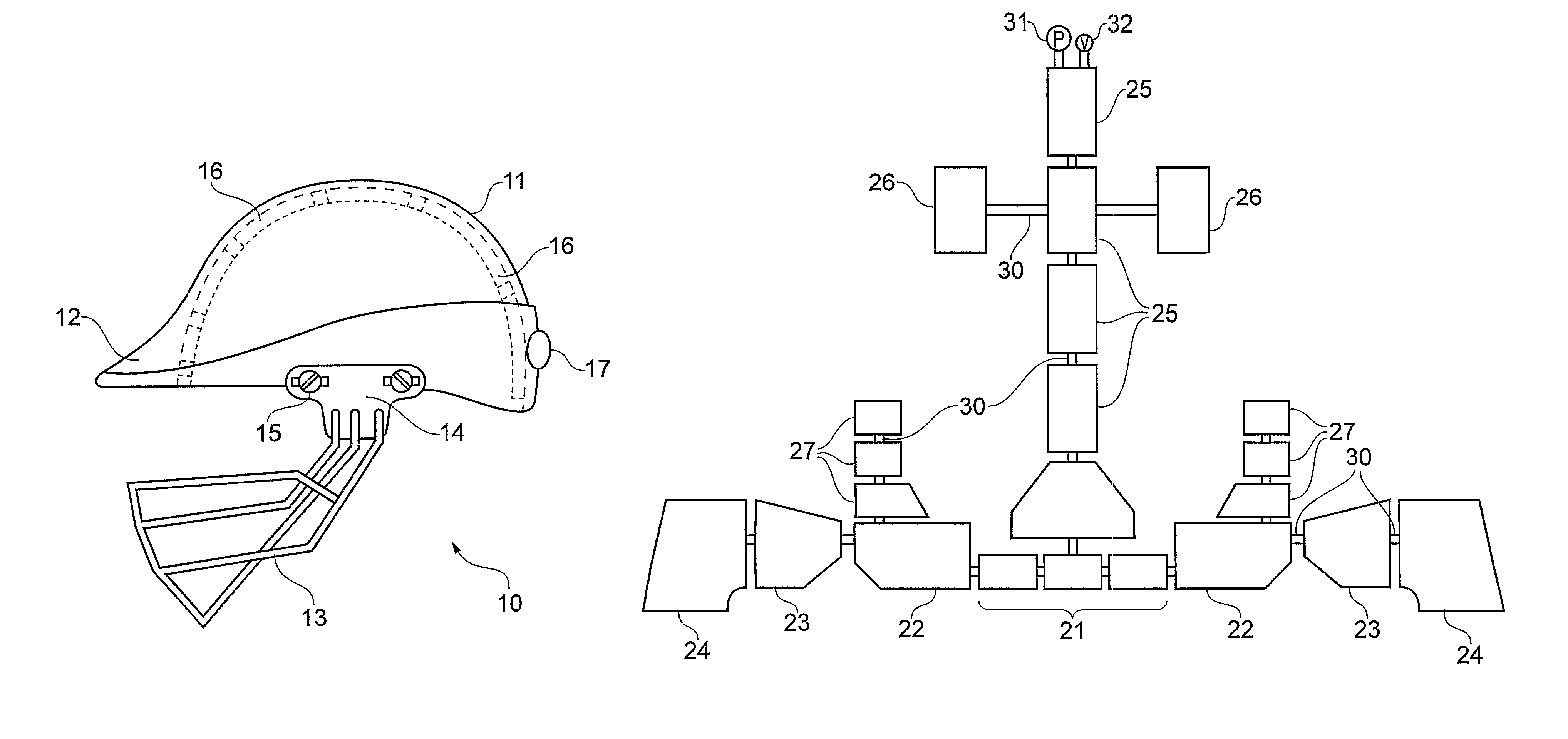
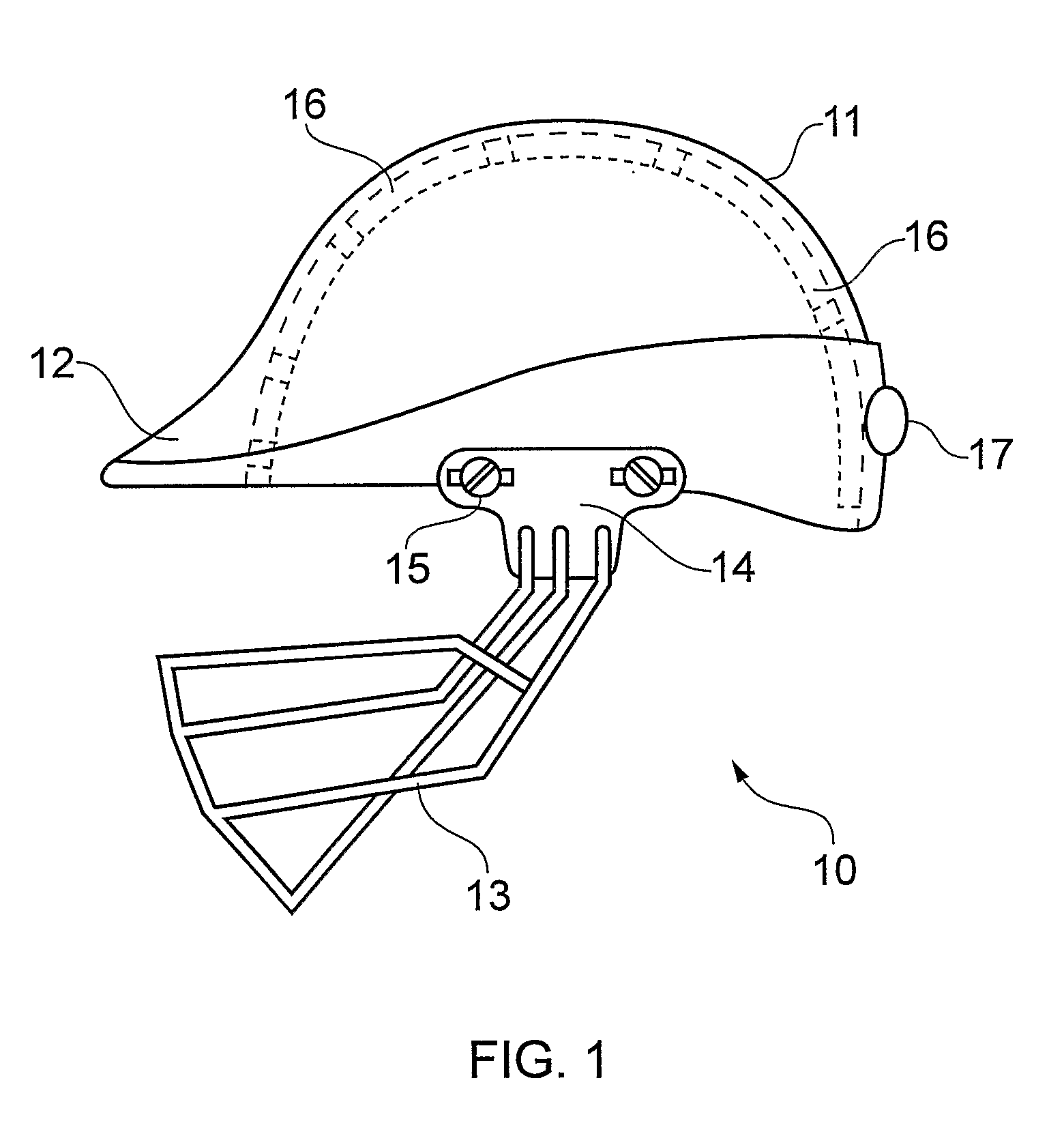
[0014]Referring firstly to FIG. 1, the cricket helmet, shown generally at 10, has an outer shell 11 with, at the front, a peak 12. A face and chin guard assembly 13 is attached to the sides of the helmet via a support plate 14 and manually-operable retaining bolts 15.
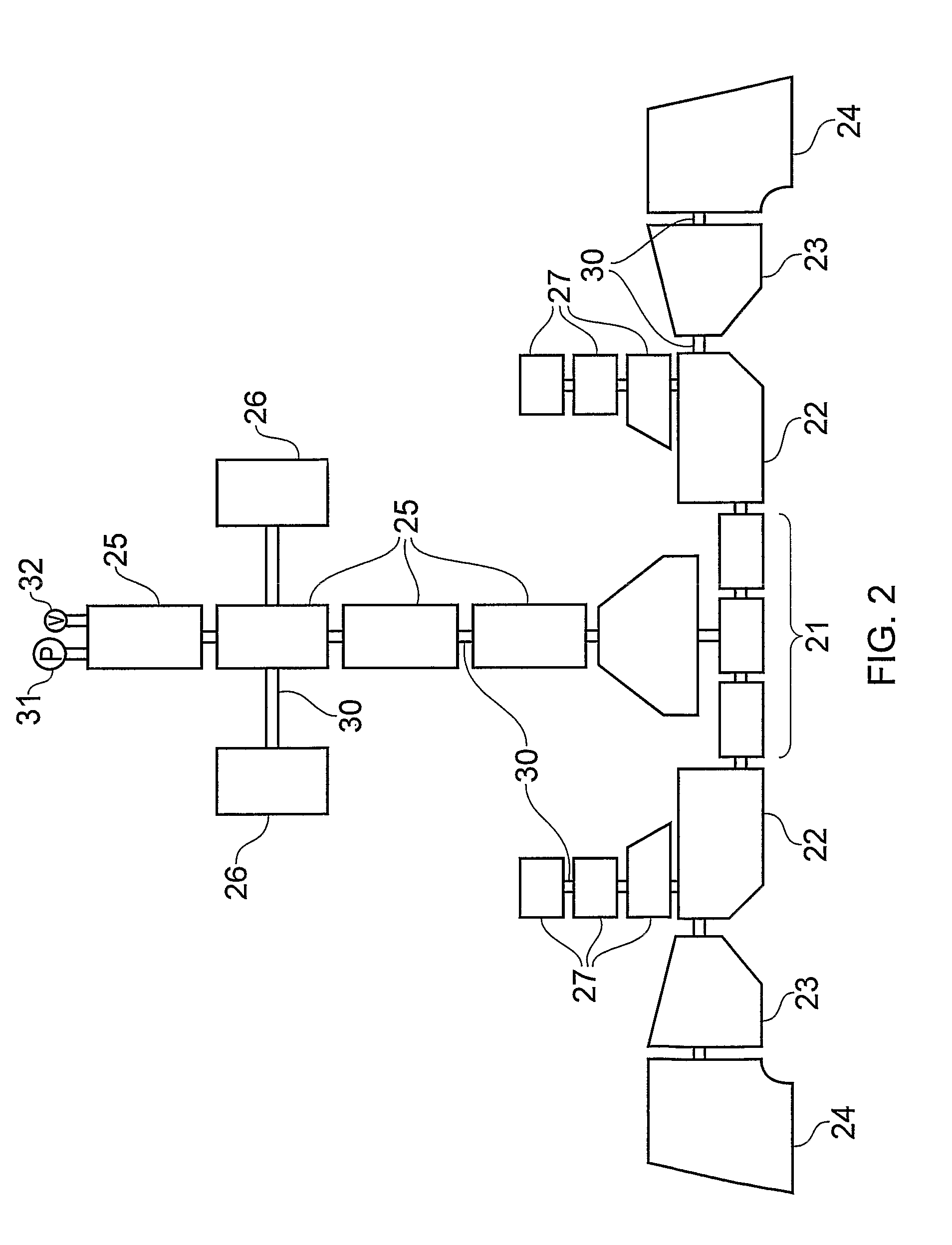
[0015]The inner surface of the shell 11 carries an inflatable liner or air bladder comprising individual cells or pockets 16 which are in pneumatic communication with each other and with a manually-operable air pump operated by a resilient push button 17 disposed at the rear of the shell. A button for a pressure release valve (not shown) is also disposed at the rear of the shell. The pockets 16 are formed from a pre-cut polyurethane sheet material of thickness 1 mm having an embossed surface finish and are vacuum-formed and high frequency welded to a pre-cut polyurethane sheet carrier. Before the pockets are formed, a layer of a high-density polyurethane foam having a density 272 kg / m3 and a thickness of 3 mm is laminat...
PUM
 Login to View More
 Abstract
Description
Claims
Application Information
 Login to View More