
Interior photocatalytic coating, preparation method and application thereof
A photocatalytic and coating technology, applied in the field of indoor coatings, can solve the problems of dependence on chemical action, failure of sterilization performance, and limitation of practical application of composite technology, and achieve the effect of broadening the application range and simple use
Patent Information
- Authority / Receiving Office
- CN · China
- Patent Type
- Applications(China)
- Current Assignee / Owner
- Publication Date
- 2011-10-19
Smart Images
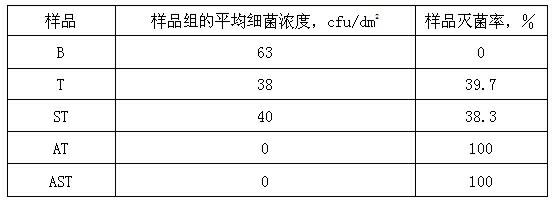
Figure 1 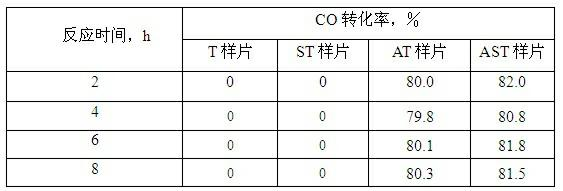
Figure 2
Abstract
Description
technical field
[0001] The invention relates to indoor coatings in building materials, in particular to a photocatalytic coating capable of photocatalytic action under the action of indoor visible light, as well as its preparation method and application. Background technique
[0002] How to make indoor building materials and sanitary utensils sterilize, inhibit bacteria and purify air is a goal pursued by the current environmental protection product research institute. For this reason, various techniques have been developed to achieve this goal. At present, the sterilization technologies used in the market mainly include: (1) Sterilization using inorganic heavy metal ions. For example, loading antibacterial metal salts on a pore size of (3-10)×10 -10 As an additive on the carrier of pigments, paints, paints, putty powder or building cement products, so that the building materials have a sterilizing function; The nanometer zinc-loaded composite antibacterial material can b...
Examples
Embodiment 1
[0023] Embodiment 1: the preparation of pure titanium dioxide sol type photocatalytic coating
[0024] Add 1.1 ml of concentrated nitric acid (68%) into 150 ml of deionized water to make a uniform solution, slowly drop 12.5 ml of tetraisopropyl titanate into the acidic aqueous solution under vigorous stirring, and hydrolyze the suspension containing white precipitate The solution was continuously stirred at 40°C until the white precipitate dissolved to form a uniform and transparent sol. Put the sol into a dialysis membrane bag and use 2 liters of deionized water for dialysis treatment, and change the water every 12 hours until the final pH of the dialysis water is 3.2 to obtain a pure titanium dioxide sol with a titanium dioxide content of 2.5 wt%. This sol coating is denoted as T.
Embodiment 2
[0025] Embodiment 2: Preparation of silica / titanium dioxide composite sol-type photocatalytic coating
[0026] Under vigorous stirring, slowly drop 5 ml of ethyl orthosilicate into a solution made of 0.25 ml of concentrated nitric acid (68%) and 10 ml of deionized water, and continue stirring until a uniform and transparent silica sol is formed. After the sol passed through dialysis, 10 ml of it was mixed with 100 ml of the titanium dioxide sol prepared in Example 1, and then the same dialysis treatment as in Example 1 was carried out to adjust the pH value to 2.8. In this coating, the titanium dioxide content was 2.3 wt%, and the silica content was 1.1 wt%. This composite sol coating is marked as ST.
Embodiment 3
[0027] Embodiment 3: Preparation of pure titanium dioxide sol-type photocatalytic coating containing Au nanoparticles
[0028]0.7 mL HAuCl 4 (0.057 mol / L) was added to 20 mL of TiO prepared in Example 1 2 In the sol coating, stir evenly, then place in an ice-water bath, add 1 drop of concentrated nitric acid to acidify (maintain pH = 2), add NaBH drop by drop under strong stirring 4 solution (0.05 g NaBH 4 Dissolved in 20 mL deionized water), fully reacted, the sol changed from white to purple, and a titanium dioxide sol-type coating containing nano-Au particles was prepared, wherein the Au content was 0.02g / 100mL. This paint is recorded as AT.