
Tunable laser with double output light beams
A tuning laser, dual output technology, applied in the direction of lasers, laser components, semiconductor lasers, etc., can solve the problems of difficult implementation, poor ability to resist various mechanical vibrations, low tuning accuracy and output bandwidth, etc., to achieve easy installation And production, no mechanical moving parts, meet the effect of reliable operation
Patent Information
- Authority / Receiving Office
- CN · China
- Patent Type
- Applications(China)
- Current Assignee / Owner
- Publication Date
- 2014-04-30
Smart Images
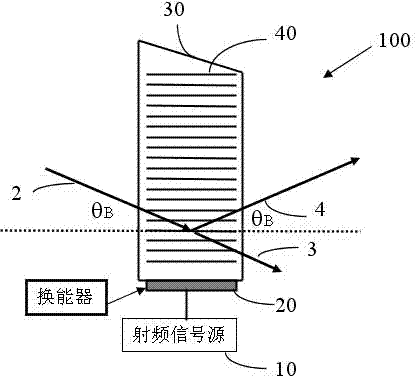
Figure 1 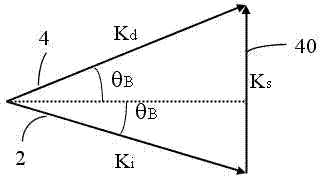
Figure 2 
Figure 3
Abstract
Description
technical field
[0001] The invention belongs to the field of optoelectronics, in particular to an external cavity-type tunable laser with double output light beams which adopts a tunable Fabry-Perot filter of a liquid crystal optical phase modulator and a tunable acousto-optic filter. Background technique
[0002] In external-cavity broadband tunable lasers, the commonly used tuning techniques mainly include the following methods: 1. Tuning is carried out by driving the rotation of the grating through a precision stepping motor. The existing problems are reflected in: First, to achieve precise tuning of optical frequency , the stepping accuracy and repeatability requirements of the stepping motor are very high, so the manufacturing cost is relatively high; the second is that it is not easy to miniaturize due to the use of a stepping motor; the third is that the working stability in harsh working environments is relatively poor, In particular, the ability to resist various me...
Examples
Embodiment Construction
[0032] Embodiments of the present invention will be described in further detail below in conjunction with the accompanying drawings.
[0033] Tunable acousto-optic filters
[0034] figure 1 It is a structural diagram of an existing tunable acousto-optic filter. The tunable acousto-optic filter 100 includes a transducer 20 and an acousto-optic crystal 30; the radio frequency signal source 10 is connected to the transducer 20; the incident The light beam 2 is incident into the acousto-optic crystal 30 at the Bragg angle θB, generating a zero-order diffracted beam 3 and a first-order diffracted beam 4 .
[0035] The working principle of the acousto-optic filter is based on a phenomenon of Bragg diffraction. Bragg diffraction involves the interaction of photons (quanta of light energy) and phonons (quanta of sound energy). During this interaction, both energy and momentum are conserved. Momentum conservation requires κ d =κ i +κ s , where κ dis the momentum of the diff...