
Method for detecting alkaline phosphatase in body fluid
A phosphatase and alkaline technology, applied to the detection of alkaline phosphatase in body fluids, based on the field of bioluminescence quantitative detection of alkaline phosphatase, can solve the problems of high price, high analysis cost, interference with enzyme and substrate reactions, etc., to achieve Improve sensitivity and accuracy, strong anti-interference ability, and high sensitivity
Patent Information
- Authority / Receiving Office
- CN · China
- Current Assignee / Owner
- Publication Date
- 2015-05-27
Smart Images
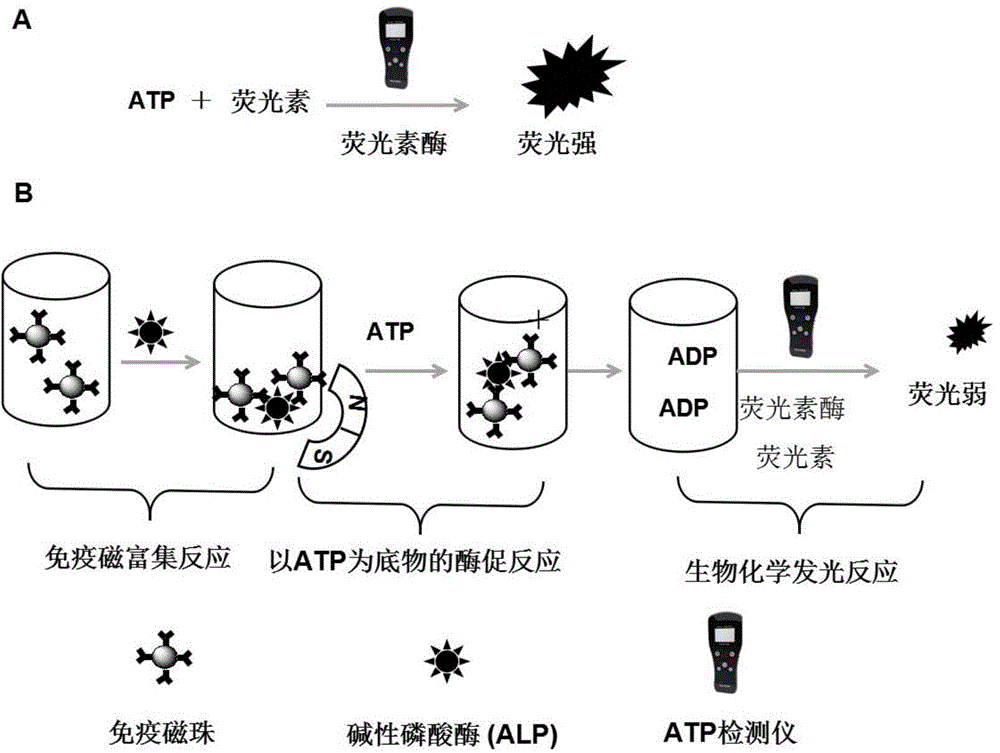
Figure 1 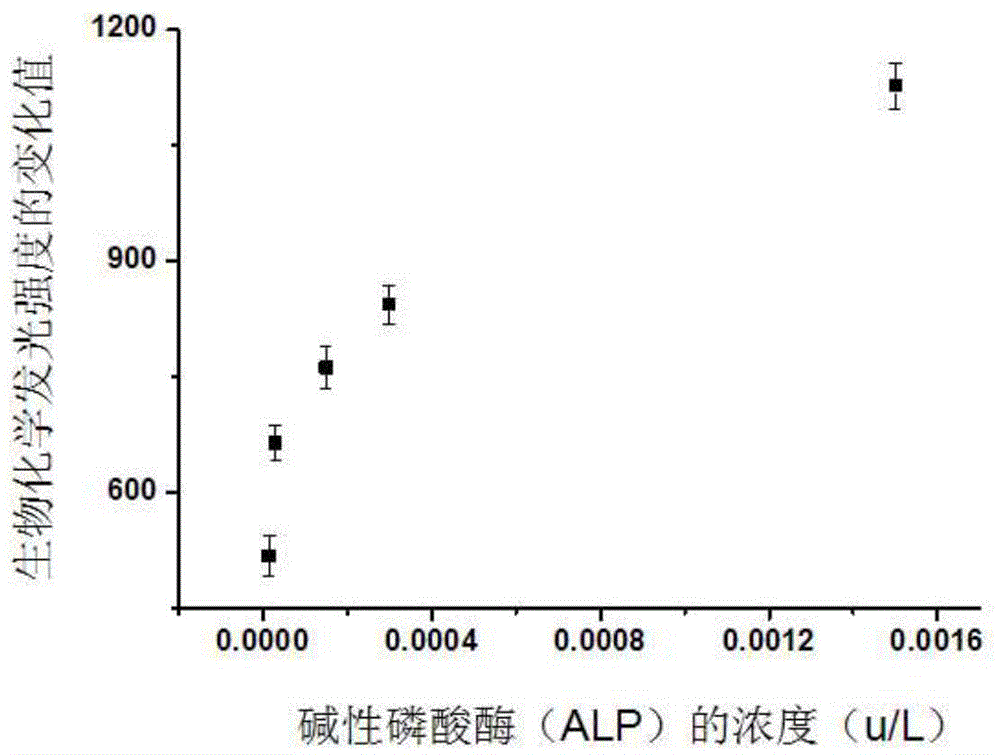
Figure 2 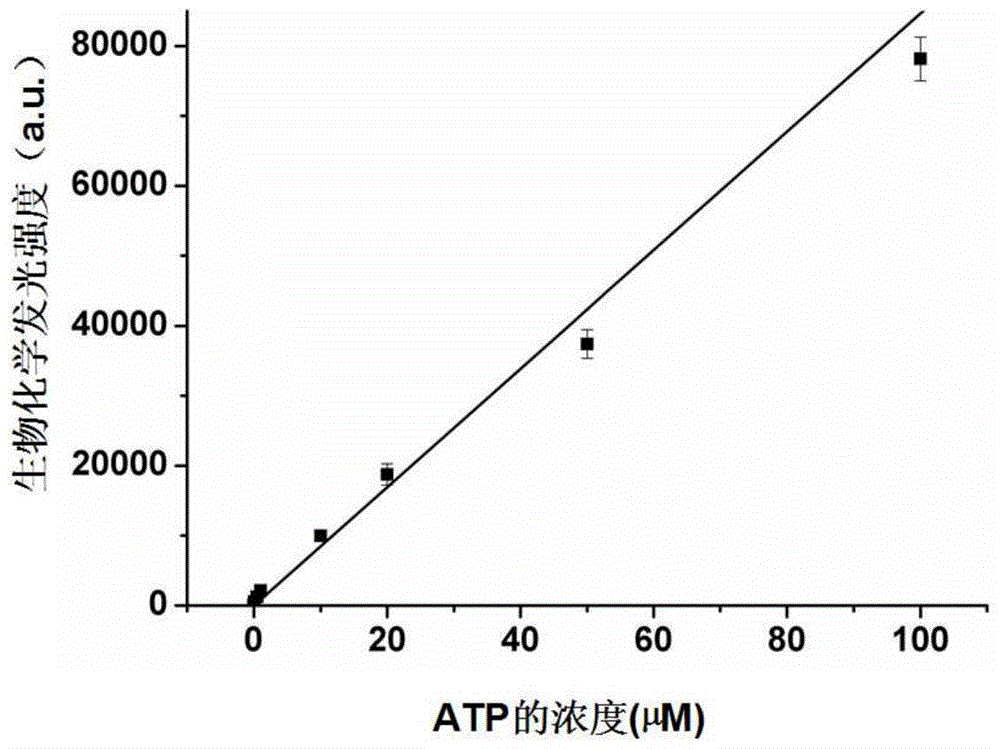
Figure 3
Abstract
Description
technical field
[0001] The invention relates to the technical field of immune detection, in particular to a method for detecting alkaline phosphatase in body fluids, in particular to a method for quantitatively detecting alkaline phosphatase based on bioluminescence. Background technique
[0002] Alkaline Phosphatase (Alkaline Phosphatase, ALP), also known as alkaline phosphatase, is a class of enzymes that can catalyze the hydrolysis of phosphate bonds under alkaline conditions. Common alkaline phosphatases include intestinal alkaline phosphatase, non-tissue-specific alkaline phosphatase, and placental alkaline phosphatase. Normally, the activity of alkaline phosphatase in stem cells and colon cancer cells is significantly increased, and it is used as a qualitative and quantitative indicator of the degree of differentiation of colon cancer cells. In addition, elevated serum alkaline phosphatase, termed hyperalkaline phosphataseemia, has been associated with malignant bile ...
Examples
Embodiment 1
[0049] Detection of Alkaline Phosphatase in Serum by Bioluminescence
[0050] (1) Dilute the serum of normal people 10 times with pure water, and then add a series of alkaline phosphatase with different concentrations to the serum, so that the final concentrations are 7.5×10 -2 , 3.75×10 -2 , 7.5×10 -3 , 3.75×10 -3 , 7.5×10 -4 , 3.75×10 -4 , 7.5×10 -5 , 3.75×10 -5 , 7.5×10 -6 , 3.75×10 7 and 1.85×10 -7 .
[0051] (2) Take 1000 μL of serum sample, add 100 μL of adenosine triphosphate solution to resuspend it, and react at 37°C for 30 minutes; then add 50 μL of bioluminescence reagent (luciferin and luciferase), and measure the bioluminescence value with a portable ATP detector .
[0052] With the concentration of alkaline phosphatase as the abscissa and the change in bioluminescence intensity as the ordinate, a standard curve is constructed. The content of unknown alkaline phosphatase in serum can be detected through the standard curve. figure 2 It can be seen that...
Embodiment 2
[0054] Linear relationship between ATP concentration and bioluminescence values
[0055] Dilute the adenosine triphosphate solution with Tris-HCl to a concentration of 0, 0.01, 0.1, 0.5, 1, 10, 20, 50 and 100 μM, take 50 μL of each concentration of adenosine triphosphate, and then add a bioluminescent reagent containing luciferase and luciferin. 50 μL of the reagent was mixed evenly, and the bioluminescence value was measured quickly with a portable ATP detector. Construct a standard curve based on the relationship between luminescence value and ATP concentration. The linear relationship between the concentration of ATP and the bioluminescence value is as follows image 3 shown, from image 3 It can be seen that with the increase of ATP concentration, the bioluminescence value becomes larger with a good linear relationship.
Embodiment 3
[0057] The relationship between the content of alkaline phosphatase and the change of bioluminescence value
[0058] Dilute alkaline phosphatase with water to a concentration of 0,1.5×10 -5 , 3×10 -5 , 1.5×10 -4 , 3×10 -4 and 1.5×10 -3 U / mL, then take 100 μL of alkaline phosphatase dilution, then add 50 μL of ATP solution with a concentration of 50 μM and mix well, react in a 37°C incubator for 45 minutes, and finally add 50 μL of bioluminescent reagents and mix well, pass through a portable ATP detector Bioluminescence values were detected. from Figure 4 It can be seen that the method can detect 1.5×10 -5 U / mL alkaline phosphatase.