
Hydrophilic inorganic porous material, preparation method and application thereof to reaction of selective catalytic aldehyde or ketone and hydroxylamine
An inorganic porous material and hydrophilic technology, applied in the direction of inorganic chemistry, oxime preparation, organic chemistry, etc., can solve the problems of catalyst stability, catalyst/product separation difficulty, limited application range, etc.
Patent Information
- Authority / Receiving Office
- CN · China
- Current Assignee / Owner
- Publication Date
- 2017-11-03
Smart Images
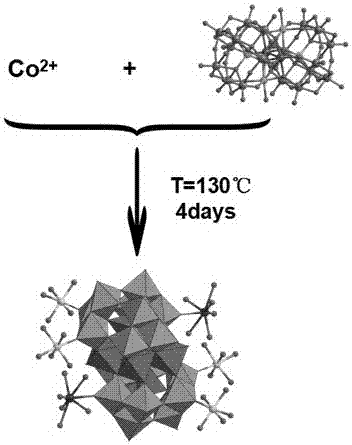
Figure 1 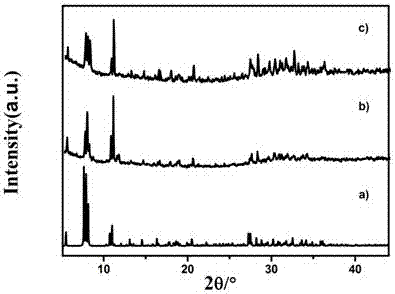
Figure 2 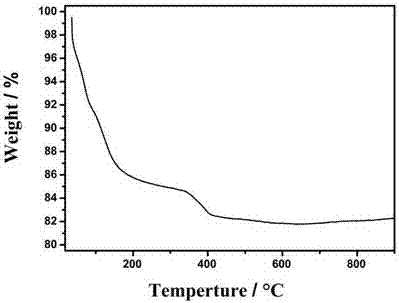
Figure 3
Abstract
Description
technical field
[0001] The invention belongs to the technical field of preparation of polyoxometalate chemical materials, and specifically relates to a multifunctional hydrophilic inorganic porous material formed by combining POMs groups with good oxidation and catalytic functions and transition metal ions with Lewis acid properties, The preparation method and its application as a catalyst in selectively catalyzing the reaction of aldehydes or ketones with hydroxylamine. Background technique
[0002] Oxime compounds and amides are very useful pharmaceutical intermediates in industrial applications, and also play a very important role as a bridge in organic conversion. Aldehydes, ketones and hydroxylamine are converted into oximes and amides through oximation, which are indispensable in modern organic synthesis. The key influencing factor in the synthesis process is hydroxylamine, which is due to the fact that hydroxylamine is quite dangerous, explosive, and easy to decompos...
Examples
Embodiment 1
[0025] A kind of hydrophilic inorganic porous material, its chemical formula is: H 110 co 4 K 2 o 123 W 19 Zn 5 .
[0026] The preparation method of the above-mentioned hydrophilic inorganic porous material specifically comprises the following steps:
[0027] 1) Preparation of precursor sandwich polyacid K 12 [WZn 3 (H 2 O) 2 (ZnW 9 o 34 ) 2 ]·46H 2 O: Firstly, prepare Na 12 [WZn 3 (H 2 O) 2 (ZnW 9 o 34 ) 2 ]·46H 2 O; then add KCl solid equal amount to replace Na ion in this solution and convert to K 12 [WZn 3 (H 2 O) 2 (ZnW 9 o 34 ) 2 ]·46H 2 O, this is common knowledge in the art, so it will not be repeated here;
[0028] 2) will K 12 [WZn 3 (H 2 O) 2 (ZnW 9 o 34 ) 2 ]·46H 2 O (60 mg, 0.02 mmol), Co(NO 3 ) 2 ·3H 2 O (40 mg, 0.19 mmol) was added to a mixed solution consisting of 4 mL distilled water and 2 mL methanol, stirred overnight at room temperature, then transferred to a 25 mL polytetrafluoroethylene autoclave at 130 °C for 5 day...