
Lactobacillus plantarum with pesticide degrading activity, preparation method and application thereof
A technology for degrading Lactobacillus plantarum and pesticides, applied in the application of Lactobacillus plantarum and the preparation of Lactobacillus plantarum, can solve problems such as the lack of ideal medical solutions, and achieve the effect of removing organophosphorus pesticide residues
Patent Information
- Authority / Receiving Office
- CN · China
- Patent Type
- Applications(China)
- Current Assignee / Owner
- Publication Date
- 2019-01-25
- Estimated Expiration
- Not applicable · inactive patent
Smart Images
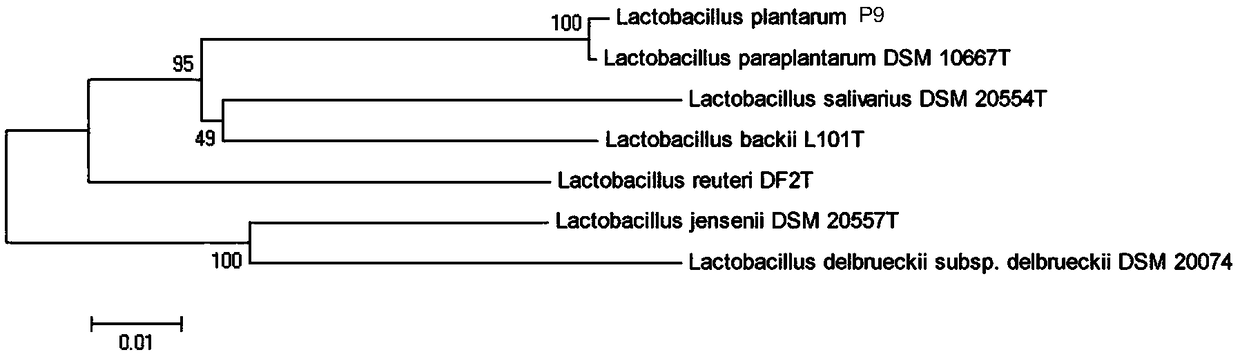
Figure 1 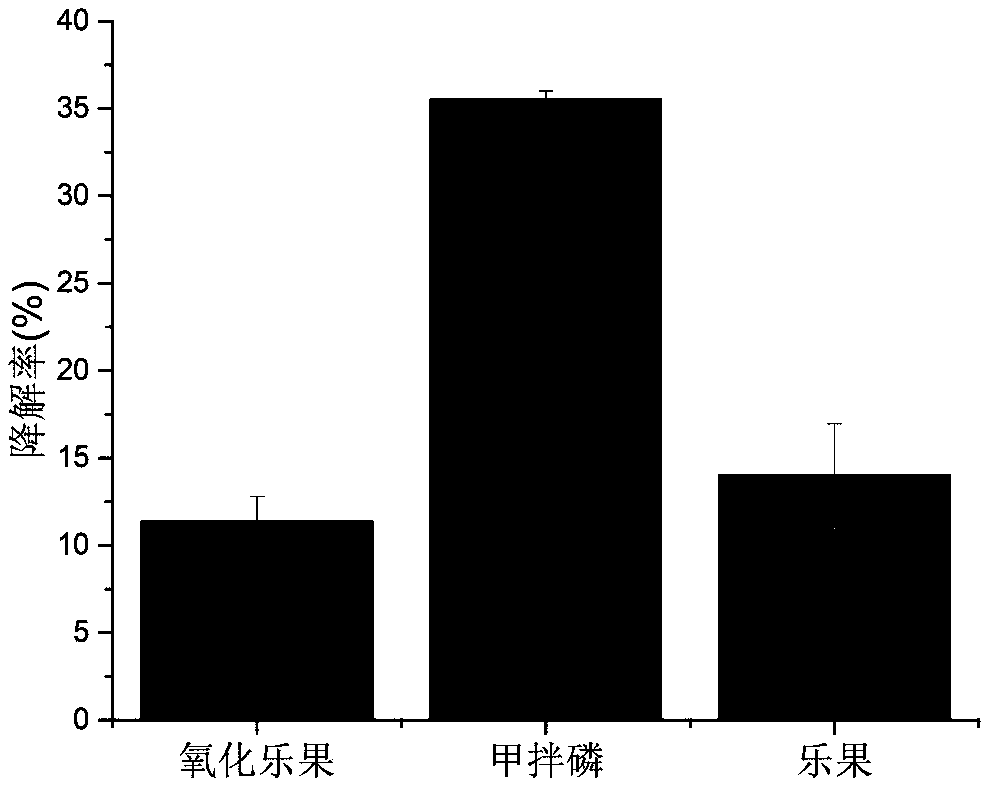
Figure 2 
Figure 3
Abstract
Description
Technical field
[0001] The invention belongs to the field of biotechnology. More specifically, the present invention relates to a Lactobacillus plantarum with pesticide degradation activity, a preparation method of the Lactobacillus plantarum with pesticide degradation activity, and an application of the Lactobacillus plantarum.
Background technique
[0002] In modern agriculture, chemical pesticides are the best choice for preventing and controlling pests and diseases in farmland. They are widely favored by people because of their advantages such as good effect, fast action, not easy to inactivate, easy storage and low price. Chemical pesticides are mainly a class of organic or inorganic chemical agents, including herbicides, insecticides, nematicides, fungicides, plant growth regulators and soil fumigants. In 2013, the active ingredients in my country's annual pesticide consumption exceeded 311,000 tons, of which more than 70% were organophosphorus, organochlorine, ca...
Examples
Embodiment 1
[0071] Embodiment 1: Activation and identification of bacterial strains
[0072] Take the strains to be tested, observe and record the colony morphology and Gram staining cell morphological characteristics, and carry out the catalase test; select the strains with positive Gram staining and negative catalase test as the strains to be tested, and inoculate them in MRS respectively. After culturing in liquid medium for 24h to 48h at 37°C, further identification was made.
[0073] Inoculate the strains to be tested in TPY enrichment liquid medium, culture at 30°C for 24 hours, subculture for 2 to 3 generations, take 2mL of the bacterial culture at the end of logarithmic growth and place it in a sterile EP tube, at 4°C for 8000 Collect the bacterial cells by centrifugation at ×g for 3 minutes, discard the supernatant, and extract the genomic DNA of the strains by the CTAB freeze-thaw method specially used for lactic acid bacteria;
[0074]Using bacterial DNA as the amplification t...
Embodiment 2
[0080] Example 2 Test strain fermentatively degrades omethoate, phorate and dimethoate activity determination in MRS
[0081] (1) The strain to be tested was inoculated into the MRS medium for activation, transferred three times in a row, and cultured at 37°C for 24 hours each time, and the strain to be tested for the third generation was inoculated with an inoculation amount of 1×10⁷cfu / mL into a medium containing 0.5mg / kg methanomethanol fruit, 0.5mg / kg phorate and 0.5mg / kg dimethoate in the MRS medium, cultured at 37°C for 24h, the fermentation broth was centrifuged at 4000×g for 10min, the supernatant was filtered through a 0.22μm micro-membrane, and stored at -20°C Store in the refrigerator for later use;
[0082] (2) Take 20 g of the fermented MRS medium of the strain to be tested in step (1) and place it in a 50 mL centrifuge tube, add 15 mL of acetone-acetonitrile (1:4, v / v) mixture, shake gently evenly, Stand still for 20min; then shake for 30s and then centrifuge at...
Embodiment 4
[0110] Embodiment 4: the activity determination of the anti-Phytophthora melon of the MRS fermentation supernatant of Lactobacillus plantarum L.plantarum P9
[0111] Phytophthora melon activated on the PDA medium was washed with PBS buffer to prepare 10 5 For cfu / mL spore suspension, put the suspension into PDA medium at 1% (V / V), oscillate and mix well, then pour the culture medium into a petri dish to make flat.
[0112] Punch 2 small holes evenly on each plate with a 7mm hole punch and mark the bacterial number of Lactobacillus plantarum, add 100 μL of MRS fermentation supernatant of Lactobacillus plantarum P9 to each well, diffuse in a refrigerator at 4°C for 12 hours, and then 28°C Cultivate at a constant temperature for 48 hours, observe the size of the inhibition zone, and measure the size of the inhibition zone of the strain with a vernier caliper.
[0113] The antibacterial zone of Lactobacillus plantarum P9 against Phytophthora melon was detected by the agar diffus...