

Anodes for lithium-ion battery cells, methods for making anodes, and batteries containing anodes
A lithium-ion battery and electrode technology, applied in the direction of electrode manufacturing, battery electrodes, electrode collector coating, etc., can solve problems such as insufficient
Patent Information
- Authority / Receiving Office
- CN · China
- Current Assignee / Owner
- Publication Date
- 2022-04-12
Smart Images
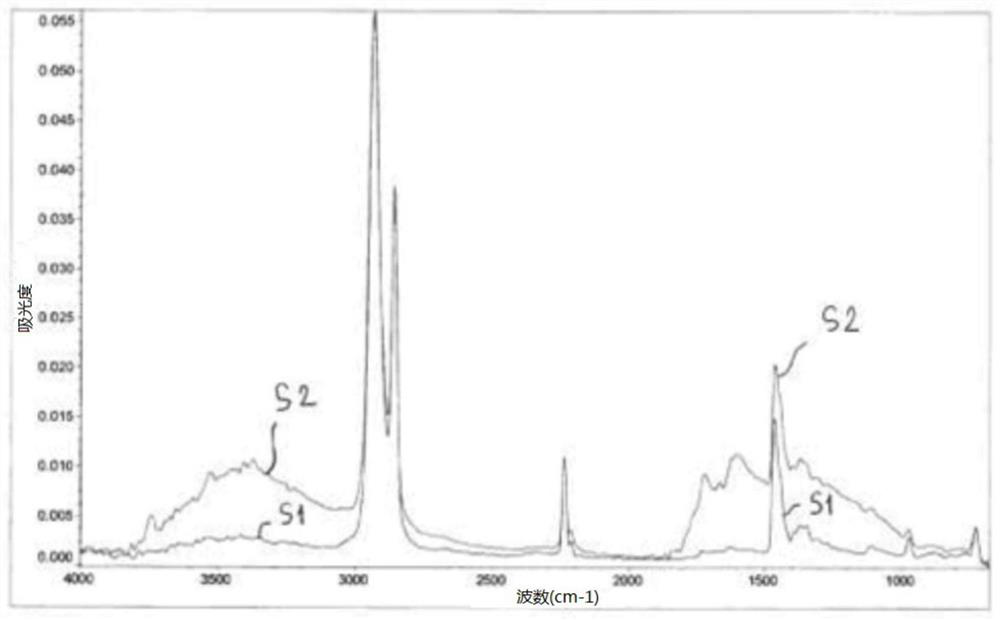
Figure 1 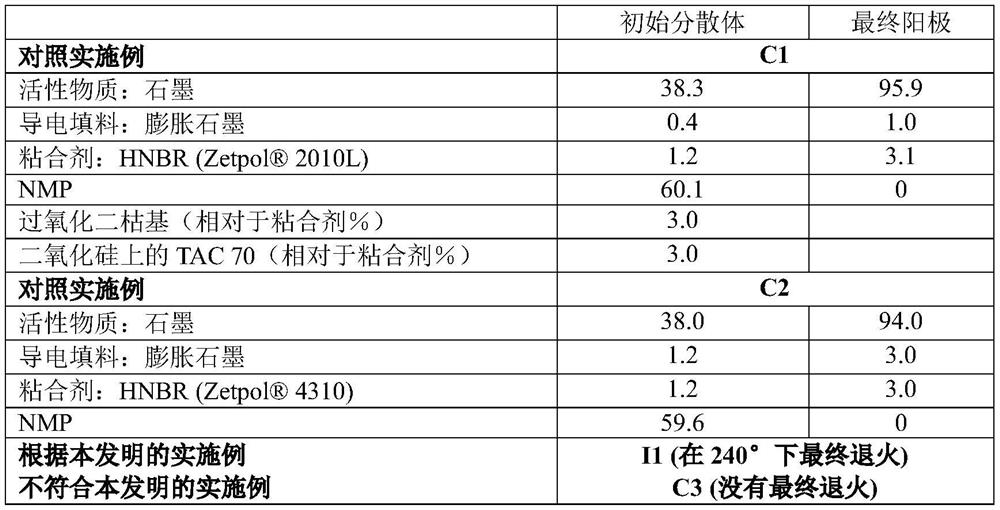
Figure 2 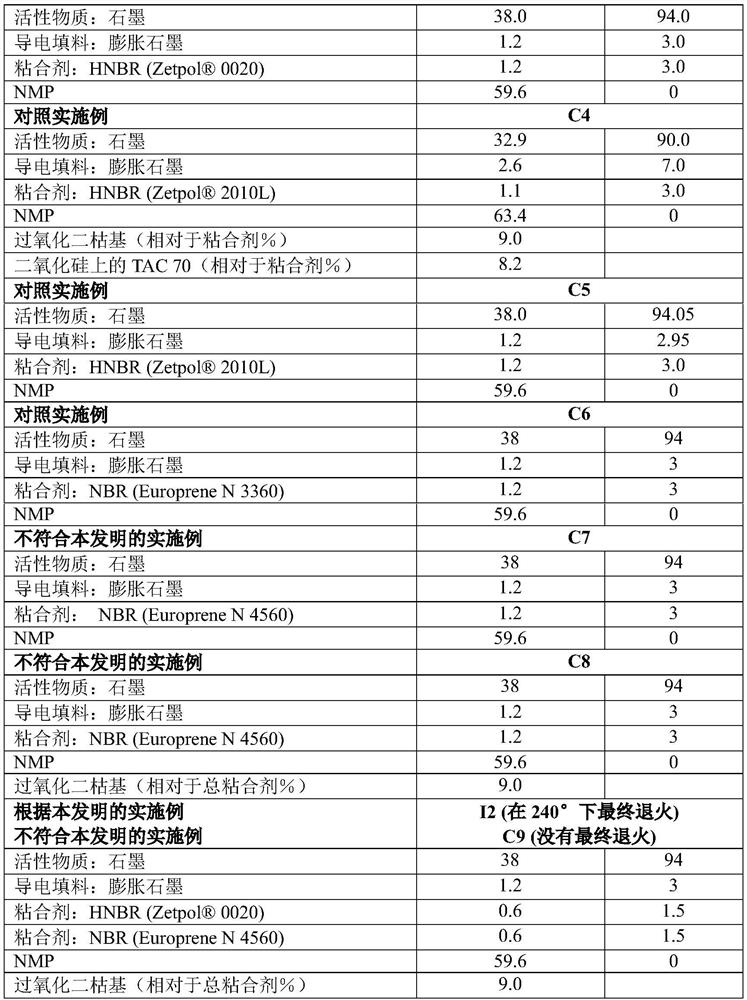
Figure 3
Abstract
Description
technical field
[0001] The present invention relates to a polymer composition capable of forming an electrode for the anode of a lithium-ion battery, a method of preparing the composition, such an electrode, and a lithium-ion battery wherein the or each battery cell Contains the electrode. Background technique
[0002] There are two main types of lithium secondary batteries: lithium metal batteries, in which the negative electrode consists of lithium metal (a material that poses safety concerns in the presence of a liquid electrolyte); and lithium ion batteries, in which lithium is stored in the form of ions.
[0003] A lithium-ion battery comprises at least two conductive Faraday electrodes of different polarity, the electrodes comprising a negative electrode or anode and a positive electrode or cathode, between which is an electrode separator impregnated with Li + Cationic aprotic electrolytes constitute electrical insulators. The electrolyte used in these lithium-ion ba...
Examples
Embodiment Construction
[0060] Other features, advantages and details of the invention will emerge from reading the following description of several embodiments of the invention, given as non-limiting illustrations in relation to the accompanying drawings, in which:
[0061] figure 1 is a graph illustrating the absorption spectrum measured by Fourier Transform Infrared Spectroscopy (abbreviated FTIR), showing the absorbance as a function of wavenumber for two elastomeric films composed of HNBR binder, one of which is a non-crosslinked "control" Thin films and another is crosslinked by thermal oxidation in the present invention.
[0062] "Control" example not according to the invention, and lithium ions prepared by the liquid route according to the invention Examples of battery anodes:
[0063] All of the following examples use the following:
[0064] - as the active material, called C- Artificial graphite of L-SERIES (Timcal);
[0065] - as conductive filler, purified conductive expanded gra...