
Application of icosl protein in preparation of breast cancer prognosis assessment kit
A technology for prognostic assessment and breast cancer, which is applied in the biological field and can solve the problems of breast cancer cell ICOSL that have not been reported.
Patent Information
- Authority / Receiving Office
- CN · China
- Patent Type
- Patents(China)
- Current Assignee / Owner
- Publication Date
- 2021-12-21
Smart Images
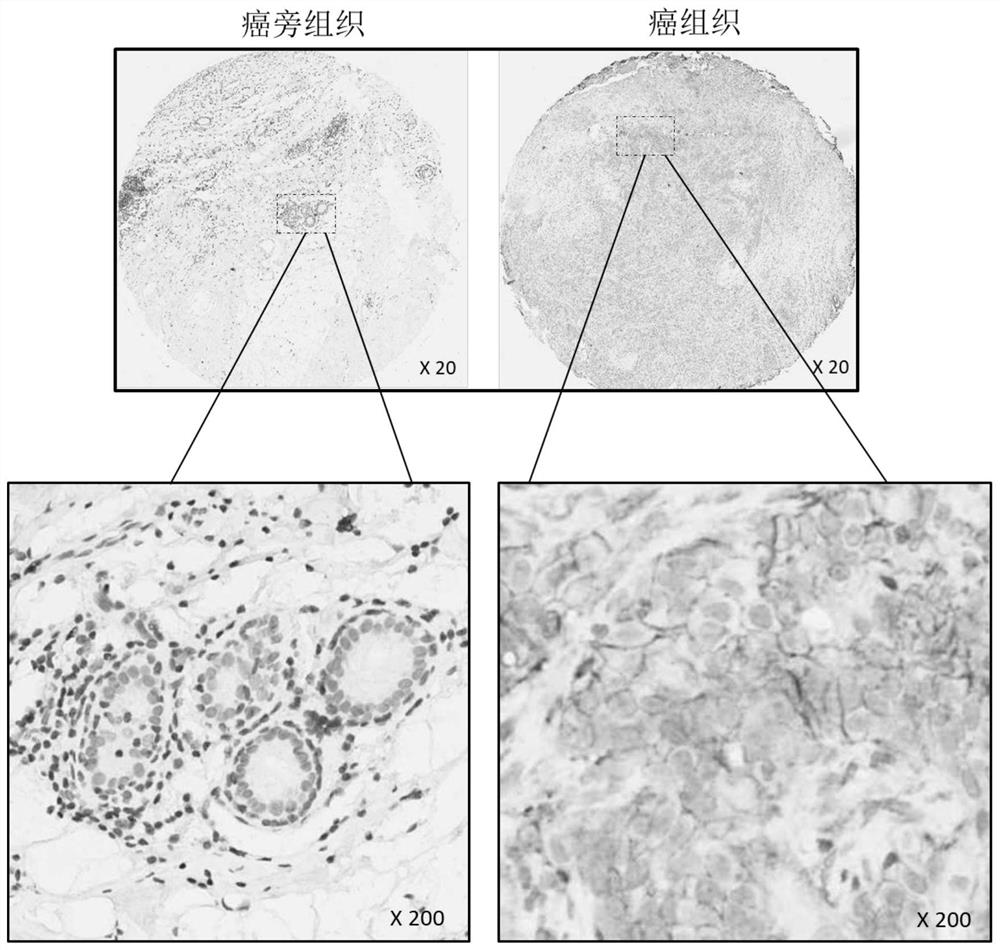
Figure 1 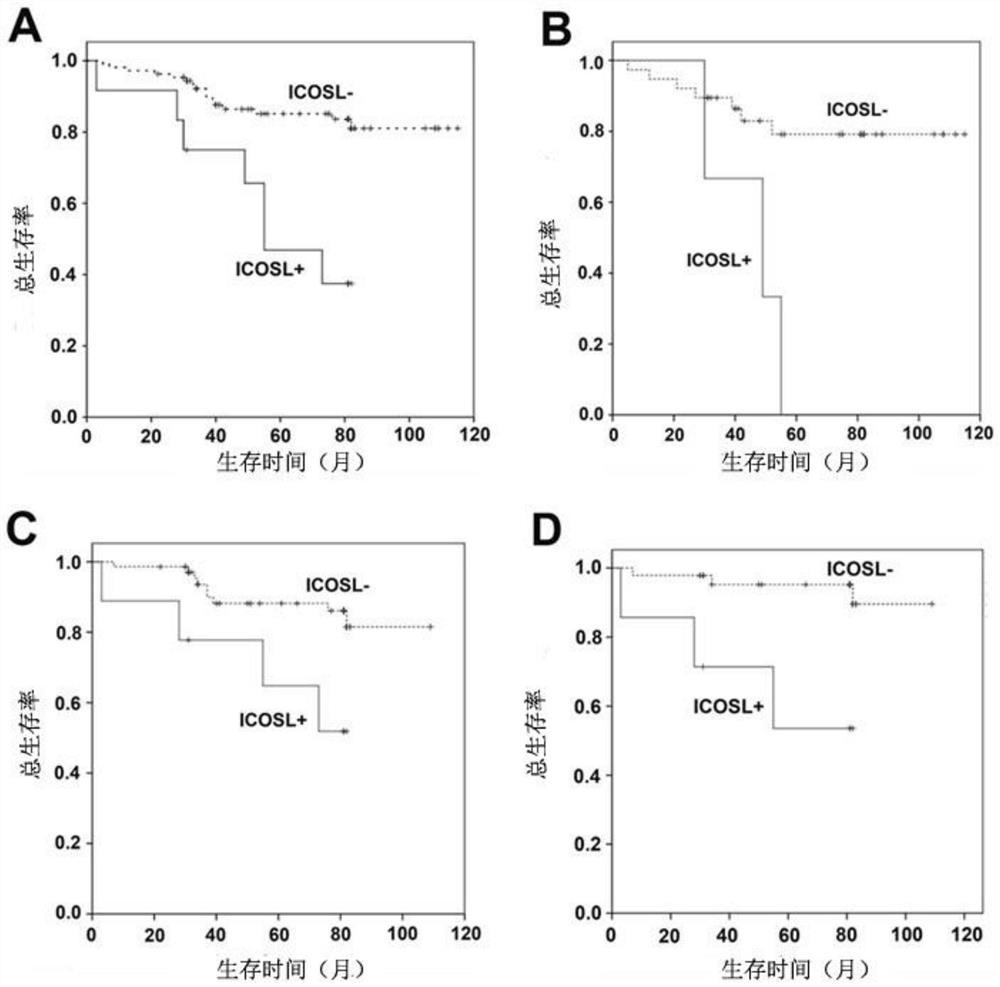
Figure 2 
Figure 3
Abstract
Description
Technical field
[0001] The present invention relates to the field of biotechnology, in particular to ICOSL (Inducible Costimulator, inducible co-stimulating molecular ligand; also known as B7H2) protein in the preparation of breast cancer prognostic evaluation kits. Background technique
[0002] Breast cancer is also the case in the world only in the second most common tumor (11.6%) of lung cancer, which is the most common malignant tumor in my country. Breast cancer, especially triple-negative breast cancer (ER, PR, HER2 expression is negative) is high, invasive, easy to recuriate and metastasis, and severely affects the survival of patients with breast cancer. The type of breast cancer accounts for about 10-15% of all breast cancer, due to its estrogen receptor (ER), progesterone receptor (PR) and epidermal growth factor receptor 2 (Her2) are negative (three negative), There is currently no clear treatment of targets, and the 5-year survival rate is less than 15%.
[0003] Brea...
Examples
Embodiment 1
[0066] The present invention employs immunohistochemistry ICOSL relative expression of the protein in breast cancer detection, the specific steps:
[0067] (1) Preparation of paraffin sections of breast cancer tissues, 60 ℃ oven overnight;
[0068] (2) to the water dewaxing slice;
[0069] (①10min → Xylene Xylene Xylene ②10min → ethanol ③10min → 100% ethanol 5min → 95% ethanol 5min → 85% ethanol 5min → 75% double distilled water 5min 5min →)
[0070] (3) 3% H 2 O 2 Methanol solution, room temperature for 20min;
[0071] (4) distilled water 5min × 3;
[0072] (5) Antigen Retrieval: sections were placed in 0.01M citrate buffer (pH 6.0) boiled for 5min, cease-fire 10min, then boiled for 5min;
[0073] (6) cool to room temperature, distilled water 5min × 3;
[0074] (7) 1% BSA blocking 30min, 37 ℃;
[0075] (8) the rejection to the blocking solution, washing is not directly primary antibody (Anti-ICOS Ligand antibody [2D3] ab189052, ABCAM Company). Wet box placed 30min, 37 ℃, 4 ℃ refr...
Embodiment 2
[0089] Experimental Materials: 2003-2010 Shanghai Changhai Hospital, next to the 162 cases of invasive breast cancer surgical specimens and normal tissue samples
[0090] Method: breast cancer tissue specimens and adjacent normal tissue ICOSL performed according to the method of Example 1 staining embodiment, as described above for the expression of ICOSL film score.
[0091] Result: figure 1 And shown in Table 1, 162 cases of breast cancer and their adjacent corresponding cancer tissues were analyzed for expression of ICOSL, appears next ICOSL cancer positive rate significantly higher than carcinoma.
[0092] Table 1: cancer tissue than the corresponding adjacent tissues ICOSL positive rate and expression level raised
[0093]
Embodiment 3
[0095] Experimental Materials: 2003-2010 next to Changhai Hospital, 121 cases of invasive breast cancer surgical specimens and normal tissue samples
[0096] Method: Postoperative treatment is performed in accordance with the scheme recommended by the NCCN Guide, and follows the time of survival time, considering the expression of ICOSL, and age, pathological type, pathological grading, Er, PR, HER2 and other factors, 121 cases Analysis of multivariate COX proportional risk model for patients with breast cancer patients.
[0097] RESULTS: As shown in Table 2, the factors such as age, pathological type, pathological grading, Er, PR, HER2, and breast cancer cells were expressed in breast cancer independent prognostic factors.
[0098] Table 2: Multi-factor analysis of the expression of ICOSL in consideration of age, pathological type, pathological grading, Er, PR, HER2, etc.
[0099]