
A compound with anthracene and phenanthrene as its core and its application in organic electroluminescent devices
A technology for electroluminescent devices and compounds, which can be applied in the fields of electro-solid devices, organic chemistry, luminescent materials, etc., can solve different problems, and achieve high carrier mobility, good industrialization prospects, and good reversible redox characteristics. Effect
Patent Information
- Authority / Receiving Office
- CN · China
- Patent Type
- Patents(China)
- Current Assignee / Owner
- Publication Date
- 2021-11-19
Smart Images
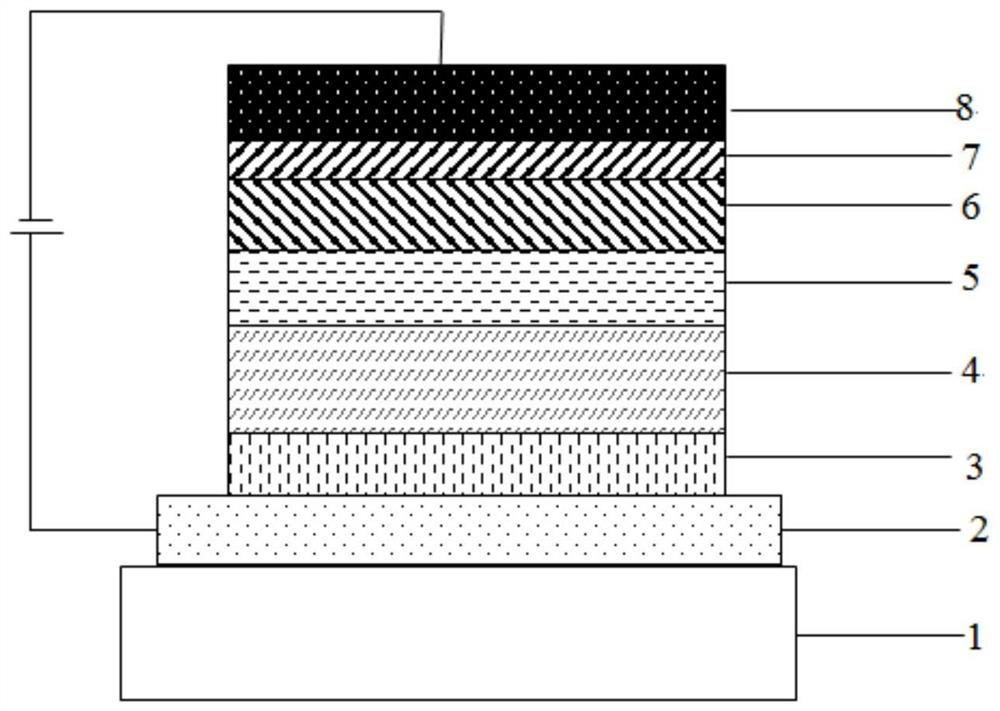
Figure 1 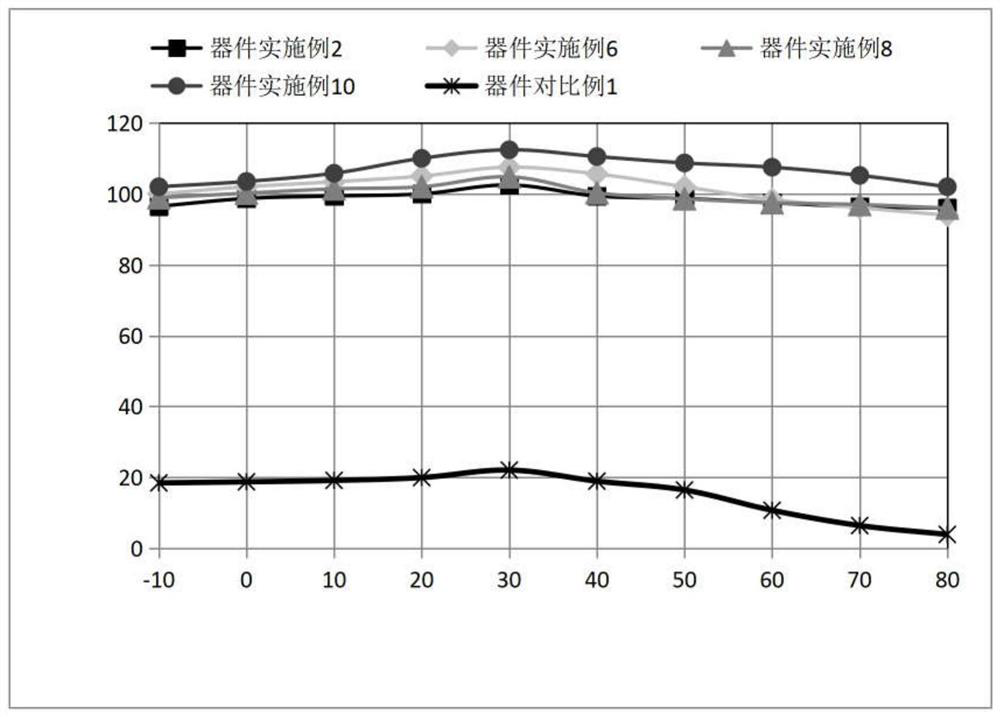
Figure 2 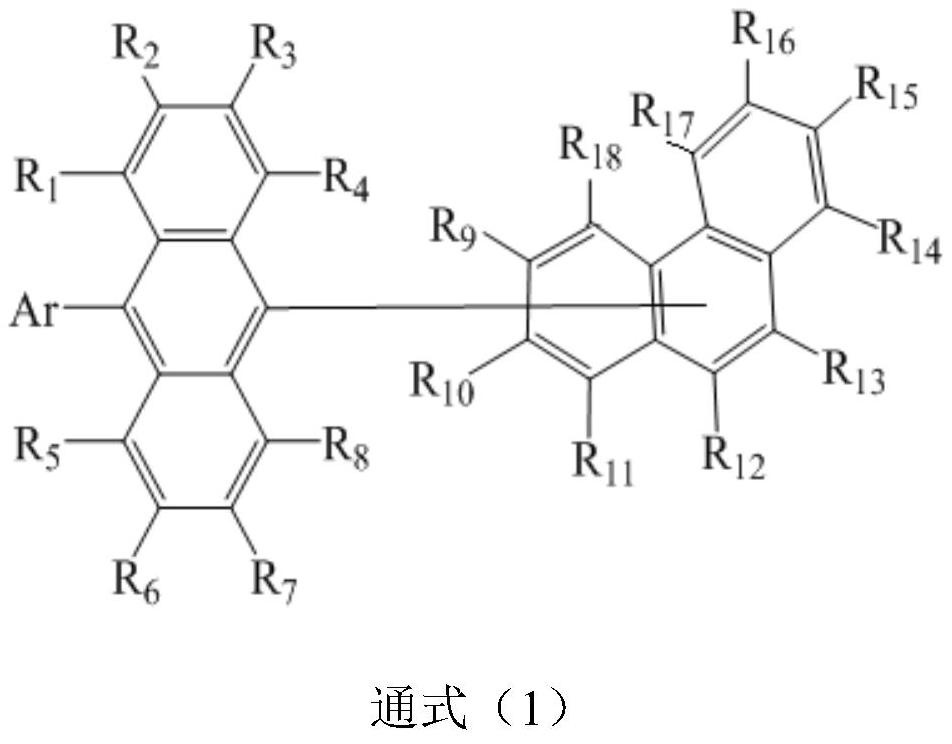
Figure 3
Abstract
Description
technical field
[0001] The invention relates to the technical field of semiconductors, in particular to a compound with anthracene and phenanthrene as the core and its application in organic electroluminescent devices. Background technique
[0002] Organic electroluminescent (OLED: Organic Light Emission Diodes) device technology can be used to manufacture new display products and new lighting products, and is expected to replace the existing liquid crystal display and fluorescent lighting, and has a wide application prospect. The OLED light-emitting device is like a sandwich structure, including electrode material film layers, and organic functional materials sandwiched between different electrode film layers. Various functional materials are superimposed on each other according to the application to form an OLED light-emitting device. As a current device, when a voltage is applied to the electrodes at both ends of the OLED light-emitting device, and the positive and negati...
Examples
Embodiment 1
[0032] Embodiment 1: the synthesis of intermediate A:
[0033]
[0034] (1) Under nitrogen atmosphere, weigh raw material A, raw material C and potassium carbonate, add toluene, ethanol and distilled water, then add tetrakis (triphenylphosphine) palladium, and start mechanical stirring. The mixed solution of the above reactants was heated to reflux for 12 hours. After the reaction, cooling and adding water, the mixture was extracted with ethyl acetate, the extract was dried over anhydrous sodium sulfate, filtered and concentrated under reduced pressure, the obtained residue was purified by silica gel column to obtain intermediate I;
[0035] The molar ratio of raw material A to raw material C is 1-1.1:1, the molar ratio of tetrakis(triphenylphosphine) palladium to raw material C is 0.001-0.02:1, and the molar ratio of potassium carbonate to raw material C is 2.0-4.0:1 , the ratio of toluene, ethanol, water is 1:1:1, the consumption ratio of raw material C and toluene, etha...
Embodiment 2
[0052] Embodiment 2: Compound 1 synthetic equation is:
[0053]
[0054] In a 250ml four-neck flask, under a nitrogen atmosphere, add 0.015mol of intermediate A-2, 0.01mol of c-1 and 0.03mol of potassium carbonate, add 0.0003mol of tetrakis(triphenylphosphine)palladium, 150ml of toluene, ethanol Mix the solution with water, stir, heat and reflux for 24 hours, take a sample point plate, and show that there is no bromide remaining, and the reaction is complete. Cool naturally, extract with 200ml ethyl acetate, separate layers, dry the extract with anhydrous sulfuric acid, filter, spin the filtrate, and pass through a neutral silica gel column to obtain the target product with a purity of 98.4% and a yield of 75.60%. Elemental analysis structure (molecular formula C 44 h 28 ): theoretical value C, 94.93; H, 5.07; test value: C, 95.01; H, 4.99. ESI-MS(m / z)(M + ): The theoretical value is 556.71, and the measured value is 556.74.
Embodiment 3
[0055] Embodiment 3: Compound 3 synthetic equation is:
[0056]
[0057] The preparation method of compound 10 is the same as that of Example 2, except that intermediate A-2 is replaced by intermediate A-3. Elemental analysis structure (molecular formula C 53 h 32 ): theoretical value C, 95.18; H, 4.82; test value: C, 95.21H, 4.79; ESI-MS (m / z) (M + ): The theoretical value is 668.84, and the measured value is 668.80.