
Quantum dots and application thereof
A quantum dot and carbon number technology, applied in the field of image display devices, can solve the problems of decreased stability and reliability, inability to solve problems such as light resistance, decreased dispersibility, etc., to achieve improved brightness and reliability, excellent oxidation stability, The effect of less peeling
Patent Information
- Authority / Receiving Office
- CN · China
- Patent Type
- Applications(China)
- Current Assignee / Owner
- Publication Date
- 2020-06-23
Smart Images
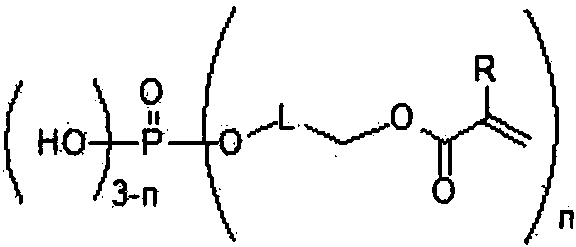
Figure 1 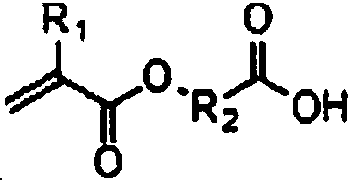
Figure 2 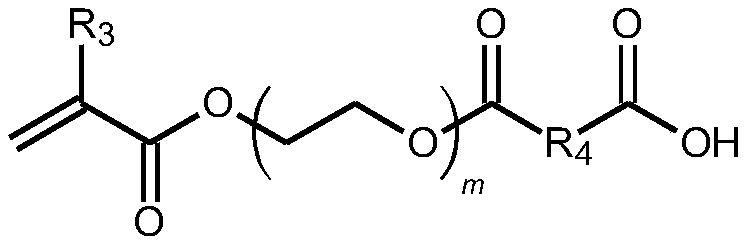
Figure 3
Abstract
Description
technical field
[0001] The invention relates to quantum dots, quantum dot dispersions, quantum dot light conversion compositions, self-luminous photosensitive resin compositions, quantum dot light-emitting diodes, quantum dot films, color filters, light conversion lamination substrates and image display devices. Background technique
[0002] Quantum dots have high luminescence and a narrow luminescence spectrum, can adjust the luminescence wavelength by one excitation wavelength, and have inherent characteristics of quantum dots that are stable to photosynthesis, so they have been used in biological imaging or energy conversion, and lighting ( A large number of researches in important application fields such as LED).
[0003] Such quantum dots are extremely sensitive to the surface state, and are oxidized from the surface due to the dispersed solvent or the surrounding environment, resulting in a sharp decrease in luminous efficiency. For various applications of quantum dot...
Examples
Synthetic example 1
[0485] Synthesis Example 1: Synthesis of InP / ZnS Core-Shell Quantum Dots
[0486] 0.05839 g of indium acetate, 0.12019 g of oleic acid, and 10 mL of 1-octadecene (ODE) were added to a three-necked flask (3-neck flask). While stirring the above-mentioned flask, after degassing at 110° C. and 100 mTorr for 30 minutes, it was heated to a temperature of 270° C. under an inert gas until the solution became transparent.
[0487] As a phosphorus (P) precursor, prepare 0.025054 g of tris(trimethylsilyl)phosphine, add 0.5 mL of 1-octadecene and 0.5 mL of tri-n-octylphosphine, and stir it under an inert gas Quickly inject into the above-mentioned flask which has been heated to 270°C. After reacting for 1 hour, the reaction was rapidly cooled to complete the reaction. Then, when the temperature of the flask reached 100° C., 10 mL of toluene was injected, and then transferred to a 50 mL centrifuge tube. After adding 10 mL of ethanol, purification was performed twice by precipitation an...
Synthetic example 2
[0491] Synthesis Example 2: Synthesis of InP / ZnSe / ZnS Core-Shell Quantum Dots
[0492] Add 0.4 mmol (0.058 g) of indium acetate (0.058 g), 0.6 mmol (0.15 g) of palmitic acid (0.15 g) and 20 mL of 1-octadecene into the reactor, and heat to 120° C. under vacuum. After 1 hour, the atmosphere in the reactor was switched to nitrogen. After heating to 280° C., a mixed solution of 0.2 mmol (58 μl) of tris(trimethylsilyl)phosphine (TMS3P) and 1.0 mL of trioctylphosphine was quickly injected and reacted for 0.5 minutes.
[0493]Next, 2.4 mmol (0.448 g) of zinc acetate, 4.8 mmol of oleic acid, and 20 mL of trioctylamine were added to the reactor, and heated to 120° C. under vacuum. After 1 hour, the atmosphere in the reactor was switched to nitrogen, and the temperature of the reactor was raised to 280°C. 2 mL of the previously synthesized InP core solution was added, followed by the addition of 4.8 mmol of selenium (Se / TOP) in trioctylphosphine, and then the final mixture was allowed...
Synthetic example 3
[0495] Synthesis example 3: Cardo series alkali-soluble resin (BP-1)
[0496] (1) Add 9,9'-bis(4-glycyloxyphenyl)fluorene (Hearchem Company) 138g, 2-carboxyethyl acrylate (2-Carboxyethyl acrylate) as bisphenol epoxy compound in the reactor ) 54g, benzyltriethylammonium chloride (Oi Kakin Co.) 1.4g, triphenylphosphine (Aldrich (Aldrich) company) 1g, propylene glycol methyl ethyl acetate (Daicel Chemical (Daicel Chemical) ) company) 128g and hydroquinone 0.5g, the temperature was raised to 120°C and maintained for 12 hours, thereby synthesizing the compound represented by the following chemical formula 25.
[0497] (2) Add 60 g of compounds represented by the following chemical formula 25, 11 g of biphenyltetracarboxylic dianhydride (Mitsubishi Gas (Mitsubishi Gas) company), 3 g of tetrahydrophthalic anhydride (Aldrich Company), propylene glycol in the reactor 20 g of methyl ethyl acetate (Daicel Chemical Co., Ltd.) and 0.1 g of N,N'-tetramethylammonium chloride were heated to ...