
An Antenna Array Fault Diagnosis Method Based on Deep Neural Network and Radiation Data Compensation
A deep neural network and data compensation technology, applied in the field of antenna array signal processing and deep learning, can solve problems such as large amount of data calculation, stay, and large number of parameter model methods.
Patent Information
- Authority / Receiving Office
- CN · China
- Patent Type
- Patents(China)
- Current Assignee / Owner
- Publication Date
- 2022-05-03
Smart Images
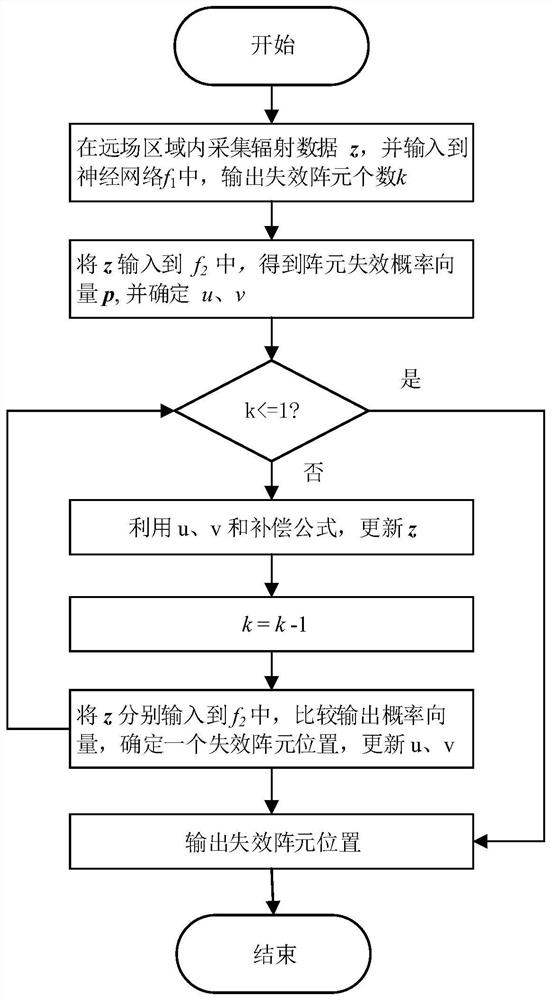
Figure 1 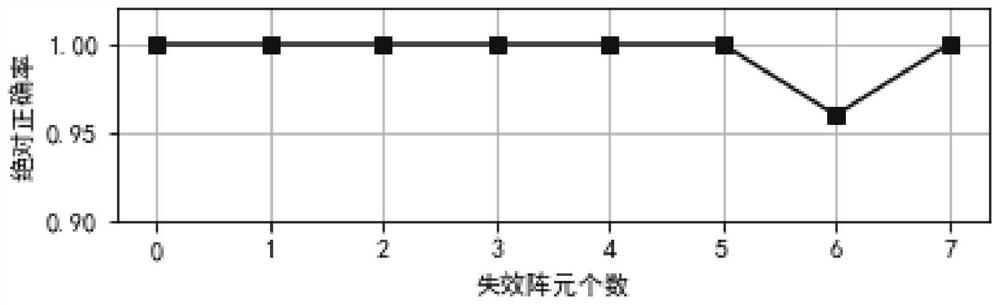
Figure 2 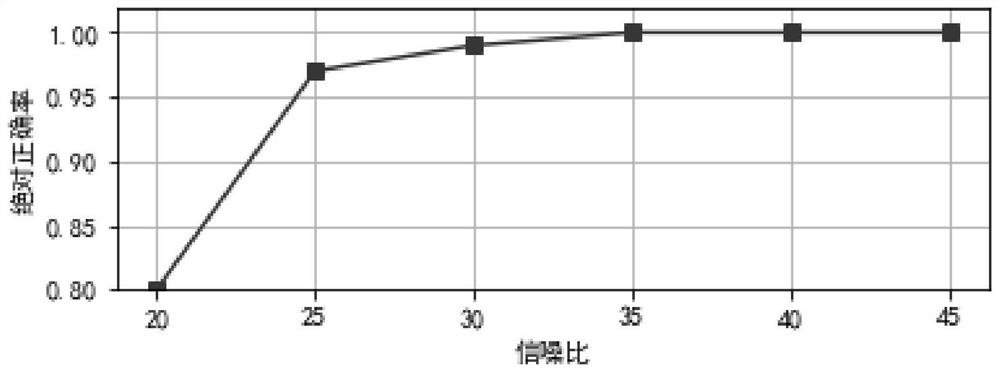
Figure 3
Abstract
Description
technical field
[0001] The present invention relates to the field of antenna array signal processing and deep learning, specifically, an antenna array fault diagnosis method based on deep learning. Background technique
[0002] An array antenna is a special antenna composed of two or more antenna units arranged according to certain rules or randomly. Compared with a single antenna, an array antenna has many advantages, mainly including: higher antenna gain, stronger Directionality, very narrow beam width, and beam scanning etc. At present, array antennas play an indispensable role in various fields such as radar detection, mobile communication, and satellite remote sensing. There is a close relationship between the radiation performance of an array antenna and the number of radiating elements. In general, the more radiating elements, the better the radiation performance of the antenna. For example, a large-scale military phased array usually contains hundreds or thousands ...
Examples
Embodiment Construction
[0028] The fault array considered in this implementation is a uniform linear array containing 50 array elements, and the array element spacing is 0.5λ, where λ is the wavelength. In practical applications, the number of failed array elements is usually small, so it is assumed that the number of failed array elements in the array is at most 7.
[0029] Model training phase:
[0030] Step 1: This embodiment measures the amplitude and phase data of the fault array radiation field at intervals of 2° within the range of pitch angle θ∈[-90°, 90°], and each sample data contains 91 measurement points. Work array element incentive x i =1, failure array element excitation x i = 0, in the far-field area, under each condition of determining the number of array element failures, measure the radiation data of 700 times of random failure scenarios of array element positions and perform standardized processing.
[0031] Step 2: All the measurement data z=[Re(z), Im(z)] in step 1 are used t...