
A method and application of using elemental analysis-stable isotope mass spectrometry to identify the authenticity of bird's nest
The technology of isotope mass spectrometry and isotope mass spectrometer is applied in the field of bird's nest identification, which can solve the problems of complex pretreatment process, low accuracy of identification results, and inability to solve the qualitative and quantitative problems of various adulterated bird's nests at the same time.
Patent Information
- Authority / Receiving Office
- CN · China
- Patent Type
- Patents(China)
- Current Assignee / Owner
- Publication Date
- 2021-08-20
Smart Images
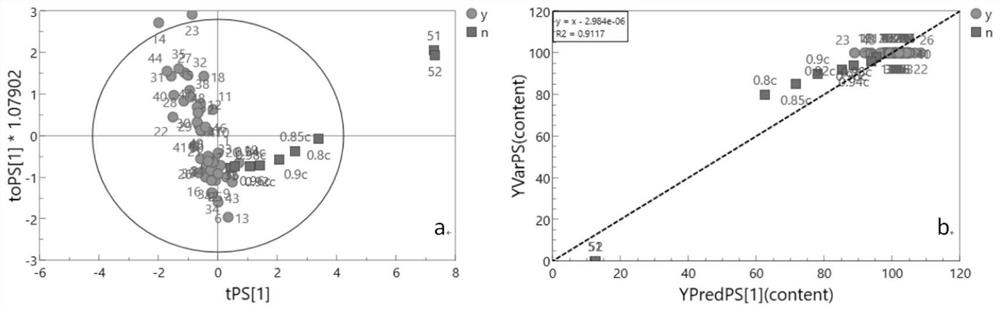
Figure 1 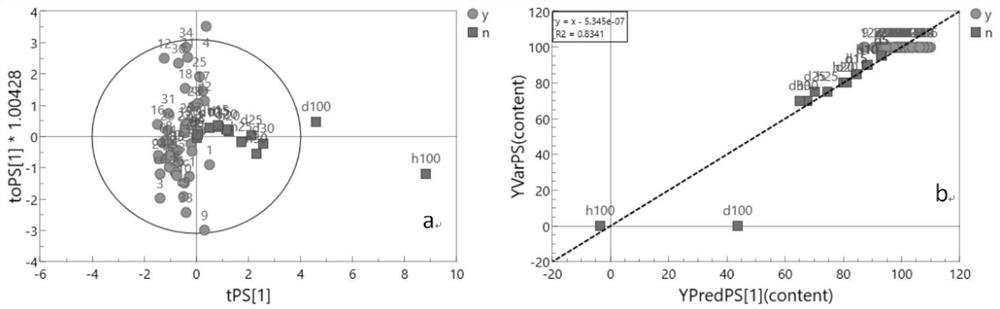
Figure 2 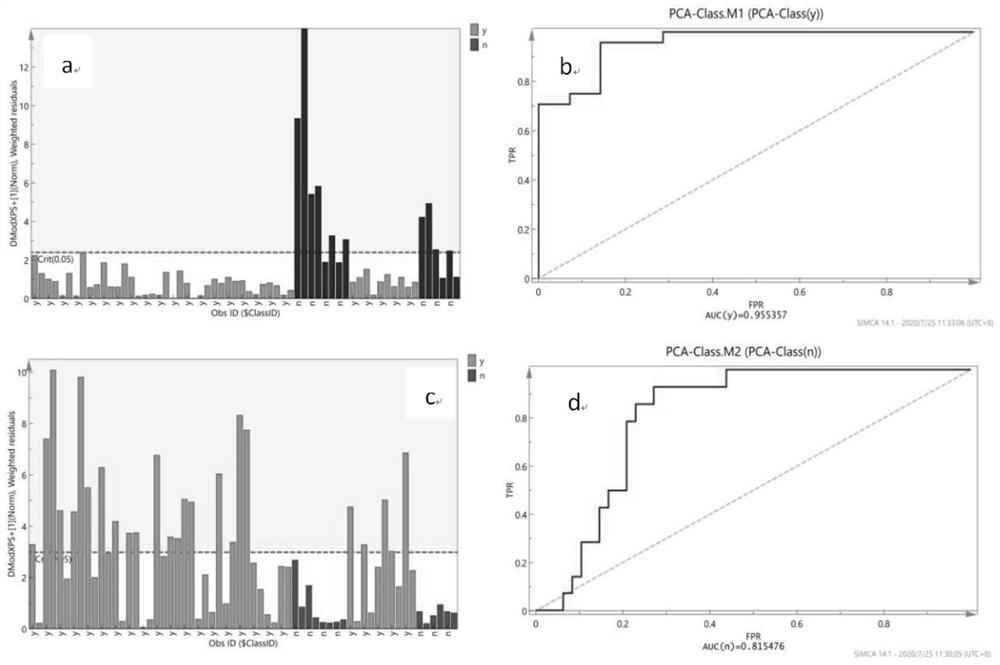
Figure 3
Abstract
Description
technical field
[0001] The invention relates to the technical field of bird's nest identification. More specifically, it relates to a method and application for identifying the authenticity of bird's nest by using elemental analysis-stable isotope mass spectrometry combined with statistical analysis. Background technique
[0002] Bird's nest is mostly produced in Southeast Asia and other places. It has rich nutritional and medicinal value. It can anti-aging, anti-virus, improve bone strength, enhance dermis thickness and improve immunity. It is a high-end tonic and is very popular among consumers. However, the current bird’s nest market is mixed with good and bad people. The relevant laws and regulations and testing technology on bird’s nest at home and abroad are still relatively lagging behind. Driven by interests, counterfeiting occurs frequently. tremella, carrageenan, etc.) and added value (sialic acid).
[0003] At present, the methods of identifying the authenticity...
Examples
Embodiment 1
[0045] Example 1 A method for identifying bird's nest mixed with sialic acid by using stable isotope mass spectrometry combined with statistical analysis Establishment of prediction equation
[0046] 1. Experimental samples
[0047] Samples 1-50 are genuine bird’s nest samples; samples 51-52 are samples of sialic acid produced by biological fermentation; , 15%, 10%, 8%, 6%, 4%, 2% sialic acid bird's nest samples.
[0048] 2. Method
[0049] (1) Crush the bird's nest sample into a fine powder and pass through a 100-mesh sieve, mix well, and wrap it in a tin cup to obtain the processed sample to be tested.
[0050] (2) The processed sample to be tested is sent to the elemental analyzer through an automatic sampler, wherein the carbon and nitrogen elements in the sample are combusted at high temperature and separated and purified to remove sulfides, halides and water, and convert them into pure CO 2 and N 2 Gas, the gas enters the isotope mass spectrometer to detect stable c...
Embodiment 2
[0060] Example 2 A method for identifying bird's nest mixed with egg white by using stable isotope mass spectrometry combined with statistical analysis and the establishment of a prediction equation
[0061] 1. Experimental samples
[0062] Samples 1-50 are all genuine bird’s nest samples; d100 is a sample of pure duck egg liquid; Bird's nest samples with liquid weight gain; h100 samples are pure egg liquid; bird's nest samples.
[0063] 2. Method
[0064] (1) Crush the bird's nest sample into a fine powder and pass through a 100-mesh sieve, mix well, and wrap it in a tin cup to obtain the processed sample to be tested.
[0065] (2) The processed sample to be tested is sent to the elemental analyzer through an automatic sampler, wherein the carbon and nitrogen elements in the sample are combusted at high temperature and separated and purified to remove sulfides, halides and water, and convert them into pure CO 2 and N 2 Gas, the gas enters the isotope mass spectrometer t...
Embodiment 3
[0075] Embodiment 3 A kind of model establishment of unknown bird's nest discriminant analysis using stable isotope mass spectrometry combined with statistical analysis
[0076] 1. Sample
[0077] From No. 1-50 real bird's nest samples, No. 1-48 bird's nest samples were selected as the real sample set; 14 adulterated bird's nest samples were selected as the fake sample set: d100 was pure duck egg liquid sample; d30, d25, d20, d15, d10, The d5 sample is the bird's nest sample that is increased by 30%, 25%, 20%, 15%, 10%, and 5% duck egg liquid; the h100 sample is pure egg liquid; the h30, h25, h20, h15, h10, h5 samples They are bird's nest samples that are increased in weight with 30%, 25%, 20%, 15%, 10%, and 5% egg liquid respectively.
[0078] 2. Method
[0079] (1) Crush the bird's nest sample into a fine powder and pass through a 120-mesh sieve, mix evenly, and wrap it in a tin cup to obtain the processed sample to be tested.
[0080] (2) The processed sample to be teste...