
Liriodendron transcription factor LcbHLH16421 gene and application thereof
A technology of lcbhlh16421, transcription factor, applied in the field of plant genetic engineering to achieve the effect of enhancing tolerance
Patent Information
- Authority / Receiving Office
- CN · China
- Current Assignee / Owner
- Publication Date
- 2021-04-30
Smart Images
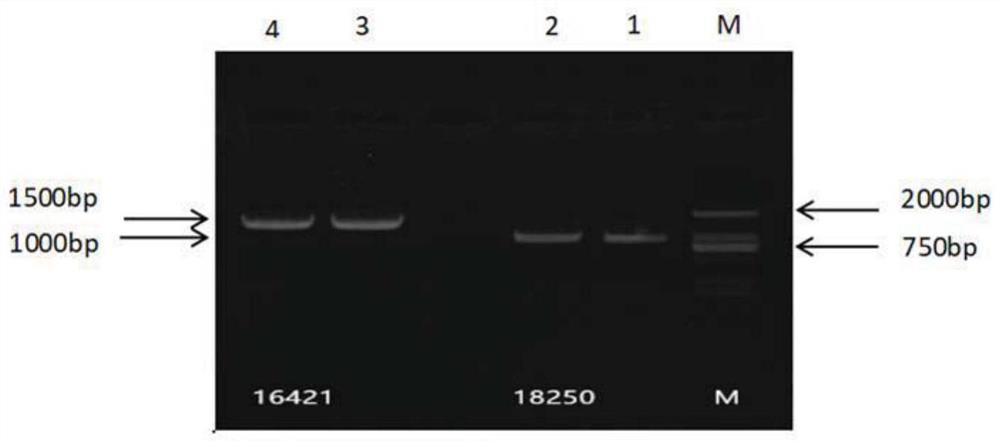
Figure 1 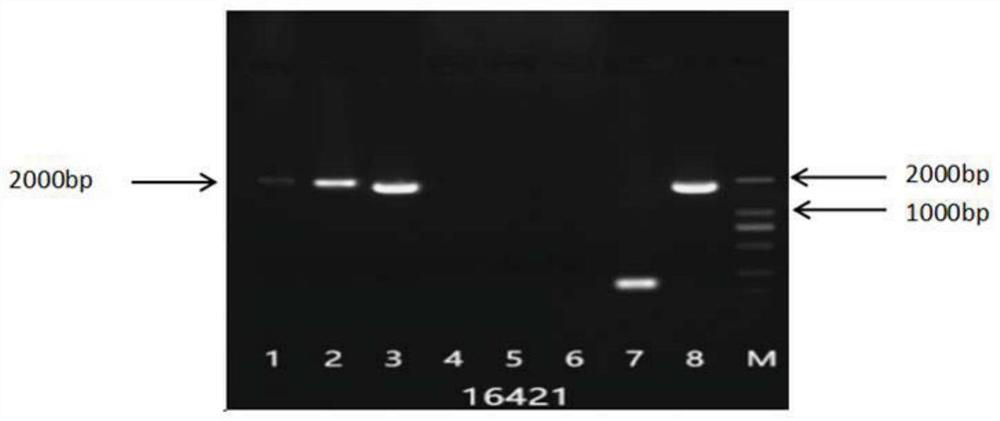
Figure 2 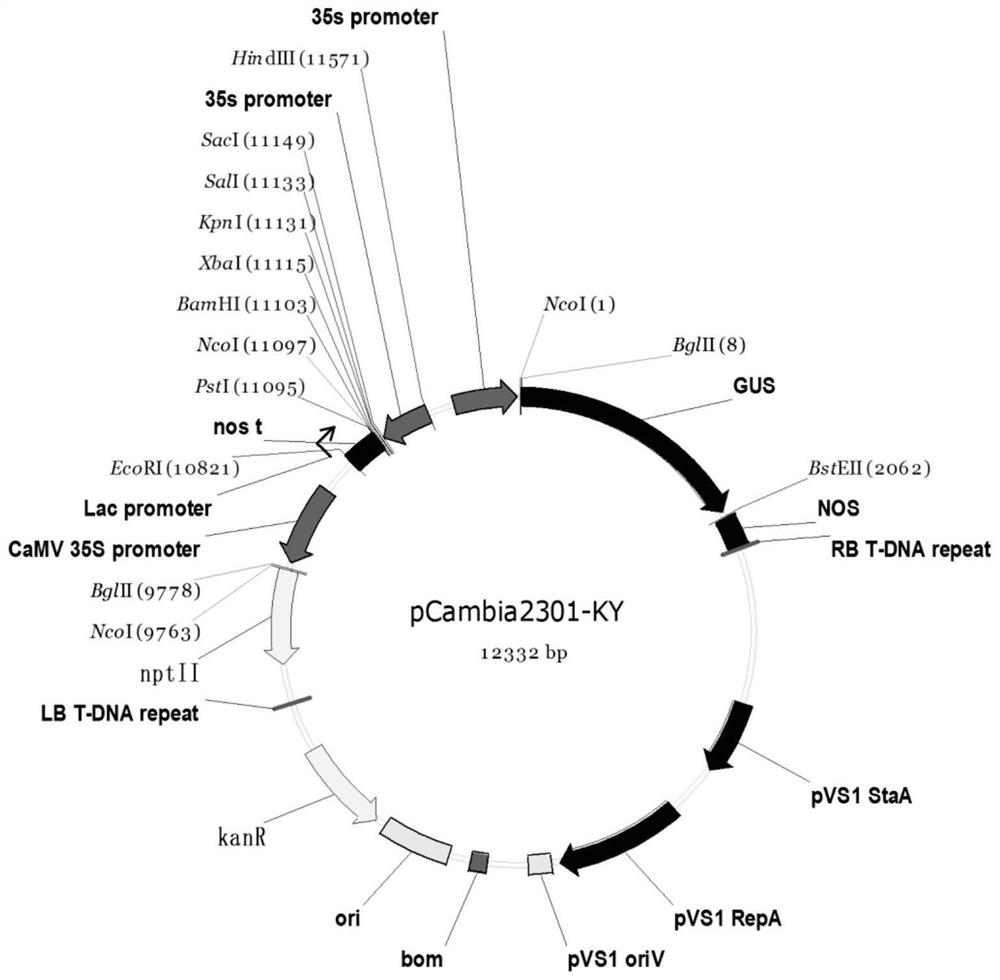
Figure 3
Abstract
Description
technical field
[0001] The invention belongs to the technical field of plant genetic engineering, and more particularly relates to a Liriodendron tulipifera transcription factor LcbHLH16421 gene and its application. Background technique
[0002] Liriodendron Chinese (Liriodendron Chinese), as an important rare tree species in my country (national second-class protected plant), has scientific research, economic, ornamental, medicinal and ecological value. Mainly reflected in: 1. It has important scientific research value for paleobotany research; 2. The trunk is straight, the crown is umbrella-shaped, the leaves are peculiar, and the flowers are large and beautiful, and it is an excellent ornamental tree species; 3. The wood texture is straight, dry and less cracked , Soft and moderate, easy to process, less deformation, no moth-eaten, is a high-quality material for interior decoration and furniture production (Liu Jianping, 2020). Liriodendron tulipifera is mainly distribut...
Examples
Embodiment 1
[0029] Example 1: Analysis of Liriodendron bHLH family and cloning of LcbHLH16421 gene
[0030] Download the model plant Arabidopsis (https: / / www.arabidopsis.org) and rice (http: / / rapdb.dna.affrc.go.jp) database to obtain bHLH family sequences, 177 and 135. Then, the protein domain alignment software HMMER3.0 was used to build a model to find out the potential bHLH family sequences of Liriodendron, and then use BLASTP to align the candidate bHLH family sequences of Liriodendron. Through sequencing and homology comparison, a sequenced sequence homologous to bHLH transcription factor and highly similar to Lch16421 in Liriodendron tulipifera genome database was cloned and named as LcbHLH16421.
[0031] 1. Extraction and quality inspection of total RNA
[0032] Before extracting total RNA, all containers used in the extraction process need to be RNase-free to remove interference from genomic DNA. Soak plastic utensils such as centrifuge tubes, grinding tools such as mortar and p...
Embodiment 2
[0085] Example 2: Construction of Liriodendron LcbHLH16421 gene expression vector
[0086] 1. Design of enzyme digestion primers
[0087] According to the Pcambia2301 plasmid map ( image 3 ) and the characteristics of the LcbHLH16421 gene coding region, using the software Primer premier 5.0 to design the primers containing the restriction site for the ORF of the LcbHLH16421 gene. Search the ORF restriction site of LcbHLH16421 gene by software and find that there is no XbaI and BamHI restriction site in the LcbHLH16421 gene ORF, and the XbaI and BamHI double restriction primer can be designed as follows: LcbHLH16421-XbaI-F: 5′-GCtctagaATGGAAGAAGGAGCAGATG-3′ , LcbHLH16421-BamHI-R: 5'-CGggatccCTACATTGTCCCTTGGAAGC-3'.
[0088] 2. PCR amplification of the enzyme-cut fragment of the target gene
[0089] Same as "4, PCR amplification target gene sequence fragment" in Example 1
[0090] 3. Electrophoresis detection and recovery of amplified products
[0091] Same as "5. Electrop...
Embodiment 3
[0117] Example 3: Agrobacterium-mediated genetic transformation of LcbHLH16421 gene into Arabidopsis thaliana
[0118] 1. Freeze-thaw method into Agrobacterium
[0119] (1) Melt the Agrobacterium EHA105 competent cells on ice, add 2 μL of the extracted plant expression vector plasmid, and mix with a pipette tip;
[0120] (2) Ice bath for 30 minutes, freeze in liquid nitrogen for 1 minute, and then water bath at 37°C for 5 minutes;
[0121] (3) Add 700 μL of LB liquid medium, 28 ° C, 200 rpm, shaking culture for 3 hours;
[0122] (4) Centrifuge at 4000rpm for 3min, leaving a little supernatant;
[0123] (5) the remaining bacterial liquid after the transformation is mixed and coated on the LB solid medium containing Kan;
[0124] (6) Inverted culture at 28°C for 3 days
[0125] (7) Identification of positive clones.