
Fluorescent probe based on triphenylamine as matrix, preparation of fluorescent probe and application of fluorescent probe in copper-silver double ion detection
A technology of triphenylamine and fluorescent probes, applied in the field of fluorescent probes, can solve the problems of environmental pollution and lack of quantitative methods for silver organisms, and achieve the effects of short response time, simple methods, and easy storage
Patent Information
- Authority / Receiving Office
- CN · China
- Patent Type
- Applications(China)
- Current Assignee / Owner
- Publication Date
- 2022-01-28
Smart Images
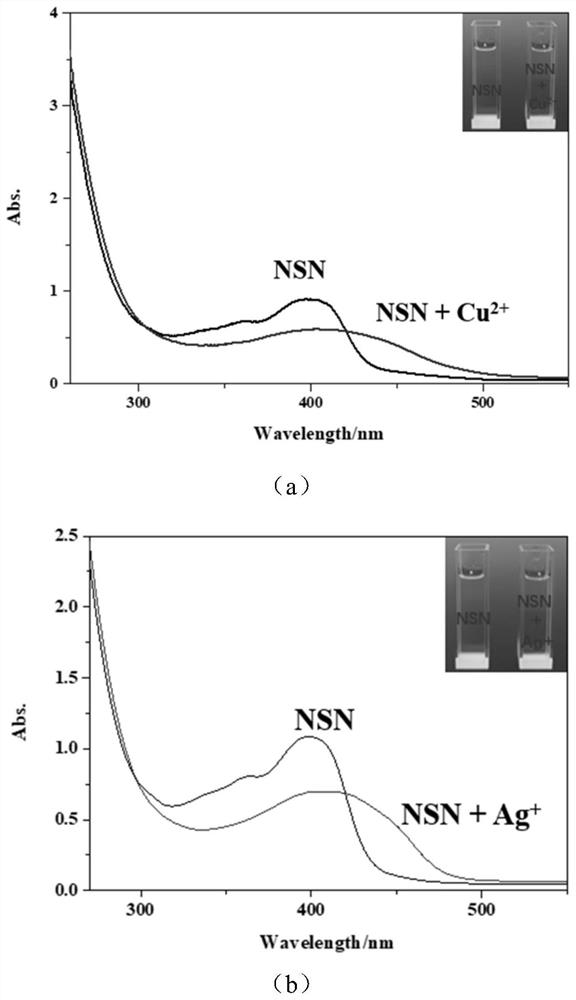
Figure 1 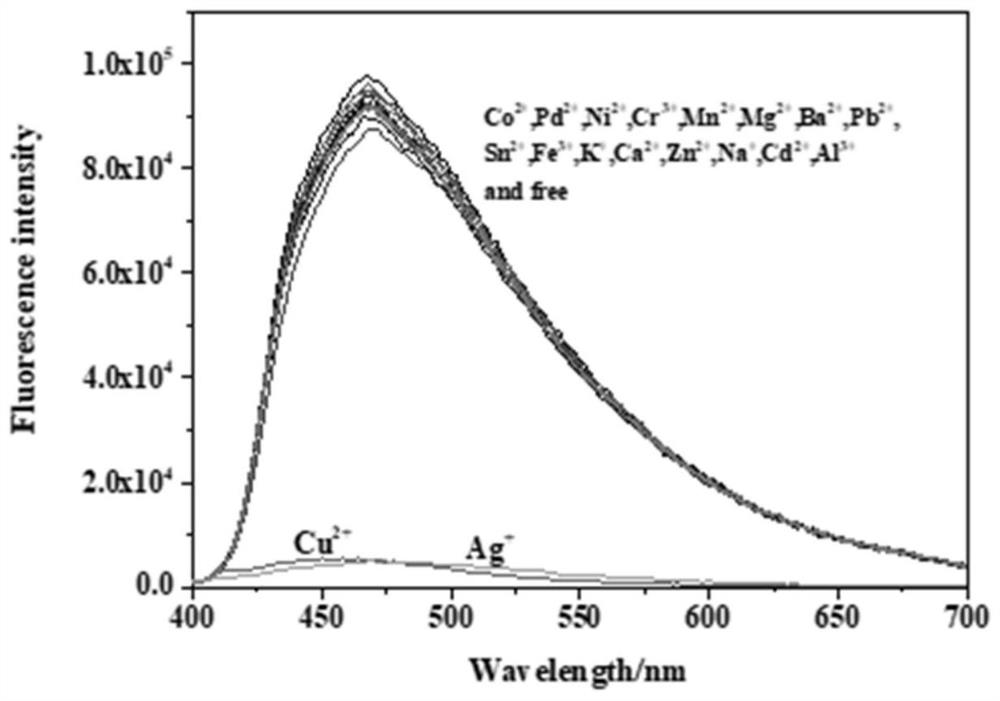
Figure 2 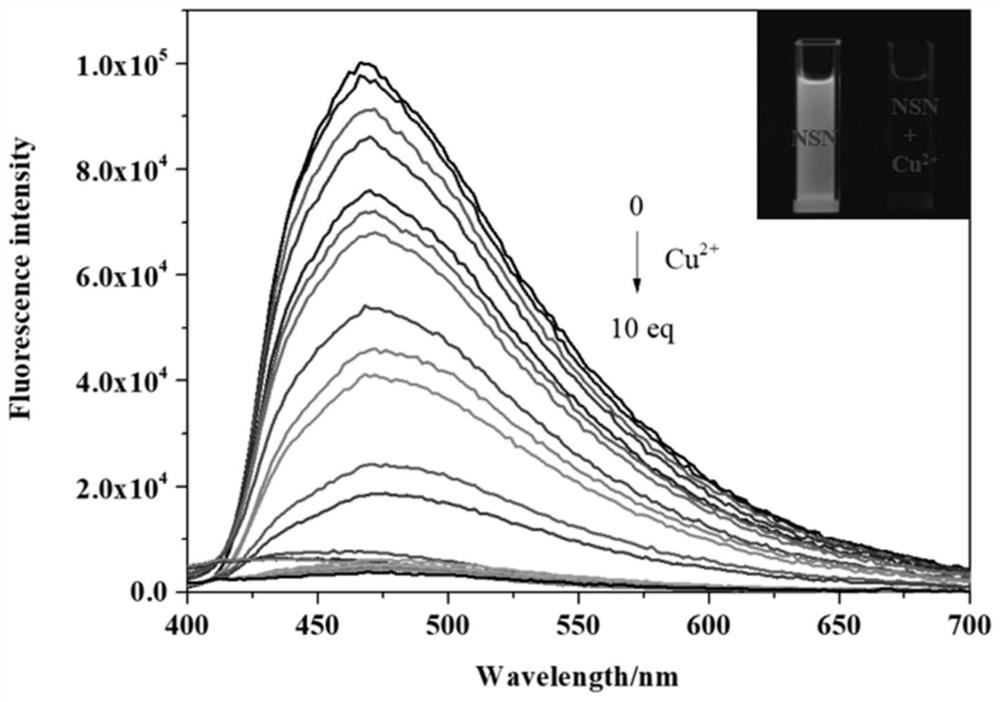
Figure 3
Abstract
Description
technical field
[0001] The invention belongs to the technical field of fluorescent probes, and in particular relates to a fluorescent probe based on triphenylamine as a matrix, its preparation and its application in the detection of copper-silver double ions. Background technique
[0002] Copper (Cu) is the third most abundant and indispensable trace element in living biological systems and is found in the active part of several essential metalloenzymes (Cu 2+ ) deficiency can increase the risk of developing neurodegenerative diseases. At the same time, the accumulation of high concentrations of copper ions may also cause damage to the central nervous system, inducing Alzheimer's and Parkinson's risk diseases. According to the health organization guidance report provided by the World Health Organization, the maximum allowable concentration of copper ions in drinking water is 2ppm; in blood, Cu 2+ The concentration should not exceed 100-150lg / dl. In addition, high concentr...
Examples
Embodiment 1
[0049] The fluorescent probe NSN based on triphenylamine as the parent is prepared by the following method:
[0050] (1) Preparation of raw material A
[0051] Add DMF (7.3mL, 93.8mmol) and phosphorus oxychloride (9.5mL, 101.9mmol) to a 100ml round bottom flask and stir in an ice-water bath for 1h. Then add triphenylamine (1.0g, 4.1mmol) and raise the temperature to 95°C, stir the reaction for 4h, after the reaction is over, cool the reaction solution to room temperature, then pour it into ice water (200mL), adjust the pH to neutral with 1M NaOH , extracted with dichloromethane (200mL), separated, the organic solvent was washed with saturated brine (3 × 50ml), dried over anhydrous sodium sulfate, and after the solvent was distilled off under reduced pressure, the crude product was obtained as a yellow solid, which was purified by column chromatography (acetic acid Ethyl ester:petroleum ether=1:5) to obtain the desired product triphenylamine dialdehyde (A) (600mg, 50%).
[00...
Embodiment 2
[0061] The dual ion (copper and silver) detection fluorescent probe NSN that embodiment 1 is made is configured into the probe stock solution of 1mM with DMSO, and each metal ion is configured into the metal ion stock solution of 3mM with deionized water, to the blank of 3mL SolutionMeOH:H 2 Add 30 μL of probe stock solution and 50 μL of metal ion stock solution to O:Hepes (v / v / v=9:1:0.1) and detect with a fluorescence spectrometer and an ultraviolet spectrophotometer. The test shows that the maximum concentration of the fluorescent probe is The excitation wavelength is 408nm, and the maximum emission wavelength is 467nm. The specific test results are as follows:
[0062] Take two cuvettes, respectively add 3mL of blank solution MeOH:H 2 O: Hepes (v / v / v=9:1:0.1) and 30 μL of probe stock solution, and then add 50 μL of copper (or silver) ion stock solution to one of the cuvettes for UV spectrum testing. Such as figure 1 As shown in a, the fluorescent probe itself has a stron...