
LAMP (loop-mediated isothermal amplification) double-chain detection probe, kit and detection method for staphylococcus aureus
A detection kit and technology for staphylococcus, applied in biochemical equipment and methods, microbial determination/inspection, recombinant DNA technology, etc., can solve the problems of low specificity and false positives, aerosol pollution, strong subjective factors, etc. The effect of strong specificity, good specificity, and no cross-reaction
Patent Information
- Authority / Receiving Office
- CN · China
- Patent Type
- Applications(China)
- Current Assignee / Owner
- Publication Date
- 2022-05-27
Smart Images
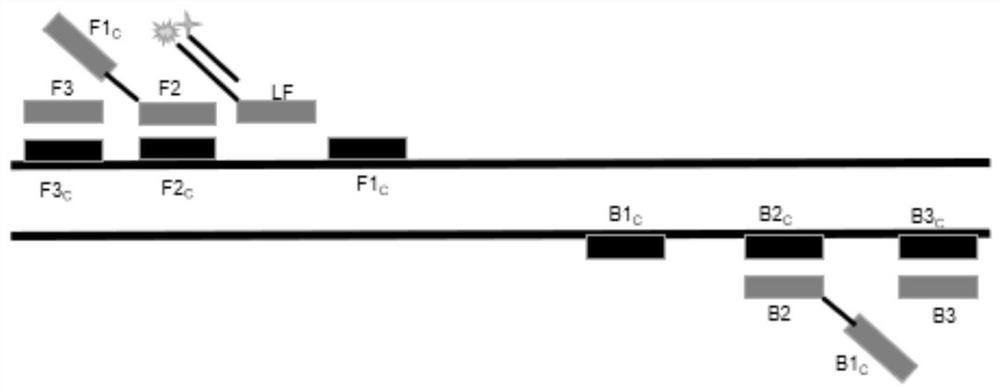
Figure 1 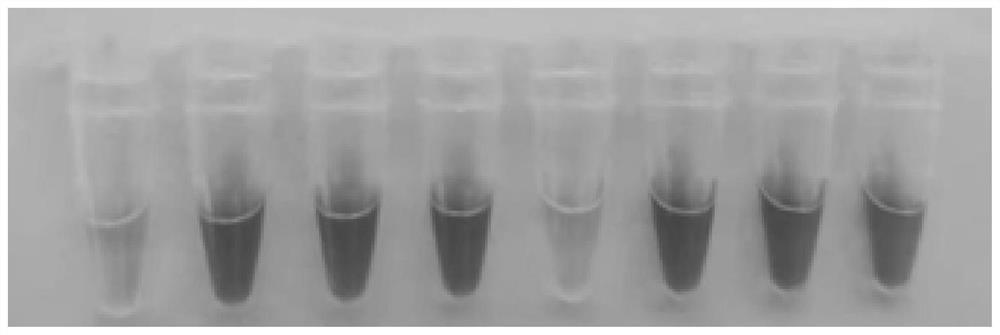
Figure 2 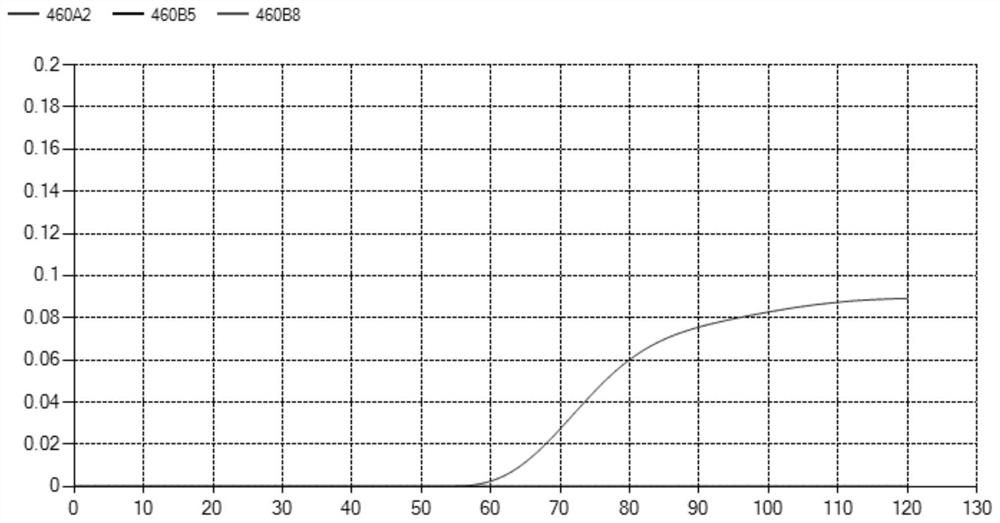
Figure 3
Abstract
Description
technical field
[0001] The invention belongs to the field of biotechnology, and in particular relates to a LAMP double-stranded detection probe of Staphylococcus aureus, a kit and a detection method. Background technique
[0002] Staphylococcus aureus is Gram-positive, is a spherical bacteria without spores, flagella, lactic acid fermentation, facultative anaerobic, is a common food-borne pathogenic microorganism, often parasitic on the skin, It is also ubiquitous in the nose, throat, stomach, sores, and the environment, often causing harm to the human body.
[0003] At present, the commonly used detection methods for Staphylococcus aureus include chromogenic medium culture method, fluorescence quantitative PCR, LAMP constant temperature PCR method, etc., all of which can be effectively detected. However, the chromogenic culture method has disadvantages such as time-consuming and large human factors. It often takes a week to detect a sample, and there are also defects such ...
Examples
Embodiment 1
[0046] Example 1LAMP double-stranded detection probe and primer design
[0047] The isdD gene, a specific target gene unique to Staphylococcus aureus, was screened out through literature review and comparison, and the primers and probes were designed using the isdD gene as the target sequence using the special LAMP primer design software. Primers and probes are analyzed and optimized. The design principles and positions of primers and probes are as follows: figure 1 As shown, the finalized probe and primer sequences are as follows:
[0048] The luminescent probe consists of two parts, the 5' end is a conserved sequence of 30-45 bp, and the 5' end of the conserved sequence is labeled with a fluorescent light-emitting group, such as FAM, VIC, TET, etc., the 3' end is a loop primer LF, nuclear The nucleotide sequence is: FAM-ACGCAGAGGACCCGCATGCCAATGCGGATGCGC ATGCCGA-CAACAAGACAGTAATAAAAAG (SEQ ID NO. 1); wherein the sequence of the loop primer LF is CAACAAGACAGTAATAAAAAG (SEQ ID NO...
Embodiment 2
[0054] Embodiment 2 Establish the LAMP detection reaction system of Staphylococcus aureus
[0055] The total volume of the LAMP detection reaction system constructed in this example is 25 μL. The template DNA of the sample to be tested is added to the LAMP reaction system shown in Table 1, and the reaction is carried out at 60-65° C. for 50-70 min.
[0056] Table 1. LAMP reaction system
[0057]
[0058]
[0059] Among them, the buffer is 100mmKCl, 100mm (NH 4 ) 2 SO 4 , 100mmMgSO 4 , 1% triton-100); pH adjusting agent is Tris-HCl.
[0060] Result judgment:
[0061] (1) Visual method, directly observe the color change, so as to determine the LAMP amplification and the presence or absence of Staphylococcus aureus in the sample.
[0062] (2) Fluorescence curve method, the fluorescence quantitative PCR instrument is used to collect the fluorescence of the luminescent group, and the amplification curve is given to judge the amplification of LAMP and the existence of St...
Embodiment 3
[0063] Example 3 Sample Detection
[0064] The real samples detected by the kit provided by the present invention are applicable to food samples, feces, vomitus, environmental swabs, water samples and other specimens or biological samples that need to be detected for the presence of bacteria.
[0065] (1) Sample processing: After enrichment, take 1ml of enrichment solution, collect the precipitate by low-speed centrifugation, add 200ul of chelex100 lysate, shake and mix well, boil at 100°C for 5 minutes, and take the supernatant as the template DNA to be tested.
[0066] (2) LAMP amplification: the LAMP detection reaction system shown in Table 2 was adopted, the reaction temperature was 63° C., and the reaction time was 60 min.
[0067] Table 2. LAMP detection reaction system
[0068]
[0069]
[0070] (3) Result judgment:
[0071] A. Visual judgment: the results are as follows figure 2 After the reaction is completed, directly observe the color change of the reactio...