

Hemostatic powder and preparation method thereof
A technology of hemostatic powder and powder, which is applied in the field of biomedical materials, can solve problems such as abnormal foreign body reaction, reduced hemostatic performance, and inapplicability of hemostatic powder, and achieve strong structural stability, rapid hemostasis, in-situ deposition and adhesion Good results
Patent Information
- Authority / Receiving Office
- CN · China
- Current Assignee / Owner
- Publication Date
- 2022-07-01
Smart Images
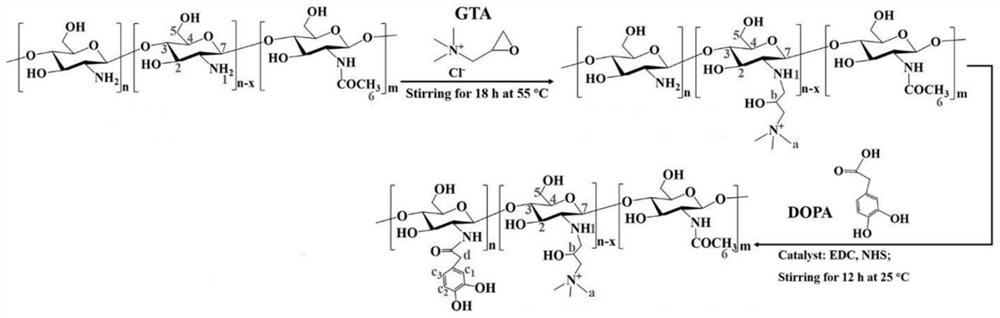
Figure 1 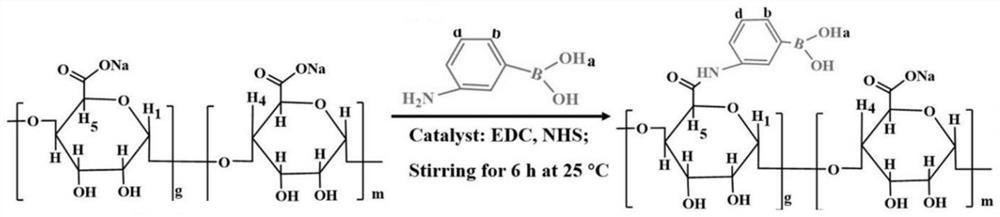
Figure 2 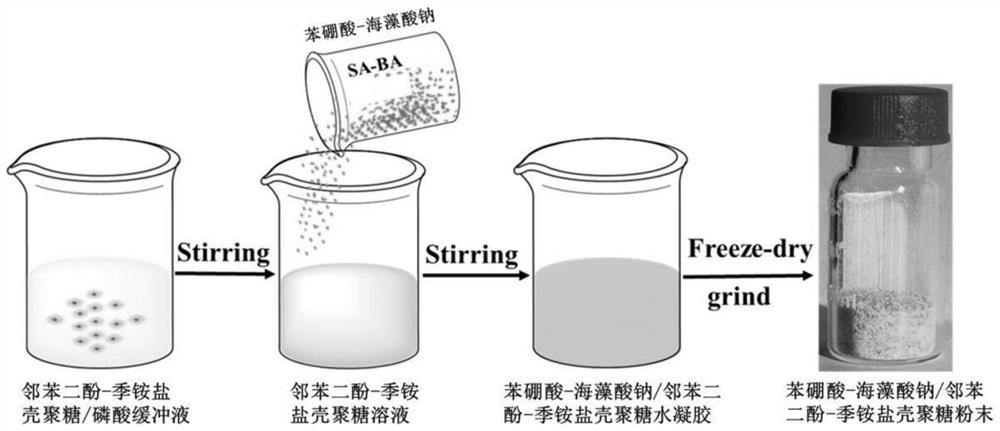
Figure 3
Abstract
Description
technical field
[0001] The invention belongs to the technical field of biomedical materials, in particular to a hemostatic powder and a preparation method thereof. Background technique
[0002] Trauma caused in battlefields, natural disasters, traffic accidents, operating rooms and other environments is often accompanied by massive and persistent bleeding. Such uncontrolled bleeding can lead to shock, organ dysfunction, and even death. Timely and effective control of bleeding is crucial to saving patients' lives. However, the body's exogenous and endogenous hemostasis mechanisms cannot achieve rapid hemostasis in massive and persistent bleeding without external intervention. Therefore, it is necessary to stop bleeding with the help of hemostatic excipients.
[0003] At present, hemostatic dressings mainly include gauze, sponge, hydrogel, powder, etc. Among them, hemostatic powder, as an effective hemostasis strategy, has been widely used in hemostasis because of its conv...
Examples
Embodiment 1
[0052] The preparation of catechol-modified quaternary ammonium salt chitosan (catechol-quaternary ammonium salt chitosan), the preparation principle is as follows figure 1 As shown, a two-step reaction was used to prepare catechol-modified quaternary ammonium salt chitosan.
[0053] first step:
[0054] 5 g of chitosan was weighed and dissolved in 100 mL of HCl solution with a pH of about 4.0 to obtain a chitosan solution;
[0055] 14.1 g of 2,3-epoxypropyltrimethylammonium chloride (Glycidyl trimethylammonium chloride, GTA) was added to the chitosan solution, stirred at 55 °C, and reacted for 18 h to obtain modified chitosan solution;
[0056] The modified chitosan solution was purified in deionized water with a dialysis membrane with a molecular cut-off of 12000 Da for 3 d, and the purified material was taken out and lyophilized to obtain quaternary ammonium salt-modified chitosan.
[0057] Step 2:
[0058] Weigh 3 g of the quaternary ammonium salt-modified chitosan pre...
Embodiment 2
[0063] The preparation of phenylboronic acid-modified sodium alginate (phenylboronic acid-sodium alginate), the preparation principle is as follows figure 2 shown.
[0064] Weigh 3 g of sodium alginate, dissolve it in 300 mL of deionized water, add catalyst and intermediate, stir for 15 min, and mix well to obtain a mixed solution; wherein, the catalyst is 1.305 g of 1-ethyl-3-(3-( Dimethylamino)propyl)carbodiimide hydrochloride (1-Ethyl-3-(3-dimethylaminopropyl)carbodiimide, EDC·HCl), in the middle is 0.675g of N-carboxysuccinimide (N-carbodiimide) hydroxysuccinimide, NHS);
[0065] Then, a solution of 3-aminobenzeneboronic acid (3-aminobenzeneboronic acid) dissolved in dimethyl sulfoxide was added to the prepared mixed solution, wherein the content of 3-aminoboronic acid was 2.151 g, and the acylation reaction was stirred at 25 °C for 12 h;
[0066] The mixed solution after the acylation reaction was dialyzed and purified in deionized water with a dialysis membrane with ...
Embodiment 3
[0069] Preparation of hemostatic powder (1)
[0070] like image 3 and Figure 4 As shown, weigh 1.5 g of catechol-modified quaternary ammonium salt chitosan prepared by the method of Example 1, dissolve it in phosphate buffered saline (PBS) with a pH of about 7.4, and prepare a concentration of 2%. (w / v) catechol-modified quaternary ammonium salt chitosan solution;
[0071] Weigh 4.5 g of phenylboronic acid-modified sodium alginate powder prepared by the method of Example 2, dissolve it in the catechol-modified quaternary ammonium salt chitosan solution, and stir to promote the phenylboronic acid-modified sodium alginate powder. It is fully dissolved and cross-linked with the quaternary ammonium salt chitosan modified by catechol to form a homogeneous hydrogel, and the pH of the hydrogel mixed solution is kept between 7.0 and 7.5;
[0072] Put the hydrogel into a dialysis membrane with a molecular cut-off of 12,000 Da, and dialyze the hydrogel in deionized water for 1 d to...