

Laminate oleophilic reformative clay and a method of production for the same, the material and method of production of ABS nano-metric composite material produced by the same
Patent Information
- Authority / Receiving Office
- US · United States
- Current Assignee / Owner
- Publication Date
- 2005-06-09
- Estimated Expiration
- Not applicable · inactive patent
Smart Images
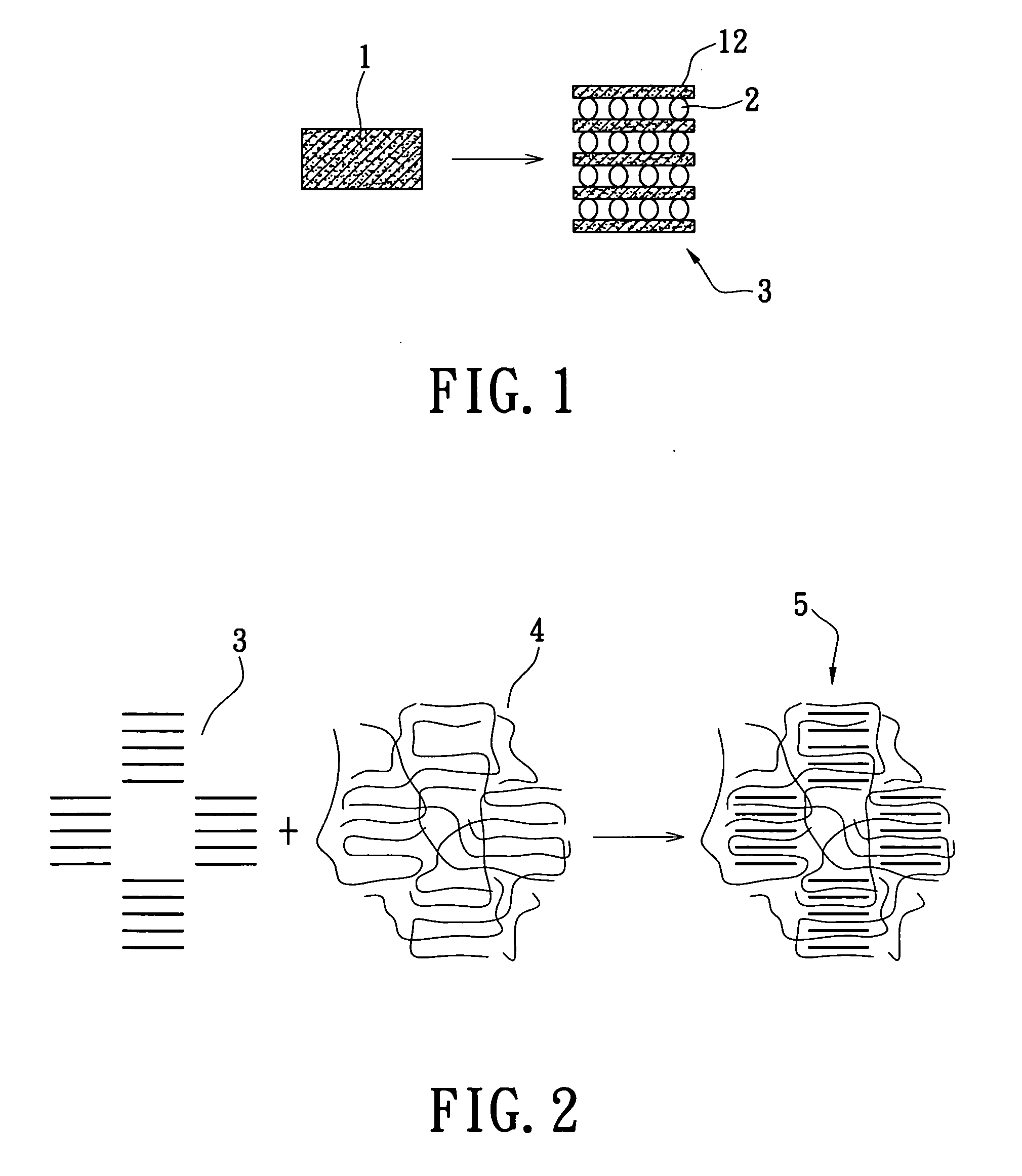
Figure 1 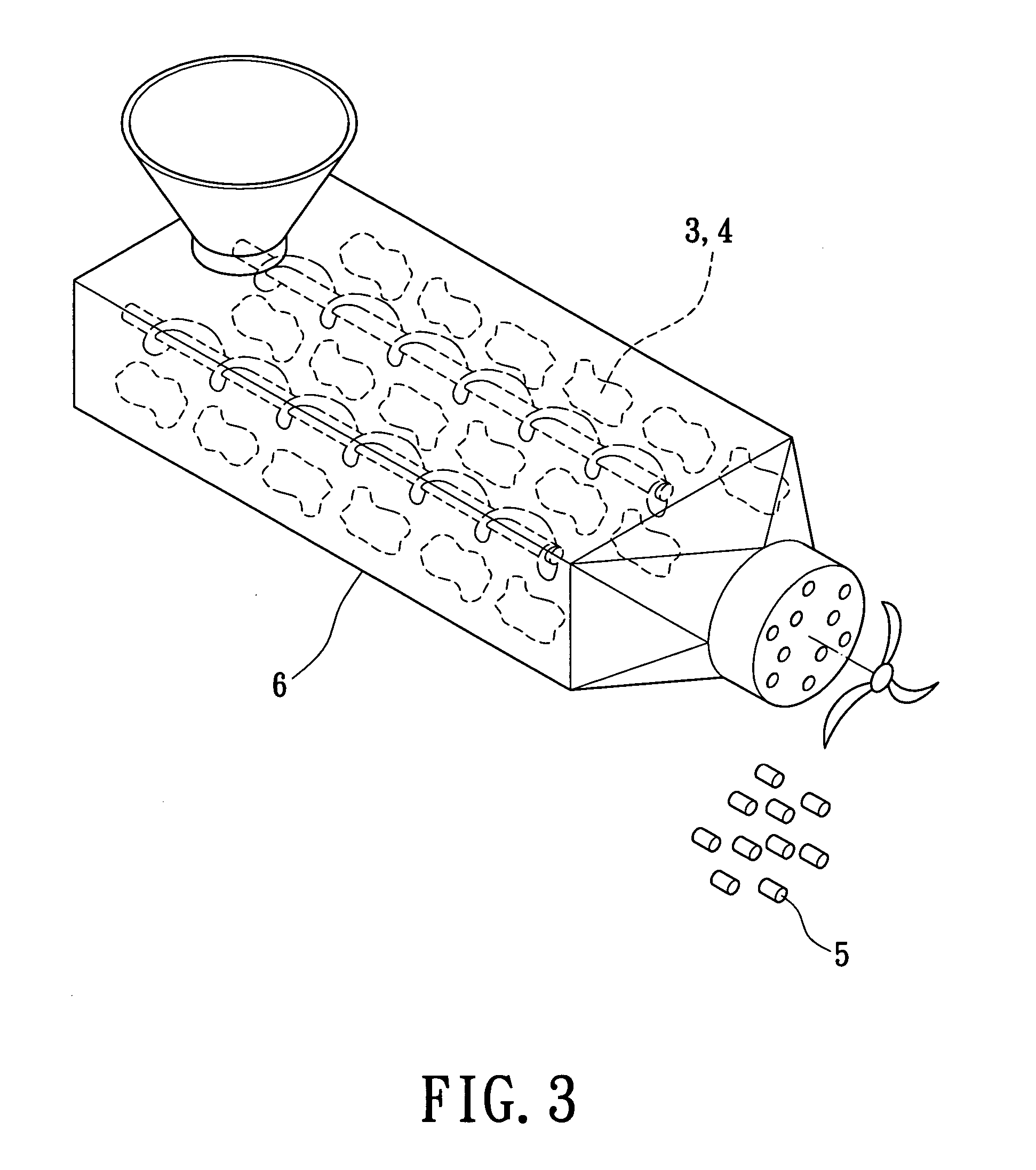
Figure 2
Abstract
Description
FIELD OF THE INVENTION
[0001] The present invention relates to a technique to produce a specific nano-metric composite material by kneading laminate oleophilic reformative clay with ABS resin. By the way of reforming the inorganic clay to have the oleophilic functional group, the compatibility between the said reformed clay and the organic ABS polymer is improved. The oleophilic reformative clay can open gaps between the laminate structures of the clay to allow the small ABS molecule particle to combine with the laminate structure of the clay. Then the kneading process of ABS and the reformative clay completely mixes the two materials. The kneading process does not require solvent, thus saving the cost of solvent and sparing the environment. The ABS nano-metric composite material (also called nanocomposite) is self-cleaning, has improved strength, is thermally stable, and cheap to add the reformed clay for mass production. The present invention relates to the material content and th...
Examples
Embodiment Construction
[0017] The present invention provides the ABS nano-metric composite material, which comprises a polymer substrate for nano-material including the ABS, and a kind of laminate oleophilic reformative clay, formed by kneading a material with uniformly spread mixing. In particular, the present invention mixes ABS resin with a greater amount and the laminate oleophilic reformative clay with an about 3-7 weight percentage.
[0018] The raw material of the clay of the laminate oleophilic reformative clay is smectite clay. The exchanging equivalent weight of the anion thereof is about 60-120 meq / 100 g for the reformation of the oleophilic functional group. In particular, montmorillonite is suitable because its equivalent weight of the anion is about 90-100 meq / 100 g. A water solution is used to expand lubricatively laminates of smectite clay. Then organic alkyl ammonium halogenated salt solution as the reformative chemical is blended with the water solution of smectite clay under agitation to ...