
Avian transgenesis using a chicken ovalbumin gene region
Patent Information
- Authority / Receiving Office
- US · United States
- Current Assignee / Owner
- Publication Date
- 2006-06-15
- Estimated Expiration
- Not applicable · inactive patent
Smart Images
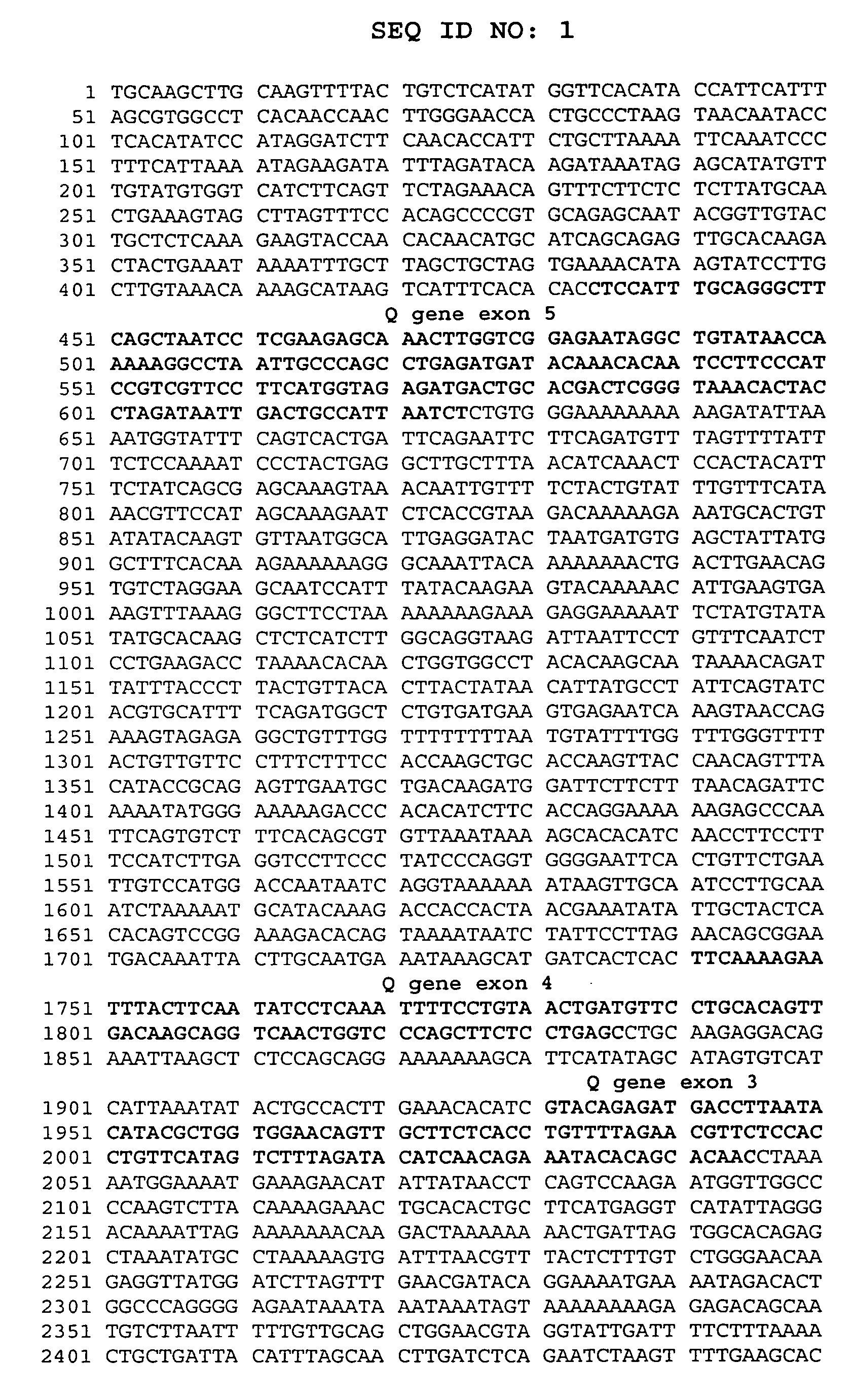
Figure 1 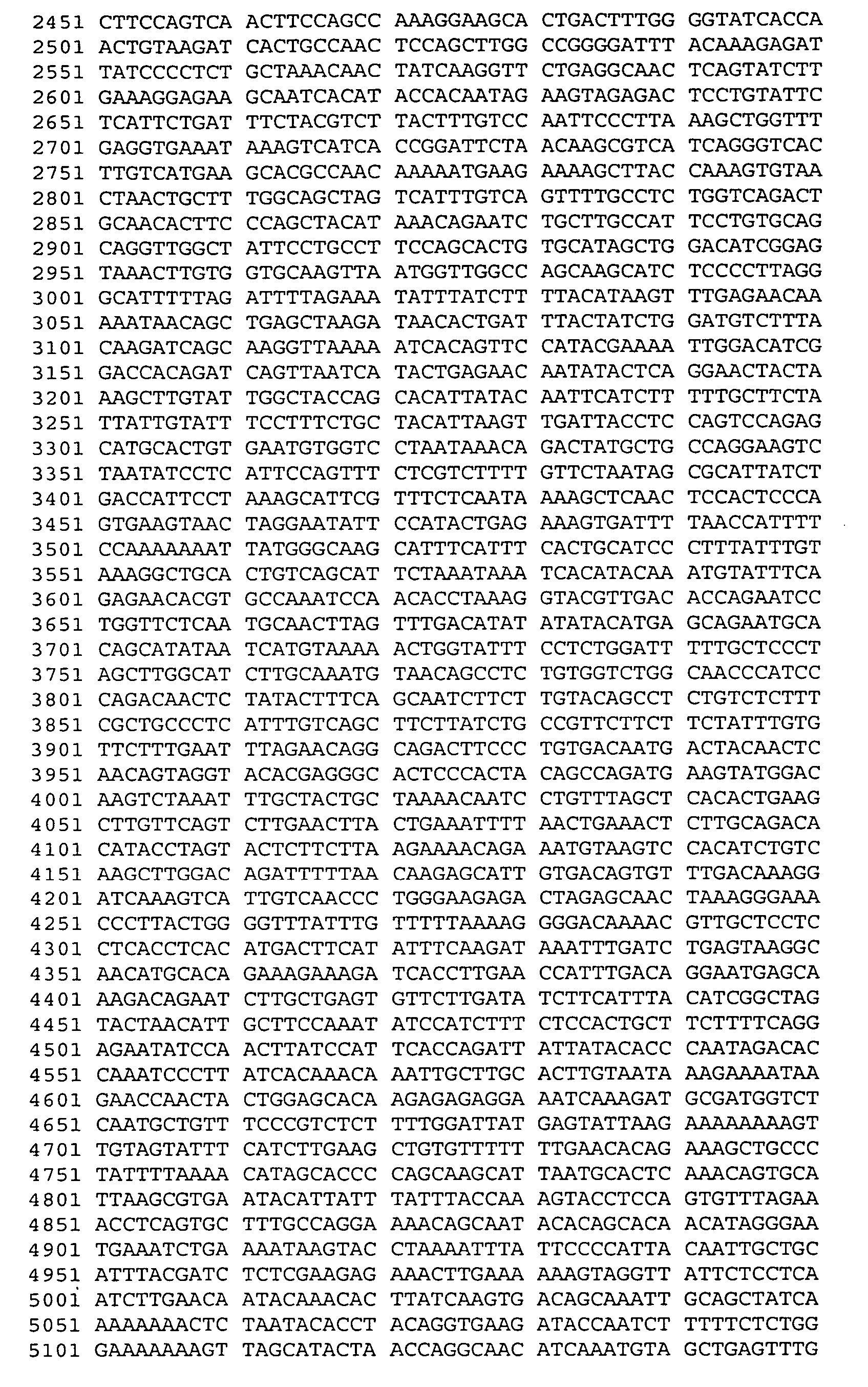
Figure 2 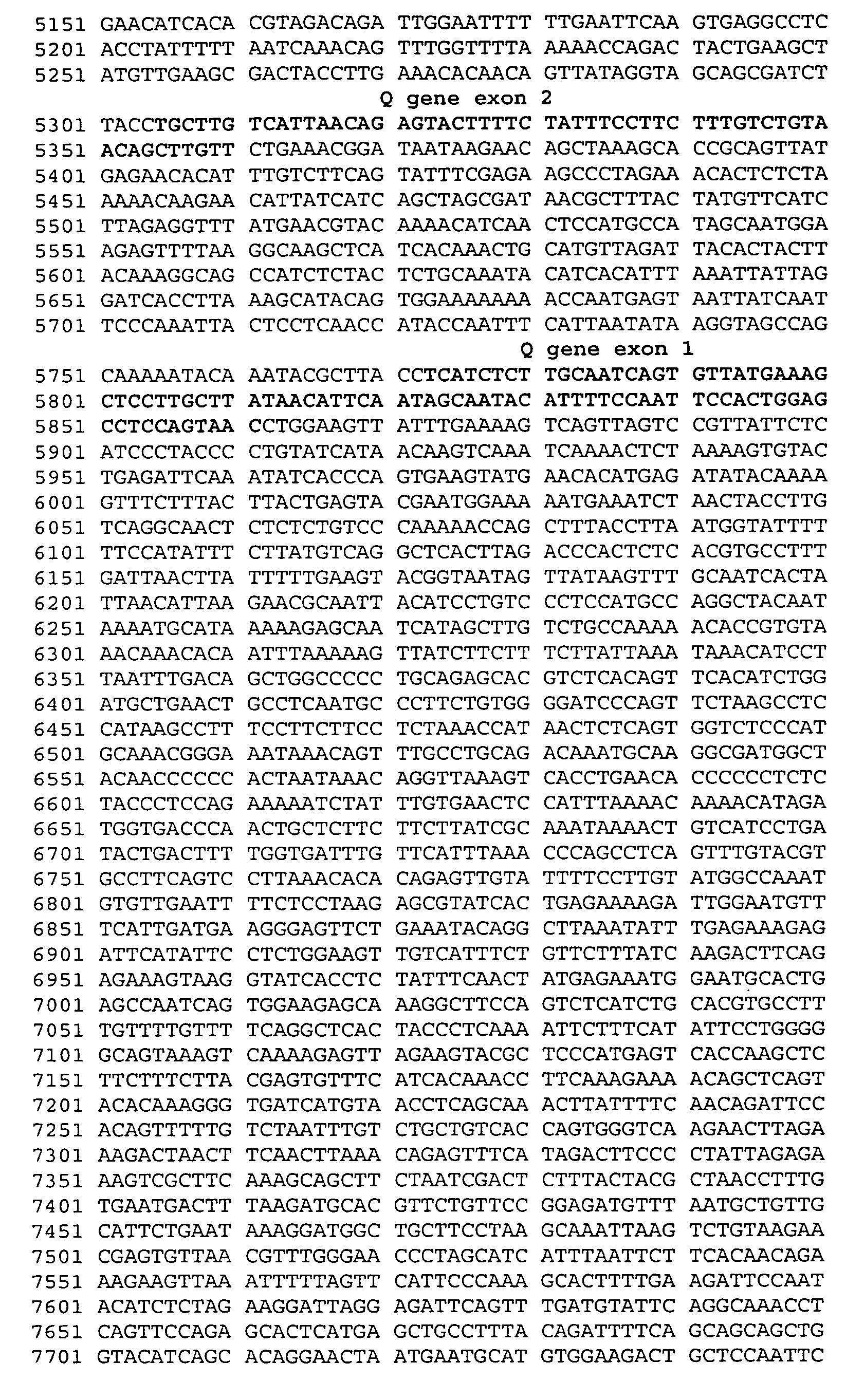
Figure 3
Abstract
Description
[0001] The present application claims priority from U.S. provisional patent applications, Ser. Nos. 60 / 462,953, filed Apr. 15, 2003; 60 / 465,015, filed Apr. 24, 2003; and 60 / 469,488 filed May 9, 2003, all of which are hereby incorporated by reference herein in their entireties.FIELD OF THE INVENTION
[0002] The present invention relates generally to an isolated nucleic acid molecule comprising an avian ovalbumin transcriptional regulatory control region and linked matrix attachment regions. The invention further relates to recombinant nucleic acids and expression vectors, genetically transformed cells and transgenic avians that comprise an avian ovalbumin transcriptional regulatory region operably linked to a heterologous polypeptide-encoding nucleic acid insert. The present invention also relates to the expression and production of the polypeptide-encoding nucleic acid molecule under the control of the isolated avian ovalbumin transcriptional regulatory region. BACKGROUND
[0003] Tran...
Examples
example 1
Construction of a Complete Ovalbumin Locus from Two Overlapping BACs
[0148] A complete ovalbumin locus BAC was created from two overlapping BACs that together contained the complete ovalbumin locus, as shown in FIG. 6. The nucleotide sequences of BAC 120 and BAC 77 are in opposite directions with respect to the vector backbone pECBAC1.
[0149] BAC 120 was digested with Not I and a 145 kb fragment was re-cloned, but in the reversed orientation (flipped), into Not I digested vector backbone pECBAC1. This resulted in a deletion of a region of approximately 11.5 kb from the 5′ end of the insert sequence of BAC 120 and which was upstream of the DNase I sensitivity region. The reversed BAC 120 ‘flip’ and BAC 77 clones were digested with Srf I and RARE digested using an oligonucleotide targeted to an EcoRI site within ovalbumin. 5′ and 3′ fragments were isolated by CHEF gel electrophoresis, and ligated together to yield the complete contiguous ovalbumin genomic locus BAC.
example 2
Expression of a Heterologous Gene by a Chicken Ovalbumin Locus BAC
[0150] cDNA constructs encoding immunoglobulin light-chain and heavy-chains of a human IgG1 kappa monoclonal antibody were inserted in-frame with the ovalbumin translation start site of separate ovalbumin locus-containing BACs, as shown in FIG. 3. The immunoglobulin chain-encoding cDNAs were first inserted into a plasmid that contained a 2.7 kb EcoR1 fragment from the ovalbumin gene and which included the ovalbumin start site. The resulting vector was then digested with restriction endonuclease EcoR1 and cloned into an approximately 195 kb ovalbumin BAC which had been subjected to EcoR1 recA-assisted restriction endonuclease (RARE) digestion as described by Boren et al., 1996, Prot. Sci. 5,: 2479-2484 and incorporated herein by reference in its entirety.
[0151] Transgenic birds were created by cytoplasmic co-microinjection of human light-chain and heavy chain BACs (figure b) followed by ovum transfer as described in ...
example 3
Expression of a Heterologous Gene by a Chicken Ovalbumin Locus BAC
[0153] The open reading frame of the firefly luciferase gene was inserted into the ovalbumin translation start site of an ovalbumin locus BAC as shown in FIG. 3. The luciferase gene was inserted into a plasmid that contained a 2.7 kb EcoR1 fragment from the ovalbumin gene and which includes the ovalbumin start site. The resulting vector was then digested with EcoRI and cloned into an approximately 195 kb ovalbumin BAC which had been subjected to EcoR1 recA-assisted restriction endonuclease (RARE) digestion as described by Boren et al., 1996, Prot. Sci. 5,: 2479-2484 and incorporated herein by reference in its entirety.
[0154] Primary tubular gland cells isolated from the oviduct of laying quail (Sanders and McKnight, Endocrinology 116, 398-405(1985)), were transfected using the ovalbumin-luciferase construct or with a negative control CMV-IFN construct. Luciferase activity in cell extracts was analyzed two days post ...