
Production method of nicotine transdermal preparation
Patent Information
- Authority / Receiving Office
- US · United States
- Current Assignee / Owner
- Publication Date
- 2007-02-01
- Estimated Expiration
- Not applicable · inactive patent
Smart Images
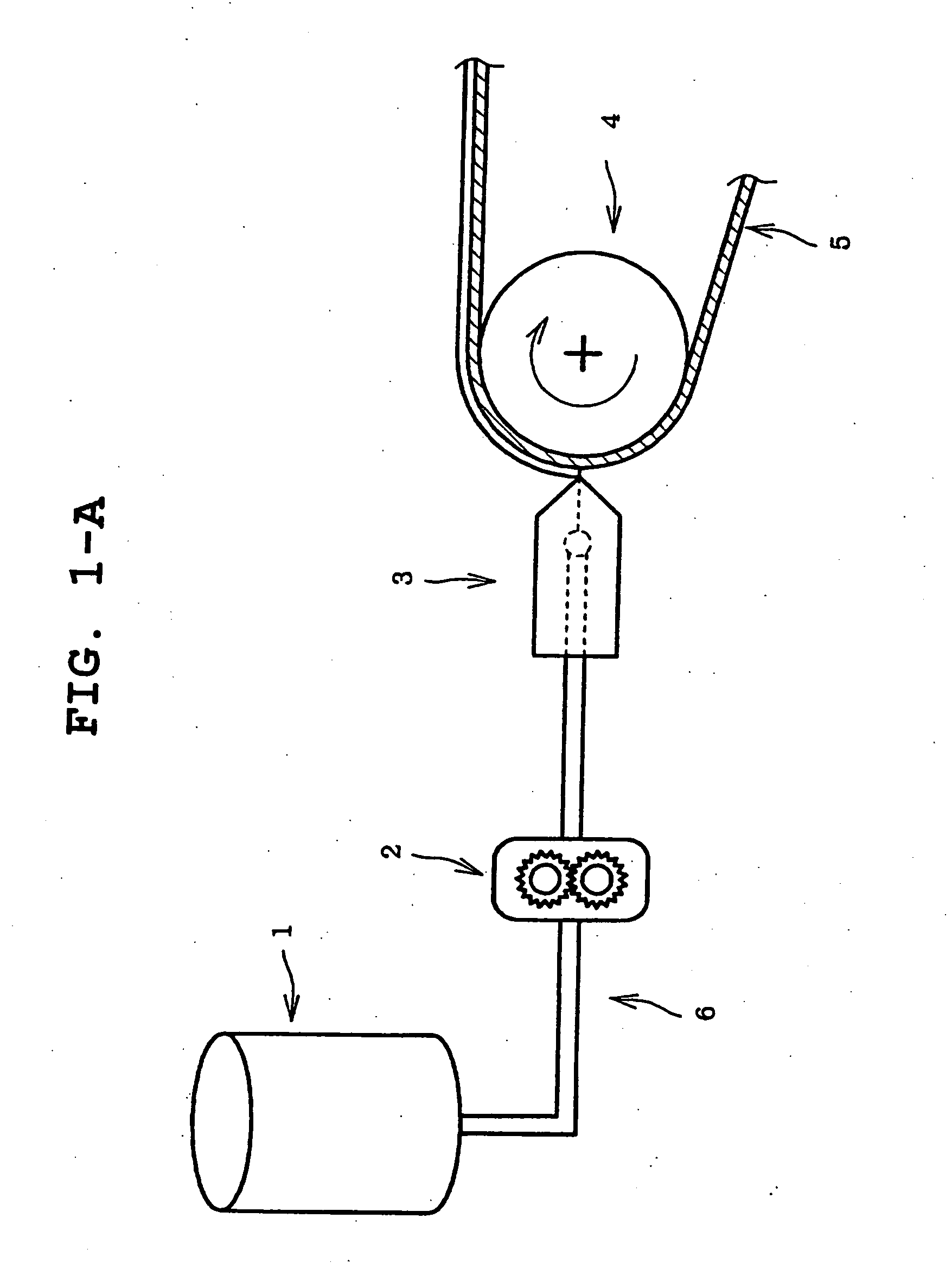
Figure 1 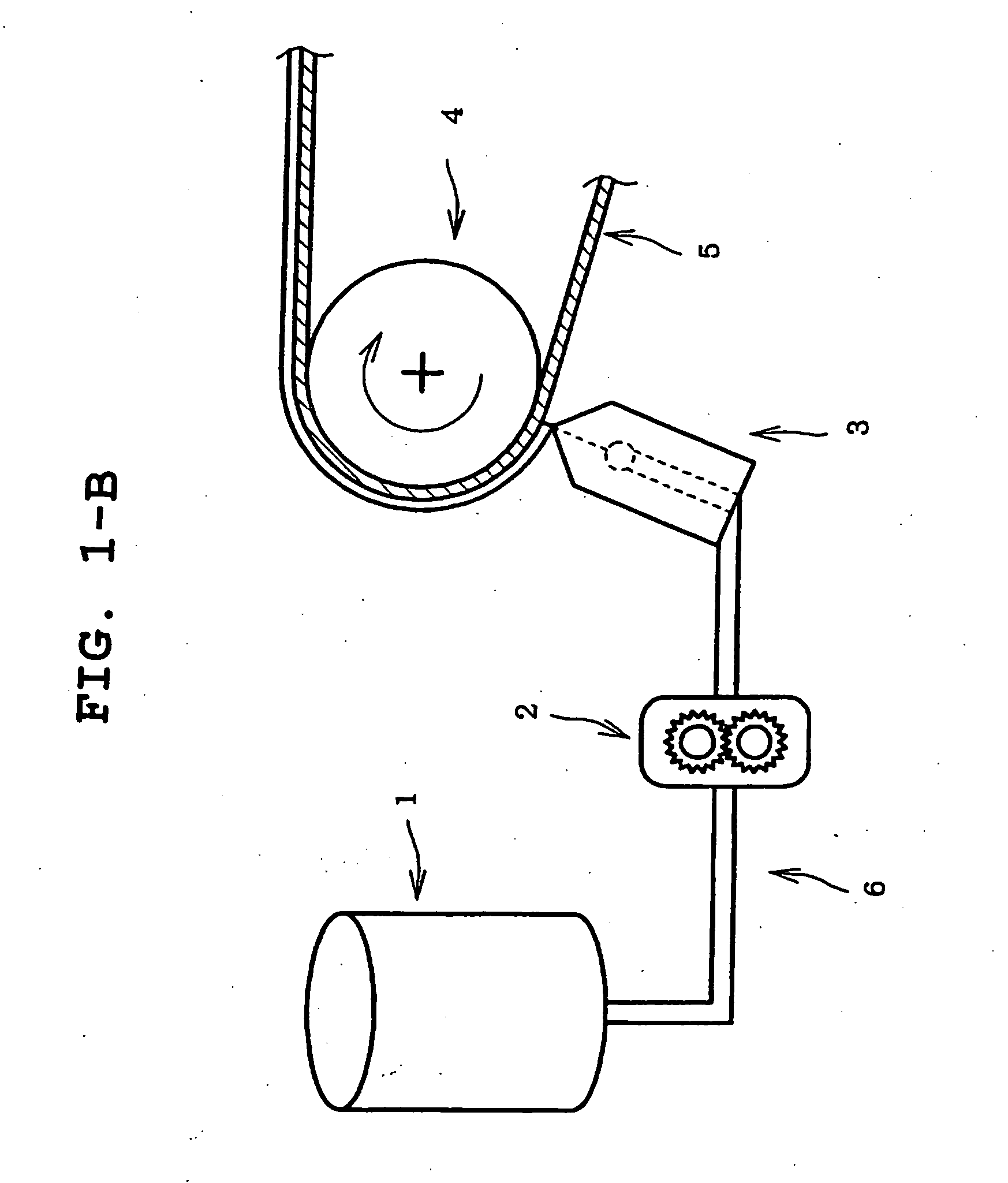
Figure 2 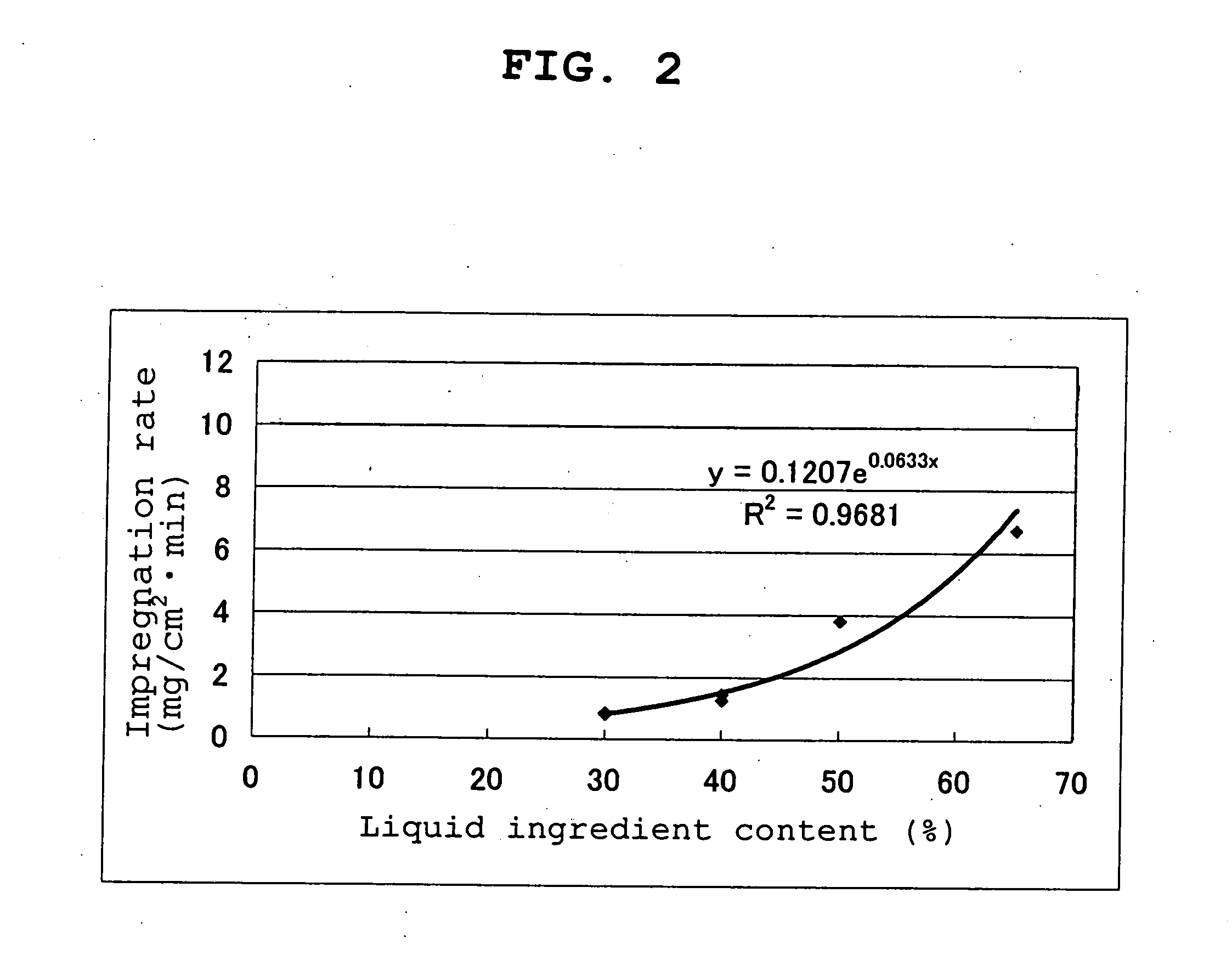
Figure 3
Abstract
Description
TECHNICAL FIELD OF THE INVENTION
[0001] The present invention relates to a production method of a nicotine transdermal preparation to be adhered to the outer skin to allow transdermal absorption of nicotine into the body. BACKGROUND OF THE INVENTION
[0002] It is well known that nicotine contained in cigarettes is deeply involved in habitual smoking. As a method for reducing smoking, administration of nicotine in a form other than smoking into the living organism has been proposed to suppress habitual smoking, and various nicotine administration methods have been proposed with the growing antismoking mood in the world. These methods are called what is called a nicotine supplement therapy, which includes the following methods.
[0003] One of them is a method of administering nicotine contained in a chewing gum or drug lozenge into the body from the mouth cavity. According to this administration method, in fact, a large amount of nicotine is swallowed down with the saliva, by which the ...
Examples
example 1
[0093] Under a nitrogen atmosphere, 2-ethylhexyl acrylate (95 parts), acrylic acid (5 parts), ethyl acetate (100 parts) and benzoyl peroxide (0.2 part) were reacted in a separable flask equipped with a refluxing condenser, a stirrer, a thermometer, a dropping funnel and a nitrogen inlet tube at 60° C. for 15 hr to give an adhesive solution.
[0094] The obtained adhesive solution was measured out in an amount corresponding to adhesive solid content of 49.93 parts and placed in a reaction container. Isopropyl myristate was added to the reaction container in 50 parts relative to the adhesive solid content, Coronate HL (manufactured by Nippon Polyurethane Industry Co., Ltd.) was added as a crosslinking agent in a proportion of 0.07 part (0.14% of the adhesive), and the mixture was thoroughly stirred.
[0095] The obtained solution was applied to a peel treated surface of a polyethylene terephthalate film release liner having the peel treated surface on one side to a thickness after drying ...
example 2
[0097] Under a nitrogen atmosphere, 2-ethylhexyl acrylate (72 parts), N-vinyl-2-pyrrolidone (25 parts) and acrylic acid (3 parts) were charged in a flask, azobisisobutyronitrile (0.3 part) was added as a polymerization initiator, and polymerization was started. By adjusting the stirring rate and the outer bath temperature, and dropwise addition of ethyl acetate, the bath inner temperature was controlled to 58-62° C., and a polymerization reaction was carried out to give an adhesive solution (hereinafter to be also referred to as an adhesive solution A).
[0098] The above-mentioned adhesive solution was measured out in an amount corresponding to an adhesive solid content of 59.82 parts and placed in a reaction container. Coconad MT (manufactured by Kao Corporation, caprylic·capric triglyceride) was added to the reaction container in a proportion of 40 parts relative to the adhesive solid content, ALCH (manufactured by Kawaken Fine Chemicals Co., Ltd., aluminum ethylacetoacetate·diisop...
example 3
[0101] 2-Ethylhexyl acrylate / vinyl acetate / 2-hydroxyethyl acrylate=78 / 16 / 6 (weight ratio, DURO-TAK2196, manufactured by National Starch & Chemical Company) was measured out in an amount corresponding to the adhesive solid content of 69.72 parts and placed in a reaction container. Coconad MT (manufactured by Kao Corporation) was added to the reaction container in a proportion of 30 parts relative to the adhesive solid content, ALCH (manufactured by Kawaken Fine Chemicals Co., Ltd.) as a crosslinking agent was added in a proportion of 0.28 part (0.4% of the adhesive) and the mixture was thoroughly stirred.
[0102] The obtained solution was applied to a peel treated surface of a polyethylene terephthalate film release liner having the peel treated surface on one side to a thickness after drying of 80 μm, and dried at 70° C. for 2 min and 90° C. for 2 min to give an adhesive layer. The adhesive surface of the adhesive layer thus formed was adhered to the surface on a non-woven fabric sid...