
Compounds for the treatment of metabolic disorders
a metabolic disorder and compound technology, applied in the field of compound for the treatment of metabolic disorders, can solve the problems of diabetes mellitus being a major cause of morbidity and mortality, debilitating complications, and prone to coronary artery diseas
Patent Information
- Authority / Receiving Office
- US · United States
- Patent Type
- Applications(United States)
- Current Assignee / Owner
- Publication Date
- 2007-05-10
Smart Images
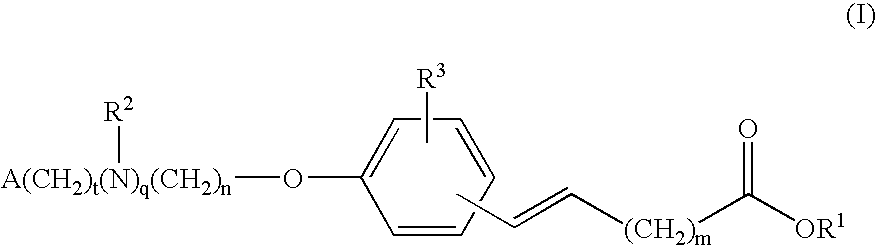
Figure 1 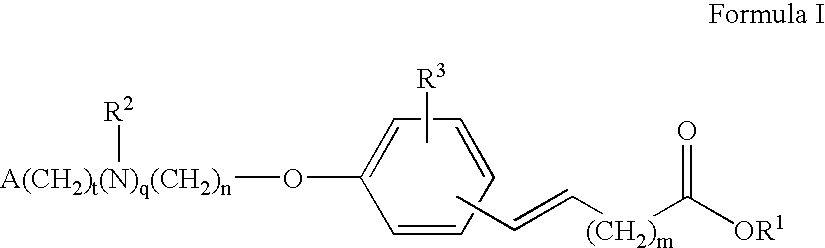
Figure 2 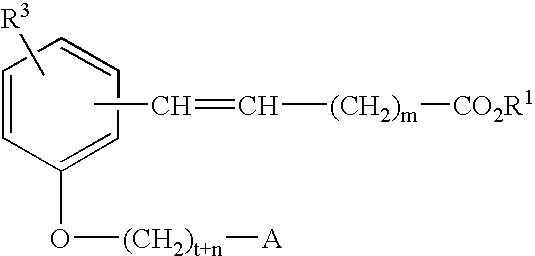
Figure 3
Abstract
Description
BACKGROUND OF THE INENTION
[0001] Diabetes mellitus is a major cause of morbidity and mortality. Chronically elevated blood glucose leads to debilitating complications: nephropathy, often necessitating dialysis or renal transplant; peripheral neuropathy; retinopathy leading to blindness; ulceration of the legs and feet, leading to amputation; fatty liver disease, sometimes progressing to cirrhosis; and vulnerability to coronary artery disease and myocardial infarction.
[0002] There are two primary types of diabetes. Type I, or insulin-dependent diabetes mellitus (IDDM) is due to autoimmune destruction of insulin-producing beta cells in the pancreatic islets. The onset of this disease is usually in childhood or adolescence. Treatment consists primarily of multiple daily injections of insulin, combined with frequent testing of blood glucose levels to guide adjustment of insulin doses, because excess insulin can cause hypoglycemia and consequent impairment of brain and other functions....
Examples
synthesis examples
CHEMICAL SYNTHESIS EXAMPLES
Example 1
5-[3-(2,6-Dimethylbenzyloxy)-phenyl]-pent-4-enoic acid ethyl ester
[0196]
Step A: Preparation of 5-[3-(2,6-Dimethylbenzyloxy)-phenyl]-pent-4-enoic acid ethyl ester
[0197] A mixture of triphenylethylbutyrate phosphonium bromide (10.06 g, 22 mmol) and sodium hydride (0.581 g, 24.2 mmol) in dimethyl sulfoxide (45 ml) was stirred for 30 minutes under nitrogen. The reaction mixture was heated to 26.7° C. and 3-(2,6-Dimethylbenzyloxy)benzaldehyde (3.89 g, 16.2 mmol) diluted in dimethyl sulfoxide (15 ml) was added dropwise over 3 minutes. The reaction mixture was stirred for 3 hours at 50° C. A mixture of triphenylethylbutyrate phosphonium bromide (3.20 g, 70 mmol) and sodium hydride (0.185 g) in dimethyl sulfoxide (10 ml) was stirred under nitrogen for 30 minutes. This mixture was added, in bolus to the above reaction mixture at room temperature. The reaction mixture was stirred for Z hours at 50° C., cooled to room temperature and poured over ice (50 g...
example 2
6-[3-(2,6-Dimethylbenzyloxy)-phenyl]-hex-5-enoic acid ethyl ester
[0199]
Step A: Preparation of Triphenylethylvalerate Phosphonium Bromide
[0200] In a 100 ml three necked flask equipped with a stir bar, thermocouple and a reflux condenser with a nitrogen inlet was dissolved triphenylphosphine (11.80 g, 45 mmol) in toluene (25 ml), ethyl-5-bromovalerate (12.54 g, 60 mmol) was added to the solution and the reaction mixture was refluxed for 2 hours and then cooled to room temperature. The toluene was decanted away from the oily solid and the residue was slurried in hexane (100 ml). The hexane (3×100 ml) was decanted away three times from the oily residue and oily residue was heated on a Kugelrohr apparatus at 40° C., 0.1 torr for 30 minutes to afford 19.0 g (89.6%) of the title compound.
Step B: 6-[3-(2,6-Dimethylbenzyloxy)-phenyl]-hex-5-enoic acid ethyl ester
[0201] A mixture of triphenylethylvalerate phosphonium bromide (Step A, 13.29 g, 28.2 mmol) and sodium hydride (0.745 g, 31.0 mm...
example 3
Antidiabetic Effects of Compounds of the Invention in db / db Mice
[0204] Db / db mice have a defect in leptin signaling, leading to hyperphagia, obesity and diabetes. Moreover, unlike ob / ob mice on a C57BL / 6J background, db / db mice on a C57BLKS background undergo failure of their insulin-producing pancreatic islet cells, resulting in progression from hyperinsulinemia (associated with peripheral insulin resistance) to hypoinsulinemic diabetes.
[0205] Male obese (db / db homozygote) C57B / Ksola mice approximately 8 weeks of age, were obtained from Jackson Labs (Bar Harbor, Me.) and randomly assigned into groups of 5-7 animals such that the body weights (40-45 g) and serum glucose levels (≧300 mg / dl in fed state) were similar between groups; male lean (db / +heterozygote) mice served as cohort controls. A minimum of 7 days was allowed for adaptation after arrival. All animals were maintained under controlled temperature (23° C.), relative humidity (50±5%) and light (7:00-19:00), and allowed fr...