
Cold Idle Adaptive Air-Fuel Ratio Control Utilizing Lost Fuel Approximation
Patent Information
- Authority / Receiving Office
- US · United States
- Current Assignee / Owner
- Publication Date
- 2007-12-06
- Estimated Expiration
- Not applicable · inactive patent
Smart Images
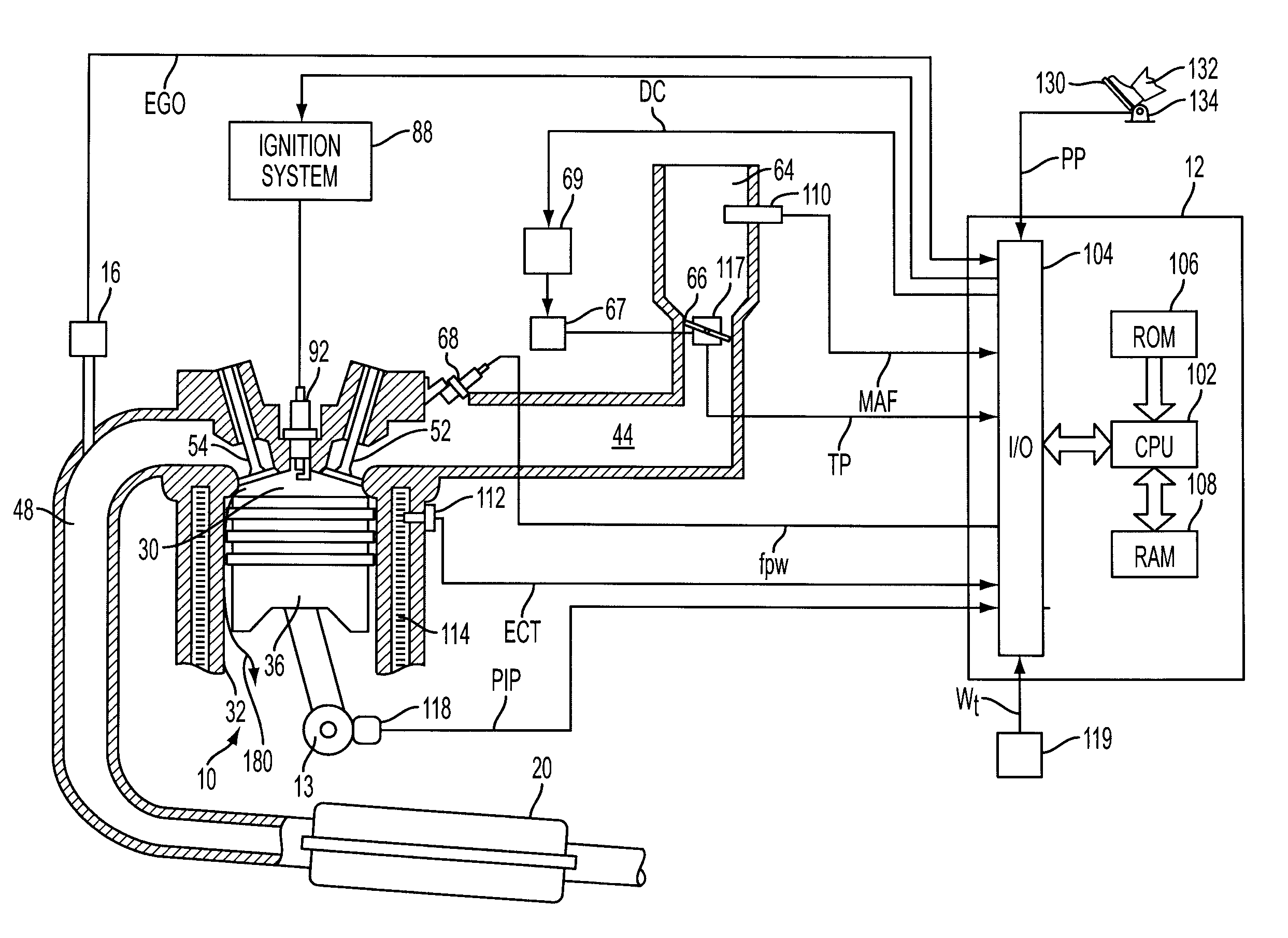
Figure 1 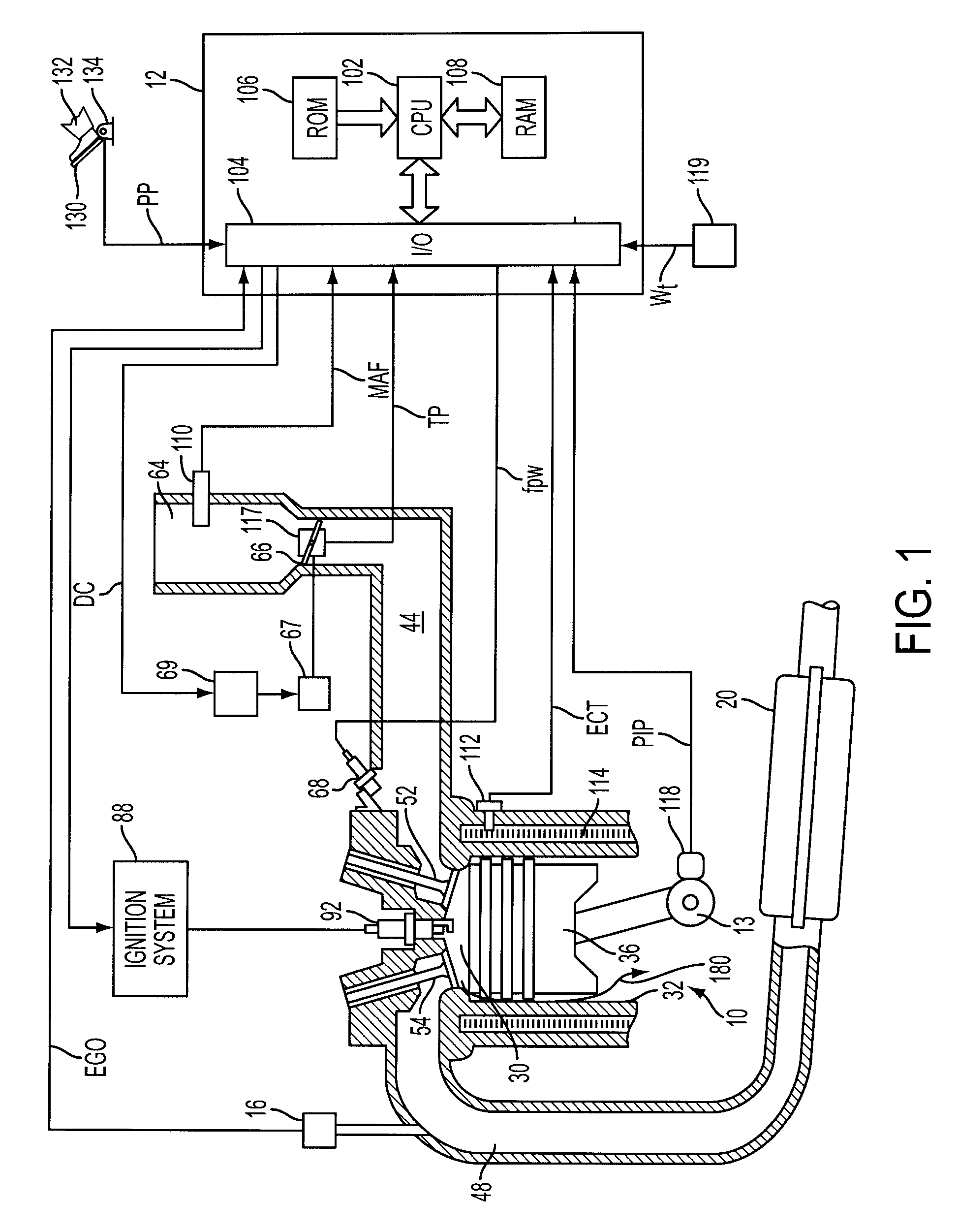
Figure 2 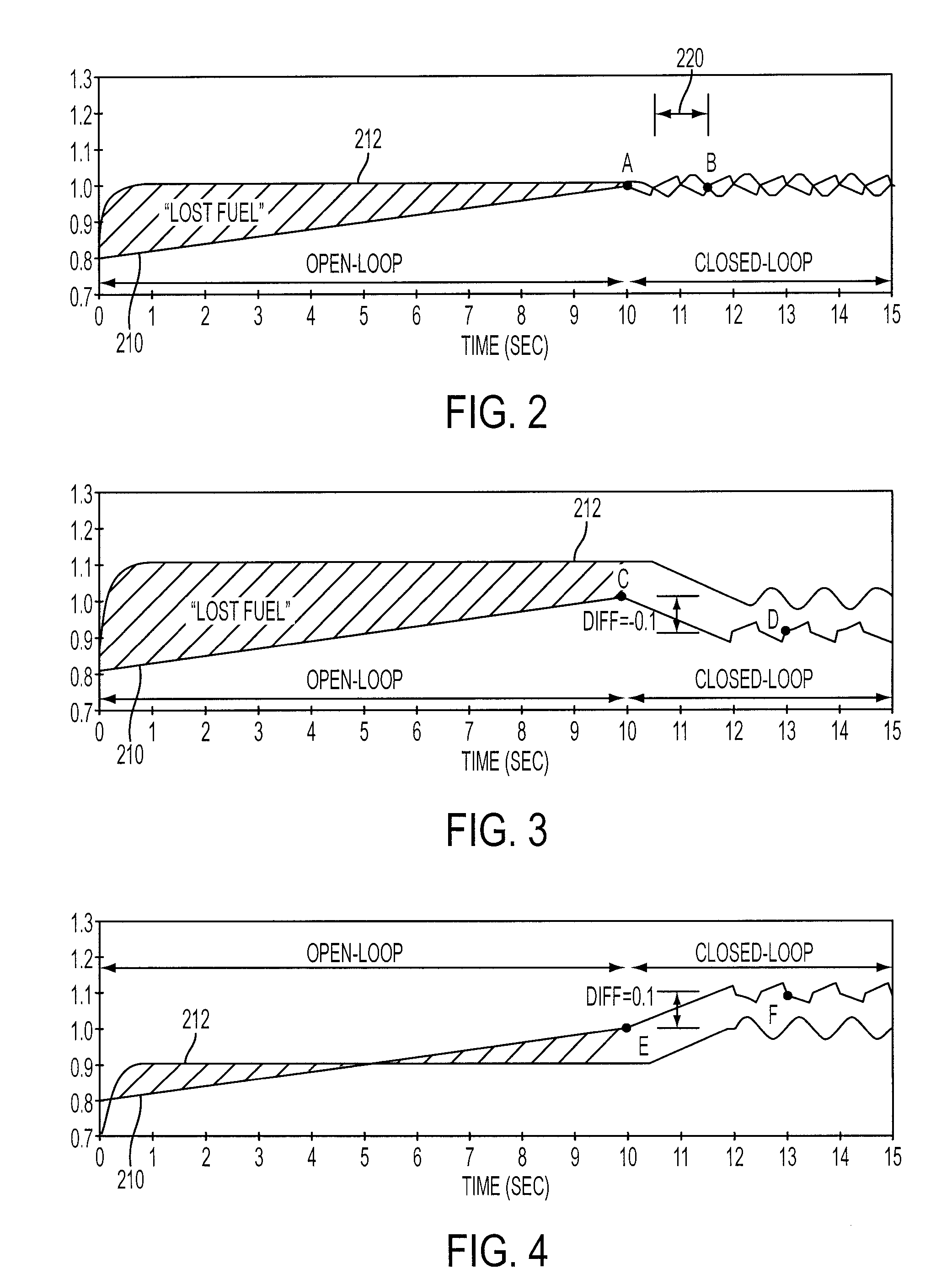
Figure 3
Abstract
Description
BACKGROUND AND SUMMARY
[0001] Engine starting during cold operating conditions, referred to as a “cold start”, can present numerous challenges in maintaining repeatability / reliability and meeting emission requirements. Specifically, providing appropriate engine air-fuel ratio during engine starting conditions can be difficult due to numerous factors, especially given that exhaust gas oxygen sensors used for feedback air-fuel control are typically unavailable during the initial operation of a cold start. As such, the initial fueling may be referred to as open-loop air-fuel control.
[0002] One phenomenon that can degrade cold start air-fuel ratio control is when a portion of injected fuel may not be available for combustion due to fuel vaporization. This phenomenon may be referred to as “lost fuel” and can be significantly influenced by intake port surface temperature at start-up and fuel volatility (vapor pressure and distillation properties). Further, lost fuel can significantly impact ...
Examples
Embodiment Construction
[0013]Internal combustion engine 10 comprising a plurality of cylinders, one cylinder of which is shown in FIG. 1, is controlled by electronic engine controller 12. Engine 10 includes combustion chamber 30 and cylinder walls 32 with piston 36 positioned therein and connected to crankshaft 13. Combustion chamber 30 communicates with intake manifold 44 and exhaust manifold 48 via respective intake valve 52 and exhaust valve 54. Exhaust gas oxygen sensor 16 is coupled to exhaust manifold 48 of engine 10 upstream of catalytic converter 20.
[0014]Intake manifold 44 communicates with throttle body 64 via throttle plate 66. Throttle plate 66 is controlled by electric motor 67, which receives a signal from ETC driver 69. ETC driver 69 receives control signal (DC) from controller 12. Intake manifold 44 is also shown having fuel injector 68 coupled thereto for delivering fuel in proportion to the pulse width of signal (fpw) from controller 12. Fuel is delivered to fuel injector 68 by a convent...