
Abuse Resistant Opioid Transdermal Delivery Device Containing Opioid Antagonist Microspheres
a technology of microspheres and opioids, which is applied in the direction of bandages, biocides, drug compositions, etc., can solve the problems of previous “used” transdermal fentanyl delivery devices being subsequently abused for their overage, and achieve the effect of reducing the potential for abus
Patent Information
- Authority / Receiving Office
- US · United States
- Current Assignee / Owner
- Publication Date
- 2008-09-25
- Estimated Expiration
- Not applicable · inactive patent
Smart Images
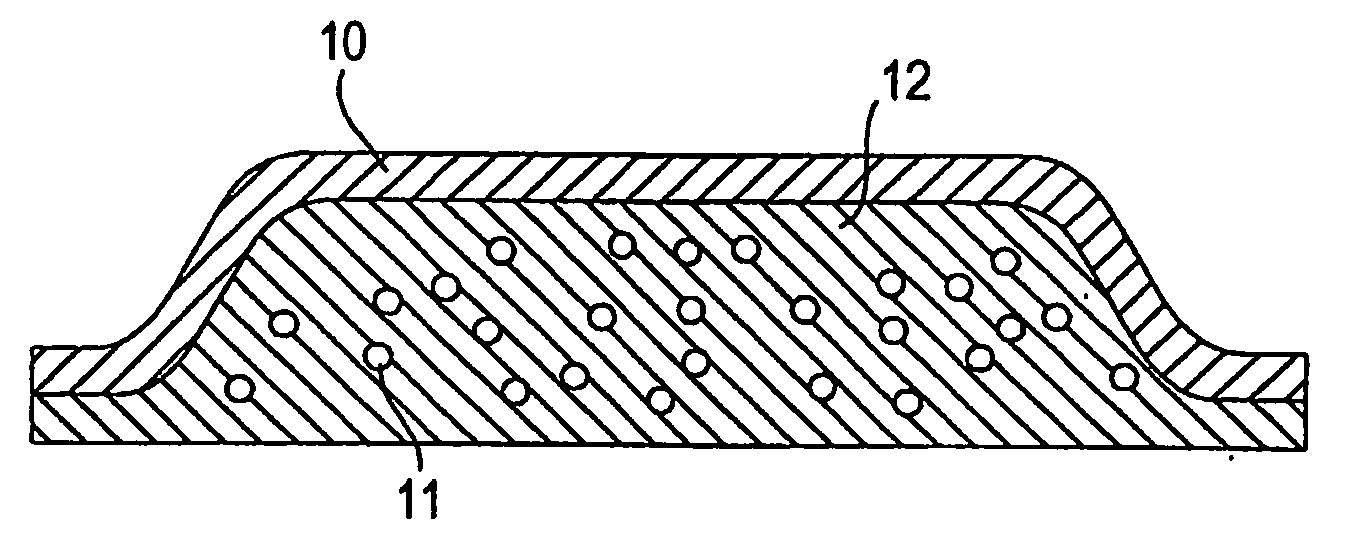
Figure 1 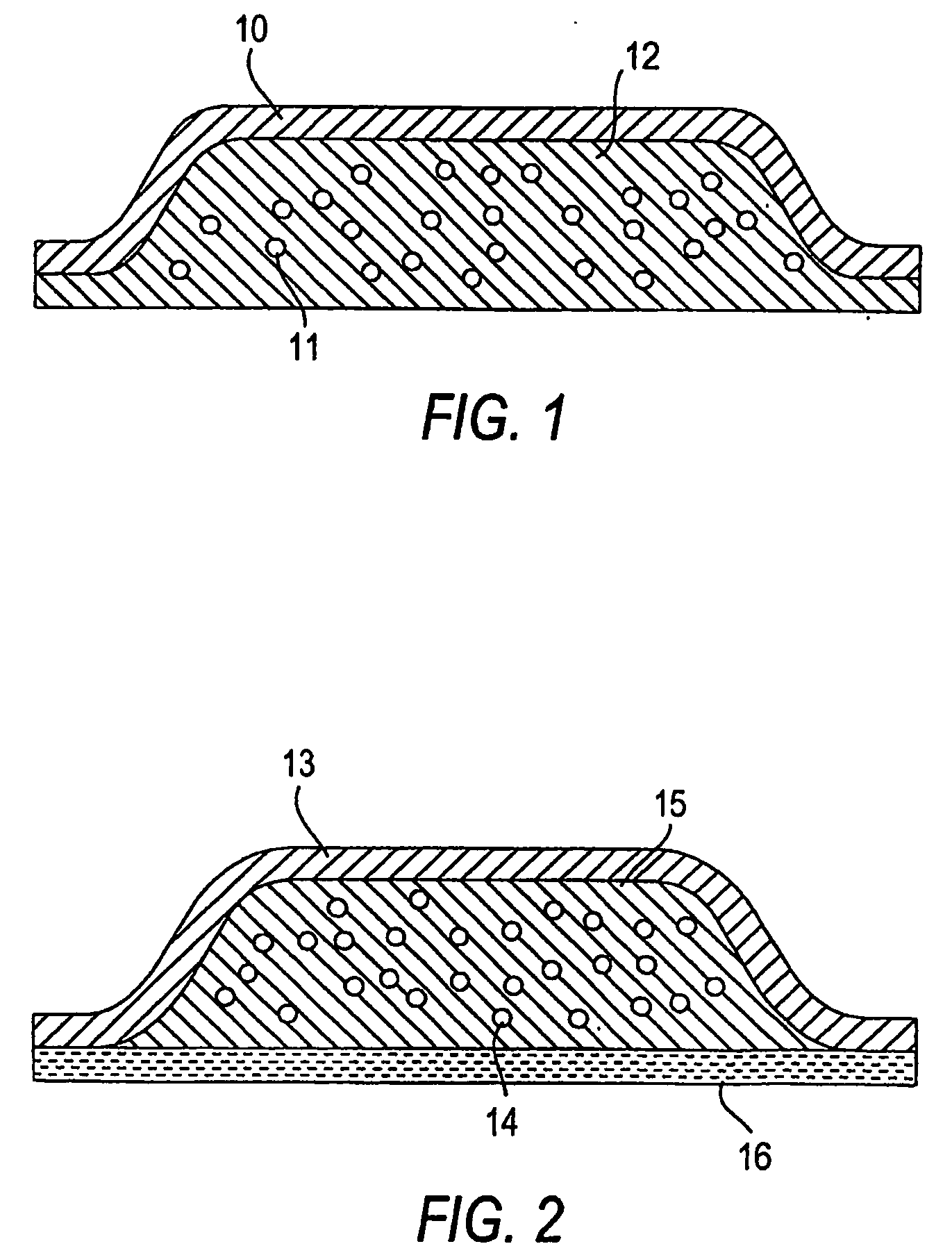
Figure 2 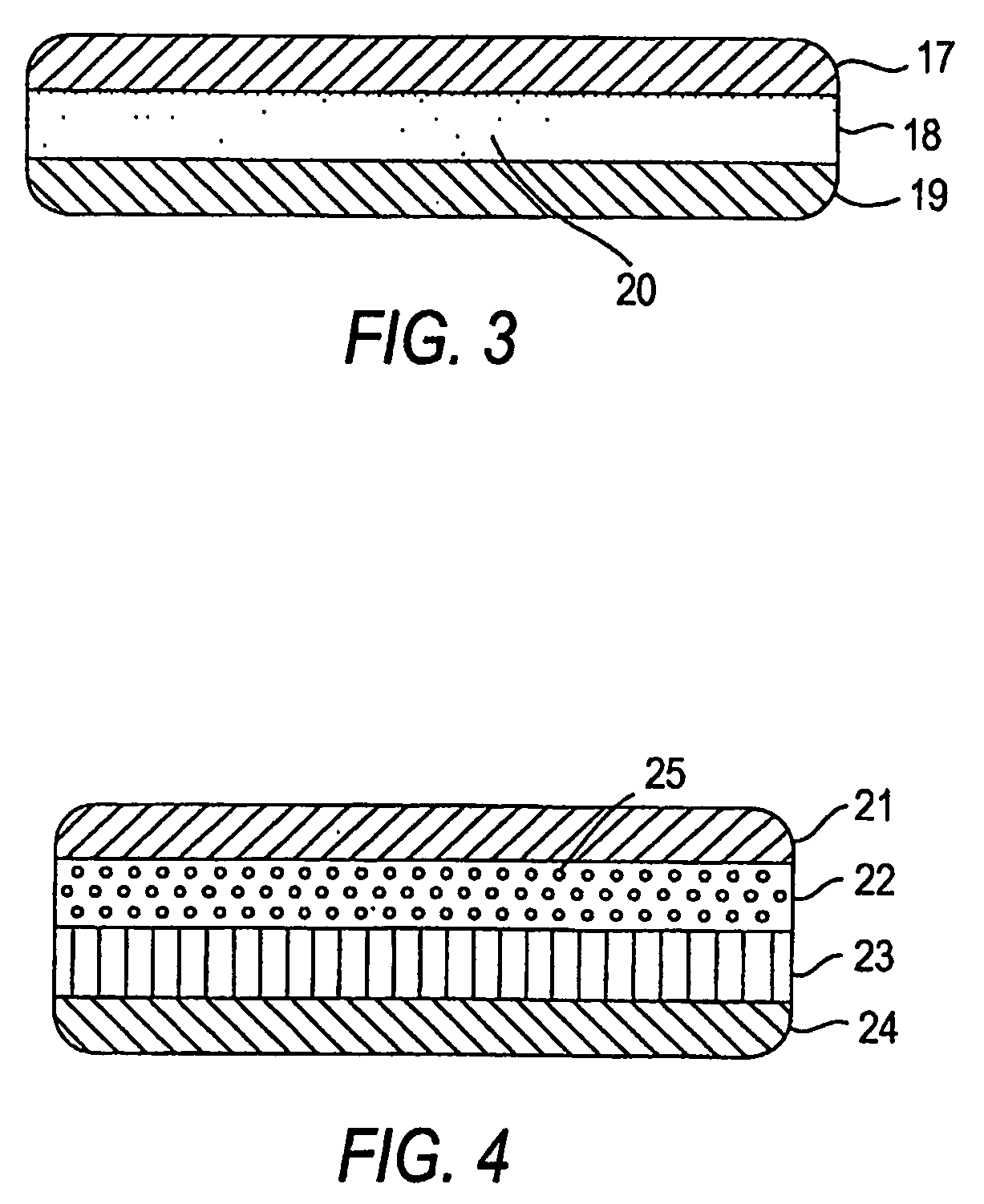
Figure 3
Abstract
Description
[0001] This application claims priority to U.S. Provisional Application No. 60 / 547,196 filed on Feb. 23, 2004 which is hereby incorporated by reference.FIELD OF THE INVENTION
[0002] The present invention relates to transdermal delivery devices useful for delivering an opioid agonist while decreasing the potential for abuse.BACKGROUND OF THE INVENTION
[0003] Sustained-release formulations of opioids are known in the art and provide a longer period of pharmacologic effect than is ordinarily experienced after the administration of immediate release preparations of the opioid. Such longer periods of efficacy achieved with sustained-release formulations can provide many therapeutic benefits that are not achieved with corresponding immediate release preparations.
[0004] One approach to sustained delivery of a therapeutically active agent is the use of a transdermal delivery device, such as a transdermal patch. Certain commercially available transdermal devices that deliver, e.g., scopolamine or ...
Examples
example 1
[0119]Using the procedure disclosed in this example, multiple batches of naltrexone-loaded microspheres were prepared using different molecular weight Lactide / Glycolide (65:35) polymers (40 KD, 40 KD with 0.01% calcium chloride, 50:50 blend of 40 KD and low molecular weight (about 10 KD) and 11 KD)
[0120]Naltrexone-loaded microspheres were fabricated using a water-in-oil-in-water (w / o / w) double-emulsion solvent extraction / evaporation technique. In this process, naltrexone was dissolved in phosphate-buffered saline (PBS) (pH 7.4) solution containing 0.05% (w / v) polyvinylalcohol (PVA) as an emulsifier and mixed with ethyl acetate containing poly(lactic-co-glycolic acid) (PLGA). The emulsification was carried out by sonication for 15 seconds. The resulting emulsion was further injected into PBS (pH 7.4) containing 0.05% (w / v) PVA as an emulsifier to produce a double w / o / w emulsion. The dispersion was then stirred at a constant temperature for 30 minutes. In order to extract ethyl acetat...
example 2
[0122]The microsphere prepared in Example 1 were exposed to simulated extraction conditions to determine the degree of in-vitro release of naltrexone from the microspheres. The extractions were performed using 0.5N NaCl, pH 6.5 phosphate buffer. The sample size was 100 mg microspheres and the naltrexone release was measures at 0.5, 1 and 4 hours. The results are set forth in Table 2 and FIG. 5.
TABLE 2Ntx ContentReleaseReleaseRelease(per 100 mgat 30at 1at 4Polymermicrosphere)minuteshourhours40 KD28.8 mg as54.7%57.8%64.6%Base40 KD and 0.01%42.2 mg as01.2%1.2%Calcium chlorideBase50:50 blend of 4039.3 mg as6.4%7.6%14.0%KD and lowBasemolecular weight(about 10 KD)11 KD42.3 mg as2.4%3.5%5.9%Base
Based on the amount of antagonist released from any given microsphere formulation, the amount of antagonist loaded into the microspheres can be adjusted in order to obtain the release of a desired amount upon tampering.
example 3 (
Prophetic)
[0123]Microspheres are prepared as follows. Naltrexone is mixed with requisite amounts of gelatin, Tween 80 and water, and heated. The mixture is then dispersed in a mixture of aluminum monostearate, Span 80 and soybean oil to form a microemulsion. The microemulsion is homogenized by a microfluidizer. Thereafter, the microemulsion is dispersed in a PLGA-acetonitrile solution. The acetonitrile is then removed from the emulsion by evaporation under atmospheric pressure, thereby forming microspheres containing naltrexone to be incorporated into a transdermal delivery device.