
CVD apparatus, method of manufacturing susceptor using the CVD apparatus, and susceptor
Patent Information
- Authority / Receiving Office
- US · United States
- Current Assignee / Owner
- Publication Date
- 2014-09-04
- Estimated Expiration
- Not applicable · inactive patent
Smart Images
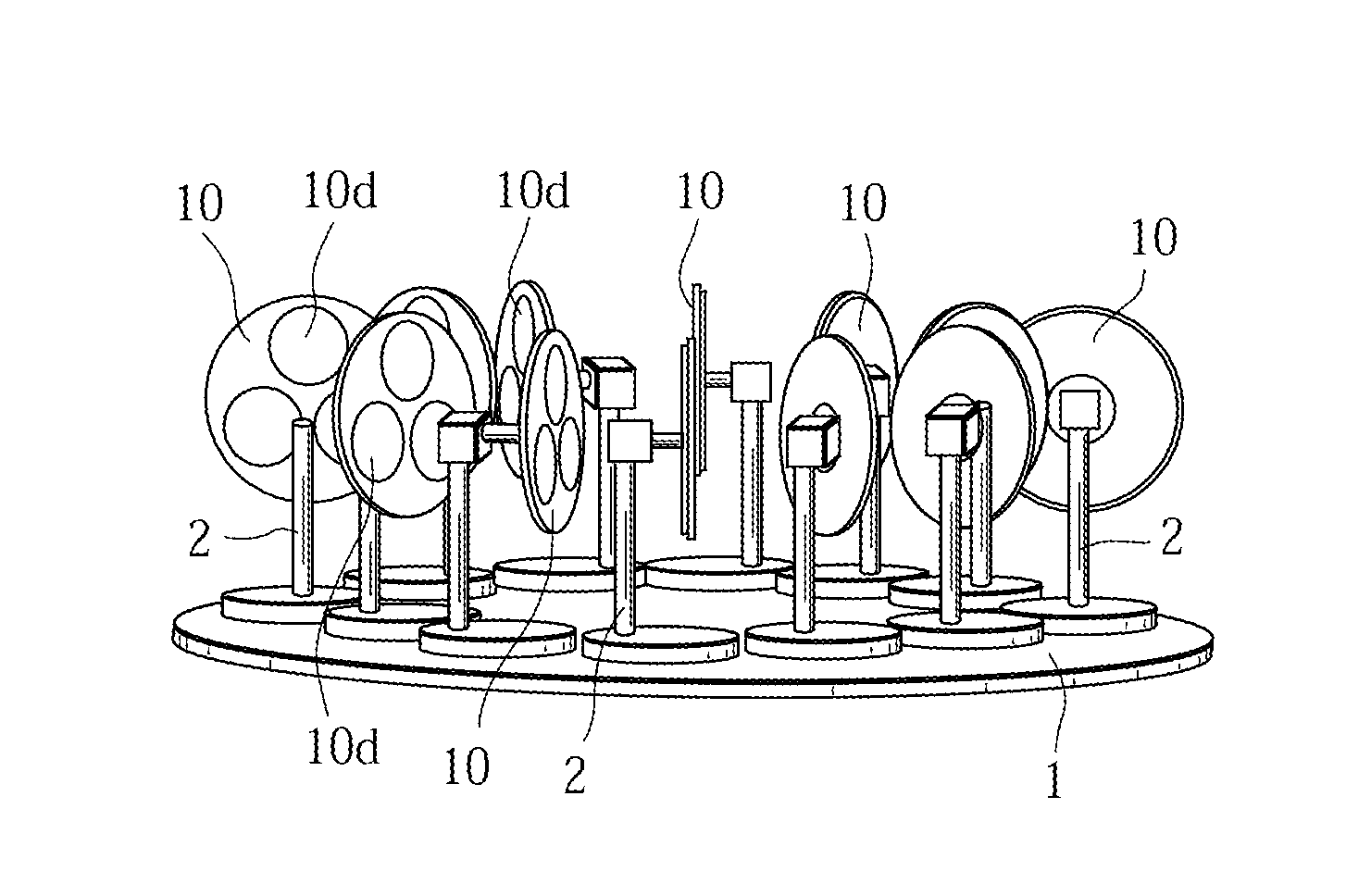
Figure 1 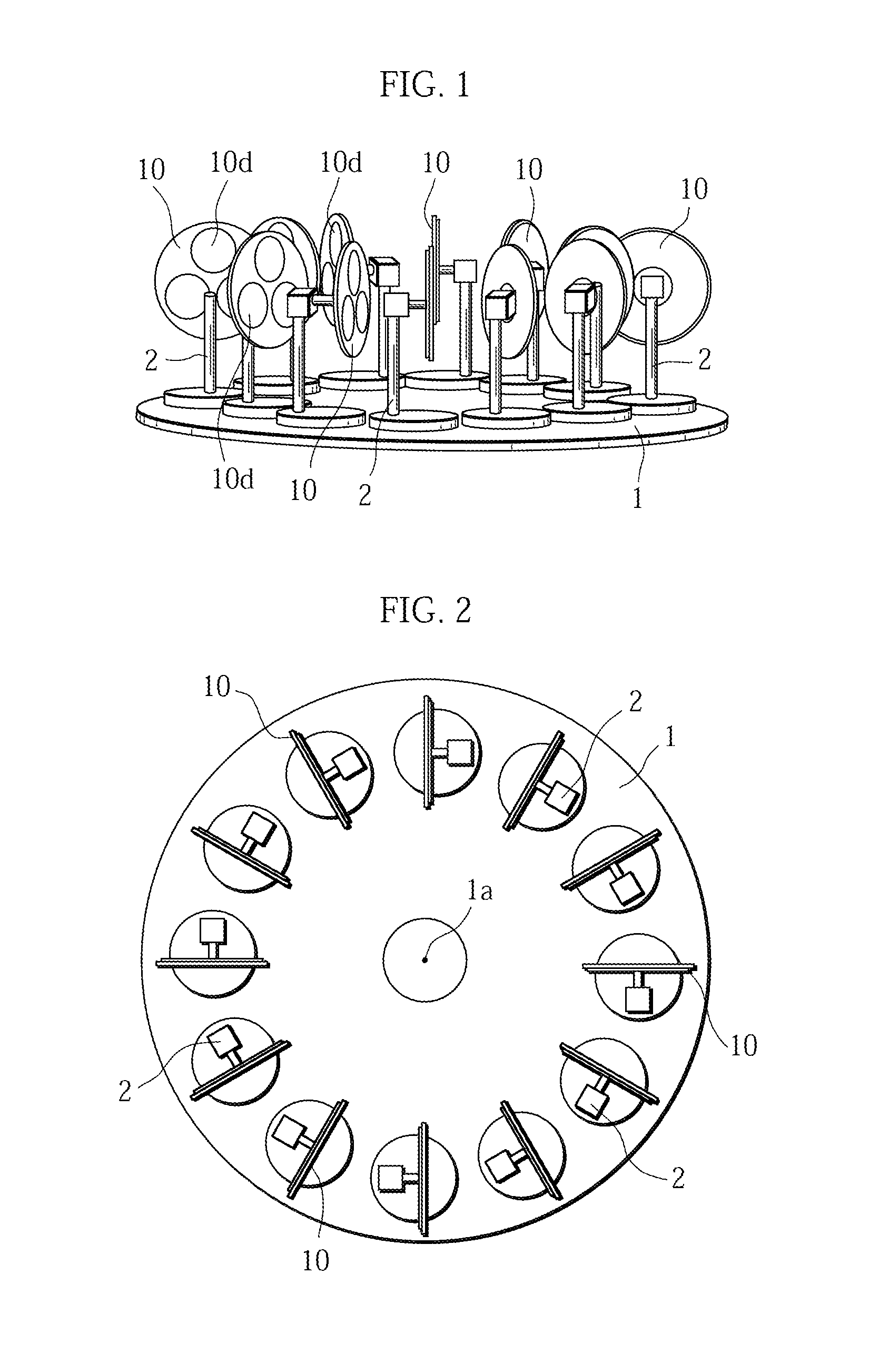
Figure 2 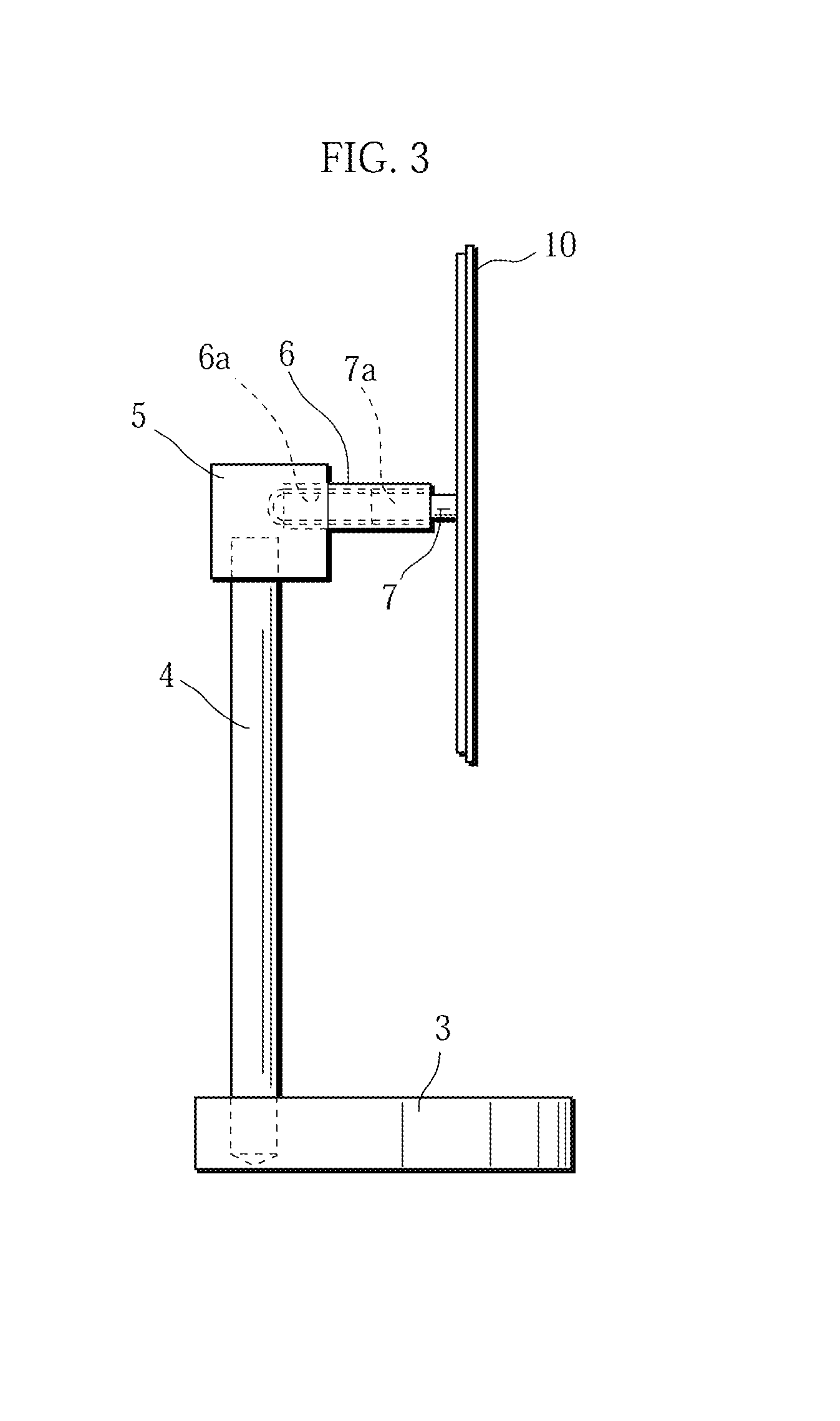
Figure 3
Abstract
Description
TECHNICAL FIELD
[0001] The present invention relates to a CVD apparatus for forming a film such as a SiC film or a TaC film on an entire surface of a carbonaceous substrate, a method of manufacturing a susceptor using the CVD apparatus, and a susceptor fabricated by this manufacturing method.BACKGROUND ART
[0002] A susceptor used for semiconductor epitaxial growth, for example, is made of a material in which a coating layer of a SiC, a TaC, or the like is formed on a surface of a carbonaceous substrate. For example, the formation of the SiC film on the carbonaceous substrate surface is usually carried out by a CVD (chemical vapor deposition) technique, in which SiC is deposited on the carbonaceous substrate surface directly by causing a halogenated organic silicon compound containing a carbon source, such as hydrocarbon, to undergo a thermal decomposition reaction in a reductive gas flow. The formed SiC film needs to be formed in an extremely dense and uniform layer without any pin hole...
Examples
embodiment 1
[0048]As illustrated in FIGS. 1 and 2, a CVD apparatus of the present invention has a disk-shaped rotation table 1 that rotates when forming a SiC film, and a plurality of film forming jigs 2 disposed near the outer periphery of the rotation table 1. It is desirable that these film forming jigs 2 be disposed so as to be equidistant from the center of the apparatus (i.e., the center 1a of the rotation table 1). The reason is as follows. The center of the CVD apparatus and the peripheral portion thereof have different distances from the source gas supply unit. However, when the film forming jigs 2 are disposed so as to be equidistant from the center of the apparatus, the carbonaceous substrates 10 that are attached to the film forming jigs 2 are also disposed so as to be equidistant from the center of the apparatus accordingly. Therefore, the difference in the distance from the source gas supply unit to the carbonaceous substrates 10, which depends on the arrangement positions of the ...
embodiment 2
[0056]Fabrication of the susceptor provided with the masking portion is described in the above embodiment 1. In contrast, described in this embodiment 2 is fabrication of a susceptor provided with no masking portion.
[0057]As illustrated in FIG. 6, a carbonaceous substrate 10 used with a CVD apparatus according to this embodiment 2 is provided, in a rear surface, with two recessed portions 30 and 31 that are each configured similarly to the masking portion (recessed portion) 20.
[0058]Upon film formation processing, a masking jig 7 is screw-fitted to the recessed portion 30 and is fitted to a film forming jig 2. The carbonaceous substrate 10 is thus supported in a standing posture, in which state the film formation processing is carried out. A SiC film is accordingly formed on the surface except for the recessed portion 30. Subsequently, the masking jig 7 is screw-fitted to the recessed portion 31 and is fitted to the film forming jig 2. The carbonaceous substrate 10 is thus supported...
example 1
[0065]Using the CVD apparatus according to the embodiment 1 of the present invention, a susceptor was fabricated by forming a film on a carbonaceous substrate in a disk shape having 465 mm in diameter and 16 mm in thickness. The susceptor fabricated in this manner is hereinafter referred to as a present invention susceptor A1. The experiment conditions (film formation conditions) were as follows.[0066]Experiment Conditions[0067]Pressure in the apparatus: 0.1 Torr to 760 Torr[0068]Temperature in a furnace: 1150° C. to 1500° C.[0069]Introduced gas: CH3SiCl3 (methyltrichlorosilan) and hydrogen gas as carrier gas[0070]Film thickness of the SiC film: 40 μm to 60 μm