
Compositions comprising hyaluronic acid and dermatan sulphate for the treatment of being overweight and obesity
Patent Information
- Authority / Receiving Office
- US · United States
- Current Assignee / Owner
- Publication Date
- 2015-07-02
- Estimated Expiration
- Not applicable · inactive patent
Smart Images
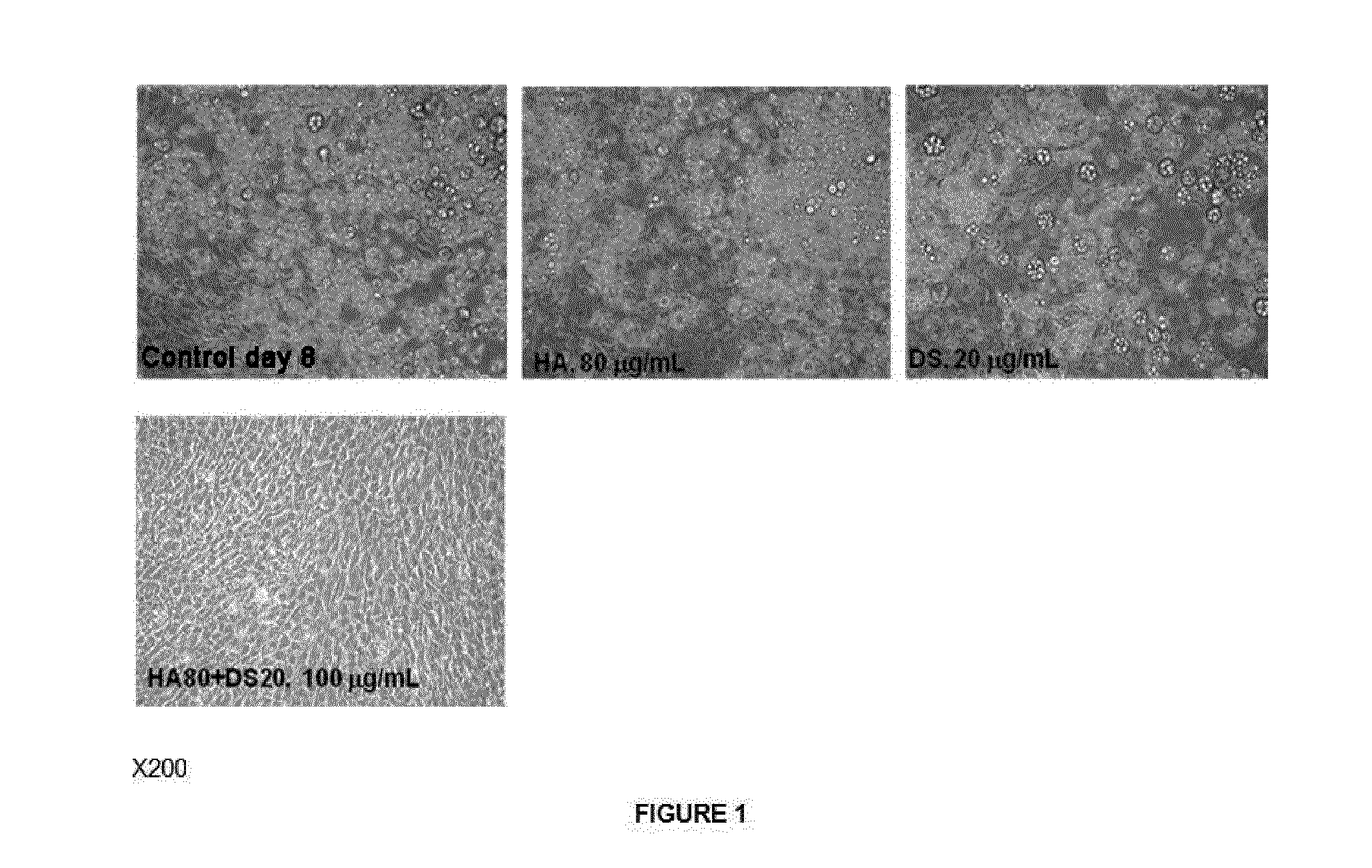
Figure 1 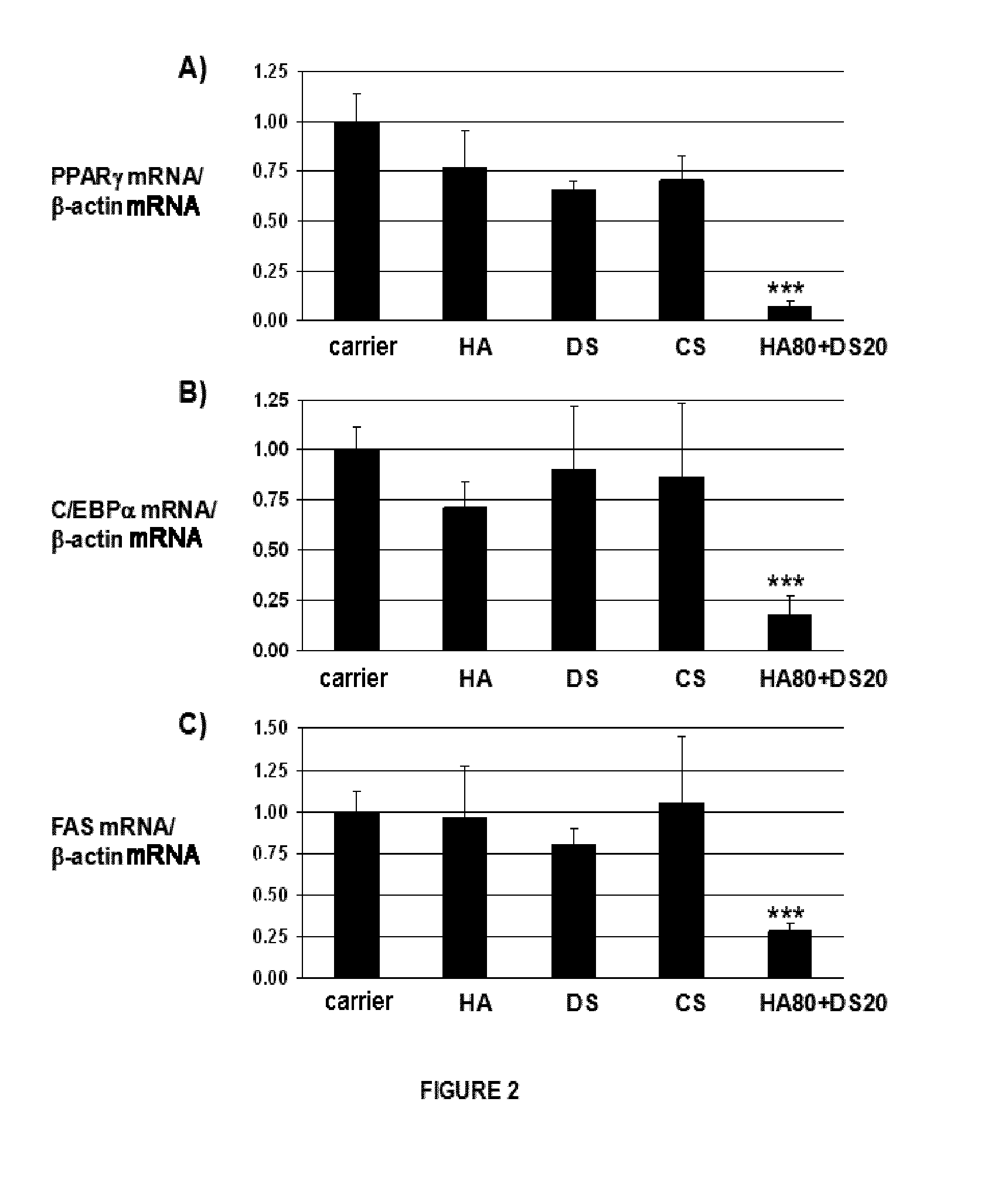
Figure 2 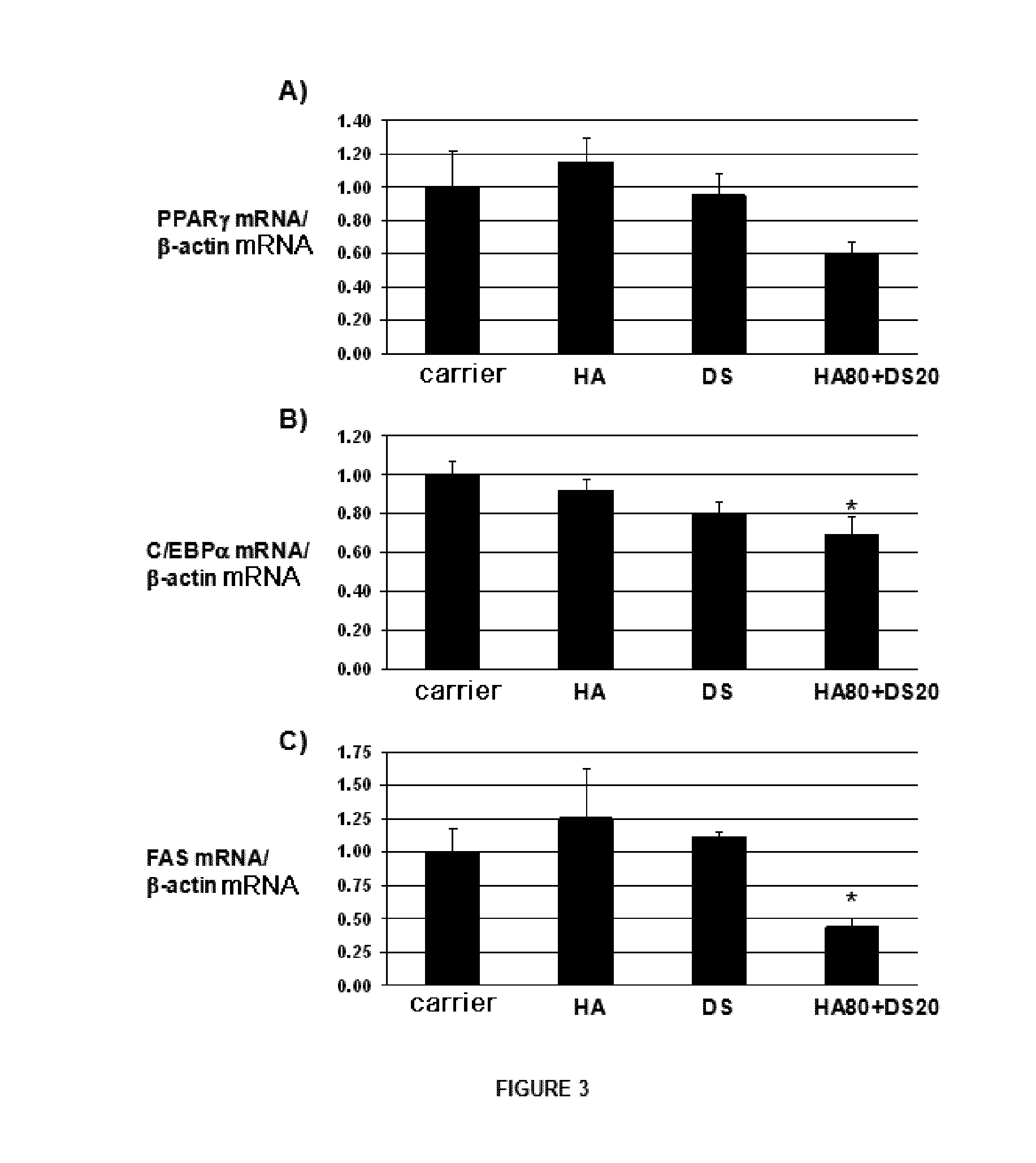
Figure 3
Abstract
Description
TECHNICAL FIELD OF THE INVENTION
[0001] The present invention relates to compositions for use in the treatment, prevention or reduction of overweight or obesity, as well as of metabolic diseases, conditions or alterations related to overweight or obesity, such as insulin resistance, type 2 diabetes, fatty liver or dyslipidemia. The compositions can be in the form of pharmaceutical compositions, foods, functional foods, medical foods or food supplements.BACKGROUND OF THE INVENTION
[0002] Obesity, which is defined as excess body weight in the form of fat, is an important risk factor for serious clinical disorders, including type 2 diabetes and cardiovascular disease, and it is a problem of increasing incidence and difficult treatment that leads to a considerable social-health expense (see http: / / www.iaso.org / iotf / obesity / ). It is known that many people with overweight or obesity develop insulin resistance and hyperinsulinemia, glucose intolerance, dyslipidemia and hypertension, which are ...
Examples
example 1
Study of the Efficacy and Synergy of a Composition of the Present Invention in Inhibiting Spontaneous Adipogenesis of Mouse Embryonic Fibroblasts. Comparison with Hyaluronic Acid, Dermatan Sulphate and Chondroitin Sulphate
[0085]Adipogenesis is the process of differentiation of fat storage cells (adipocytes) from precursor cells. Obesity is often correlated with the presence of an excessive number of adipocytes in fat depots. The objective of the study was to determine if there was a synergistic effect between the components of a composition of the present invention to suppress adipogenesis. To that end, the potential of a combination of hyaluronic acid and dermatan sulphate at a HA:DS weight ratio of 1:0.25 (HA8O+DS20), and that of the individual components thereof in inhibiting intracellular lipid accumulation and the expression of adipocyte marker genes in primary mouse embryonic fibroblast (MEFs) cultures kept in growth medium were determined. A comparison with glycosaminoglycan ...
example 2
Study of the Efficacy and Synergy of a Composition of the Present Invention in Inhibiting the Expression of Adipocyte Markers During Hormone-Induced Adipogenesis of Mouse Embryonic Fibroblasts
[0092]Comparison with Hyaluronic Acid and Dermatan Sulphate
[0093]The objective of the study was to compare the potential of a combination of hyaluronic acid and dermatan sulphate at a HA:DS weight ratio of 1:0.25 (HA8O+DS20), and of the individual components thereof in affecting adipogenesis in mouse embryonic fibroblast (MEF) cultures hormonally stimulated to differentiate into adipocytes, and to determine if there was a synergistic effect between hyaluronic acid and dermatan sulphate to this respect.
[0094]Materials and Methods
[0095]MEFs obtained from embryos of 13 days gestational age were cultured in monolayer in 12-well culture plates having a 1 mL capacity / well, as described in Example 1. Two days after reaching confluence (day 0), the cells were stimulated by exposing them for 48 hours to...
example 3
Study of the Efficacy of a Composition of the Present Invention in Inhibiting the Expression of Resistin, an Adipokine Related to Insulin Resistance, in MEF-Derived Adipocytes
[0099]One of the most common metabolic complications in obesity is insulin resistance, which is closely associated with type 2 diabetes. The objective was to study the effect of different concentrations of a combination of hyaluronic acid and dermatan sulphate at, at a HA:DS weight ratio of 1:0.25 (HA+DS) on the expression of secretion proteins of adipocytes known to be implicated as factors that enhance insulin resistance, particularly resistin, in adipose cells in culture. The effect of hyaluronic acid and of dermatan sulphate separately was also determined in the same study.
[0100]Materials and Methods
[0101]MEFs obtained from embryos of 13 days gestational age were cultured in monolayer until reaching confluence and exposed to a standard adipogenic hormone cocktail as described in Example 2, in the presence o...