
Bi-component electrical connector
Patent Information
- Authority / Receiving Office
- US · United States
- Current Assignee / Owner
- Publication Date
- 2015-11-12
- Estimated Expiration
- Not applicable · inactive patent
Smart Images
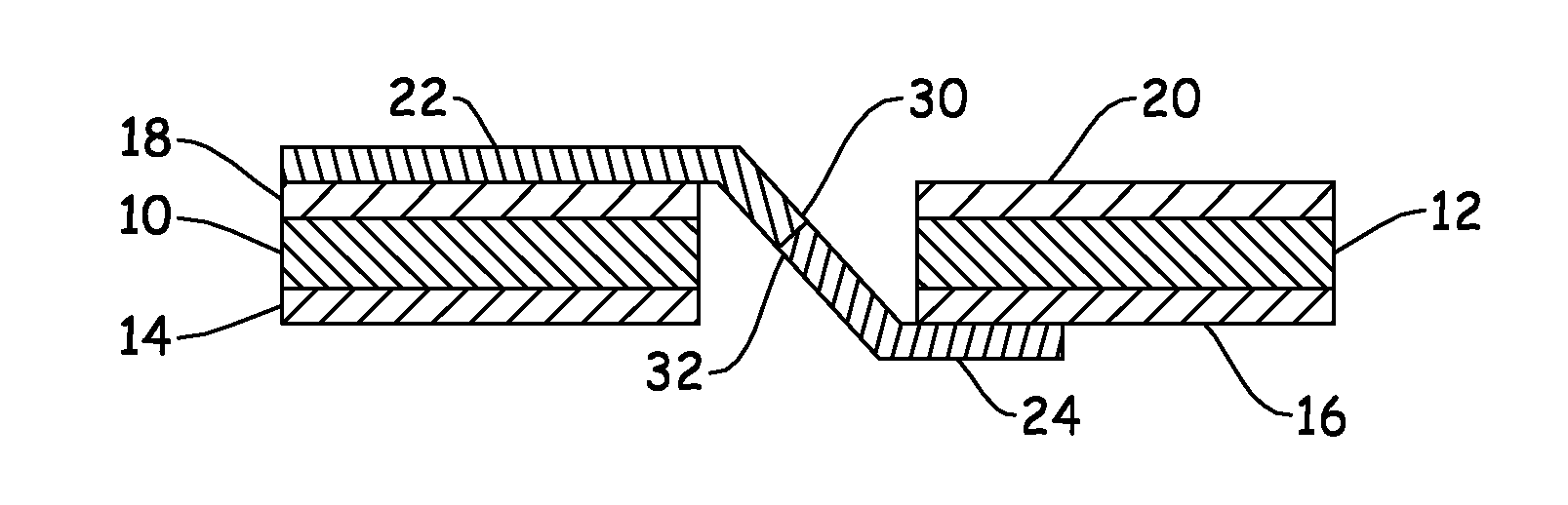
Figure 1 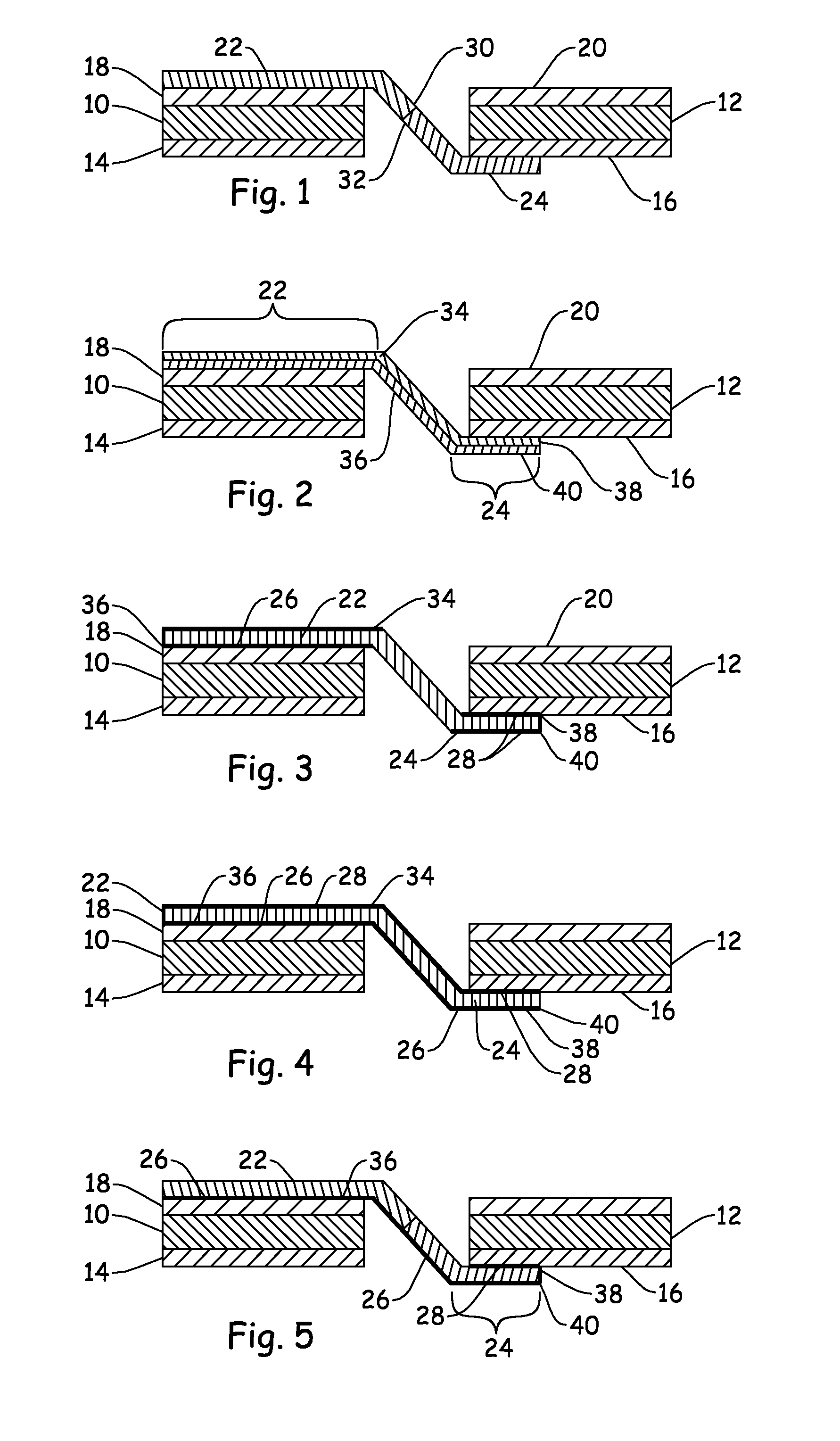
Figure 2
Abstract
Description
FIELD OF THE INVENTION
[0001] This invention relates generally to photovoltaic cells including electrical connector segments and associated conductive materials and coatings formed for improving electrical contact between cell surfaces and adjacent layers.BACKGROUND OF THE INVENTION
[0002] It is common for photovoltaic cells to be connected in series by an electrical connector substrate that contacts the front side of a first cell and the backside of an adjacent cell. Such configurations are commonly used with flexible photovoltaic cells such as copper chalcogenide type cells (e.g. copper indium gallium selenides, copper indium selenides, copper indium gallium sulfides, copper indium sulfides, copper indium gallium selenides sulfides, etc.), amorphous silicon cells, crystalline silicon cells, thin-film III-V cells, thin-film II-VI cells, organic photovoltaics, nanoparticle photovoltaics, dye sensitized solar cells, and combinations of the like. Unfortunately, certain environmental stres...
Examples
Embodiment Construction
[0017]The present teachings relate to an electrical connector including a plurality of electrical connector segments, each segment comprising at least one material that is dissimilar from that of adjacent segments. Each electrical connector segment preferably comprises a material that will promote conductivity and minimize corrosion at photovoltaic cell surfaces. This application is claims priority from U.S. Provisional Application Ser. No. 61 / 683,459 filed Aug. 15, 2012 which is incorporated herein by reference in its entirety for all purposes.
[0018]The photovoltaic cells used in this invention may be any photovoltaic cells used in the industry. Examples of such cells include crystalline silicon, amorphous silicon, CdTe, GaAs, dye-sensitized solar cells (so-called Gratezel cells), organic / polymer solar cells, or any other material that converts sunlight into electricity via the photoelectric effect. However, the photoactive layer is preferably a layer of IB-IIIA-chalcogenide, such ...