
Siloxane monomer, polymer thereof, composition containing said polymer, and electronic element
Patent Information
- Authority / Receiving Office
- US · United States
- Current Assignee / Owner
- Publication Date
- 2018-08-09
- Estimated Expiration
- Not applicable · inactive patent
Smart Images
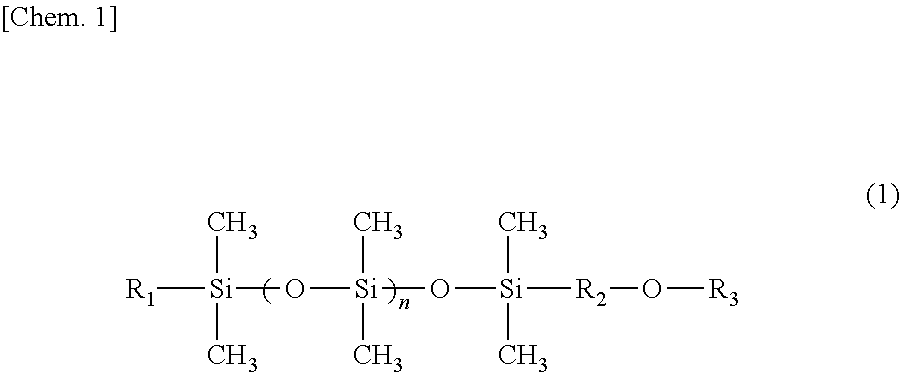
Figure 1 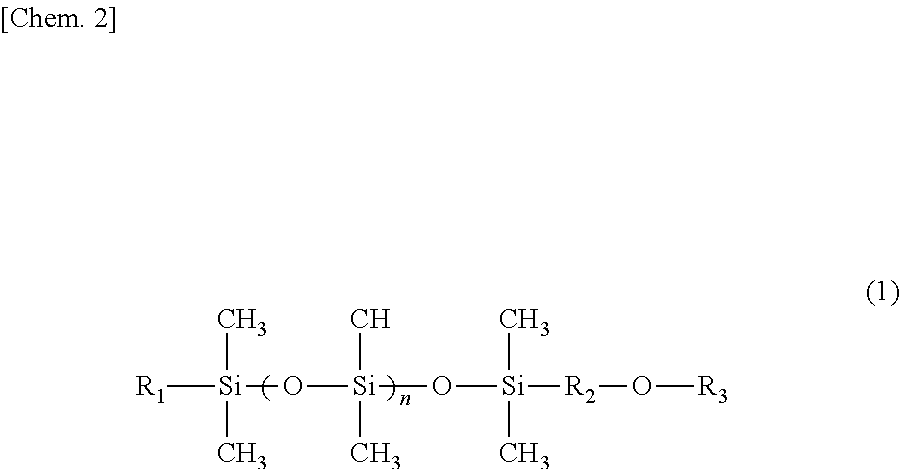
Figure 2 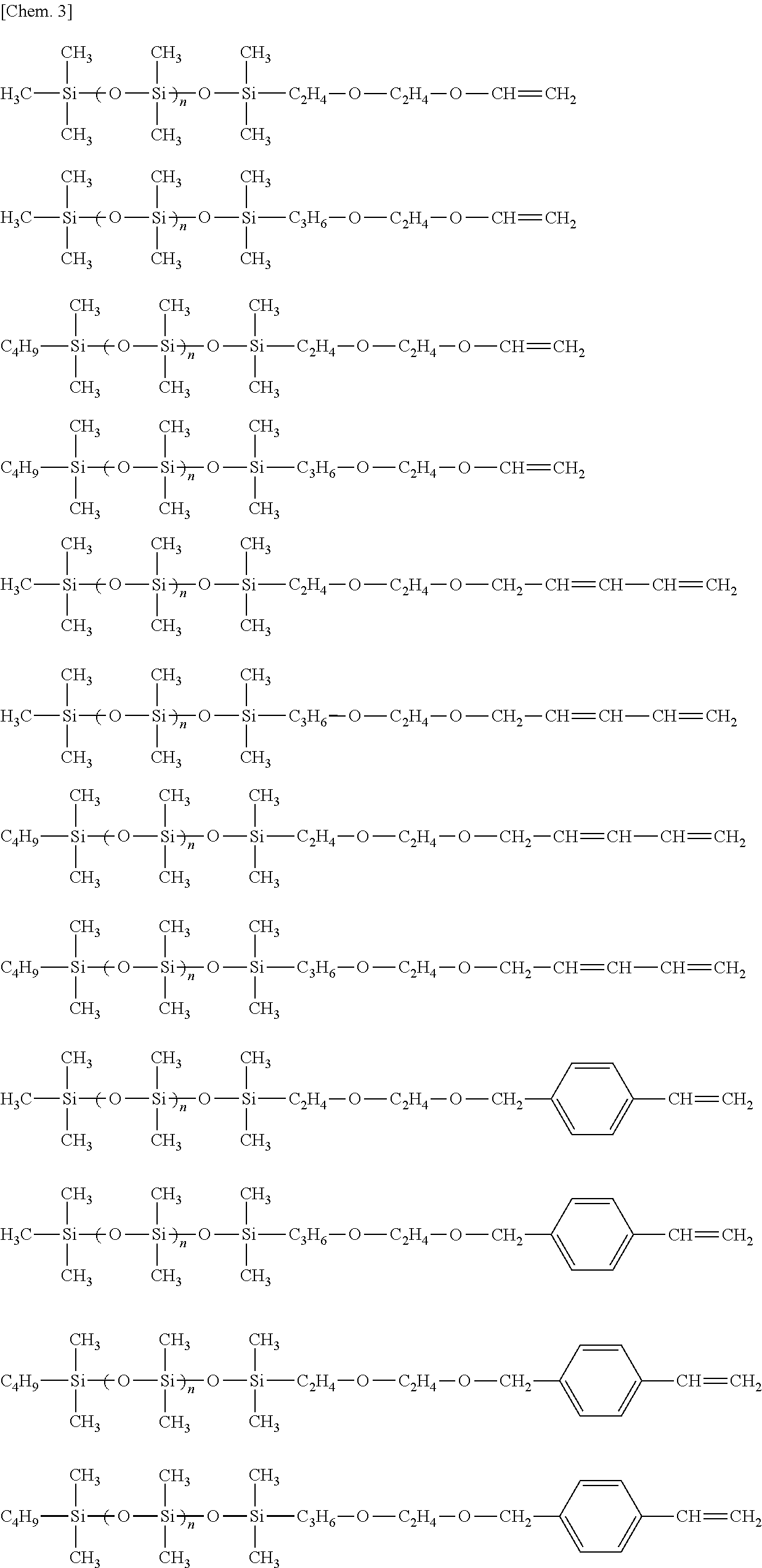
Figure 3
Abstract
Description
TECHNICAL FIELD
[0001] The present invention relates to siloxane monomers, a polymer thereof, a composition containing the polymer, an electronic material composition, and an electronic element containing the electronic material composition.BACKGROUND ART
[0002] In recent years, researches on electronic elements such as TFTs, solar cells, and organic electroluminescence elements have been conducted in various ways. In the related art, these electronic elements have been prepared by vacuum film formation, but in recent years, due to the demand on increasing the area of the substrate and reducing the cost of the product, attention has been paid to methods of preparing electronic elements by printing.
[0003] These electronic elements can be roughly classified into a low molecular weight material and a high molecular weight material on the basis of the forming materials.
[0004] Regarding the low molecular weight electronic material, in addition to the vacuum film formation, which has been used ...
Examples
example 1
[0216]100 g of SILAPLANE FM-0411 (manufactured by JNC Corporation) and 16.8 g of potassium tert-butoxide were charged into a 500 mL three-necked flask, which was purged with argon gas and into which 100 g of tetrahydrofuran (THF) was inserted, and the mixture was stirred at room temperature for an hour. 11.8 g of 5-bromo-1,3-pentadiene was added dropwise thereto, and the mixture was stirred at room temperature for 18 hours. Thereafter, THF was distilled off under reduced pressure, and the mixture was extracted with toluene, and the obtained product was washed three times with water, and then dried over sodium sulfate. Thereafter, the mixture was purified through silica gel column chromatography so as to obtain Siloxane monomer a of the present invention. The yield was 18 g.
example 2
[0218]In the same manner as in Example 1 except that 12.2 g of 4-(chloromethyl)styrene was used instead of 5-bromo-1,3-pentadiene, Siloxane monomer b of the present invention was synthesized. The yield was 12 g.
[0219]The structure of Siloxane monomer b is shown below.
[0220]
example 3
[0221]700 mg of styrene, 672 mg of Siloxane monomer a obtained in Example 1, 27.6 mg of PERBUTYL Z (manufactured by NOF Corporation), and 3.3 g of cyclohexanone were placed in a 10 mL three-necked flask and stirred at 110° C. for 30 hours under nitrogen gas charging. The obtained reaction solution was added dropwise to methanol to precipitate the polymer, and after filtration and drying, 1.3 g of Polymer A of the present invention was obtained.
[0222]The number-average molecular weight (Mn) and the weight-average molecular weight (Mw) of the obtained Polymer A were measured and found to be 7,900 and 20,000, respectively. The number-average molecular weight and the weight-average molecular weight were measured using polystyrene as the standard substance using a high-speed GPC apparatus (manufactured by Tosoh Corporation).