
Positive Electrode for Lithium Secondary Battery and Lithium Secondary Battery Including the Same
Patent Information
- Authority / Receiving Office
- US · United States
- Current Assignee / Owner
- Publication Date
- 2022-05-05
Smart Images
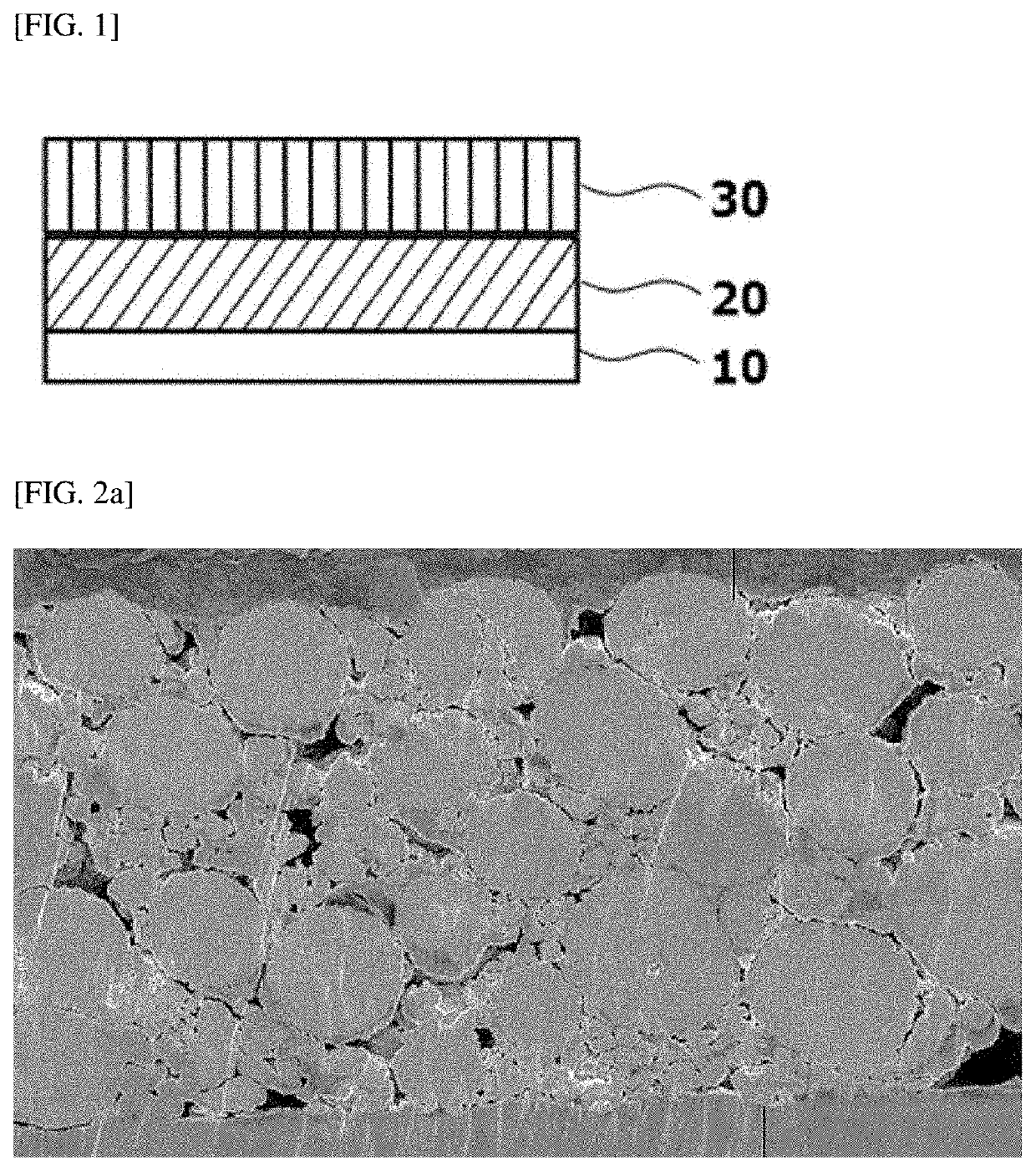
Figure 1 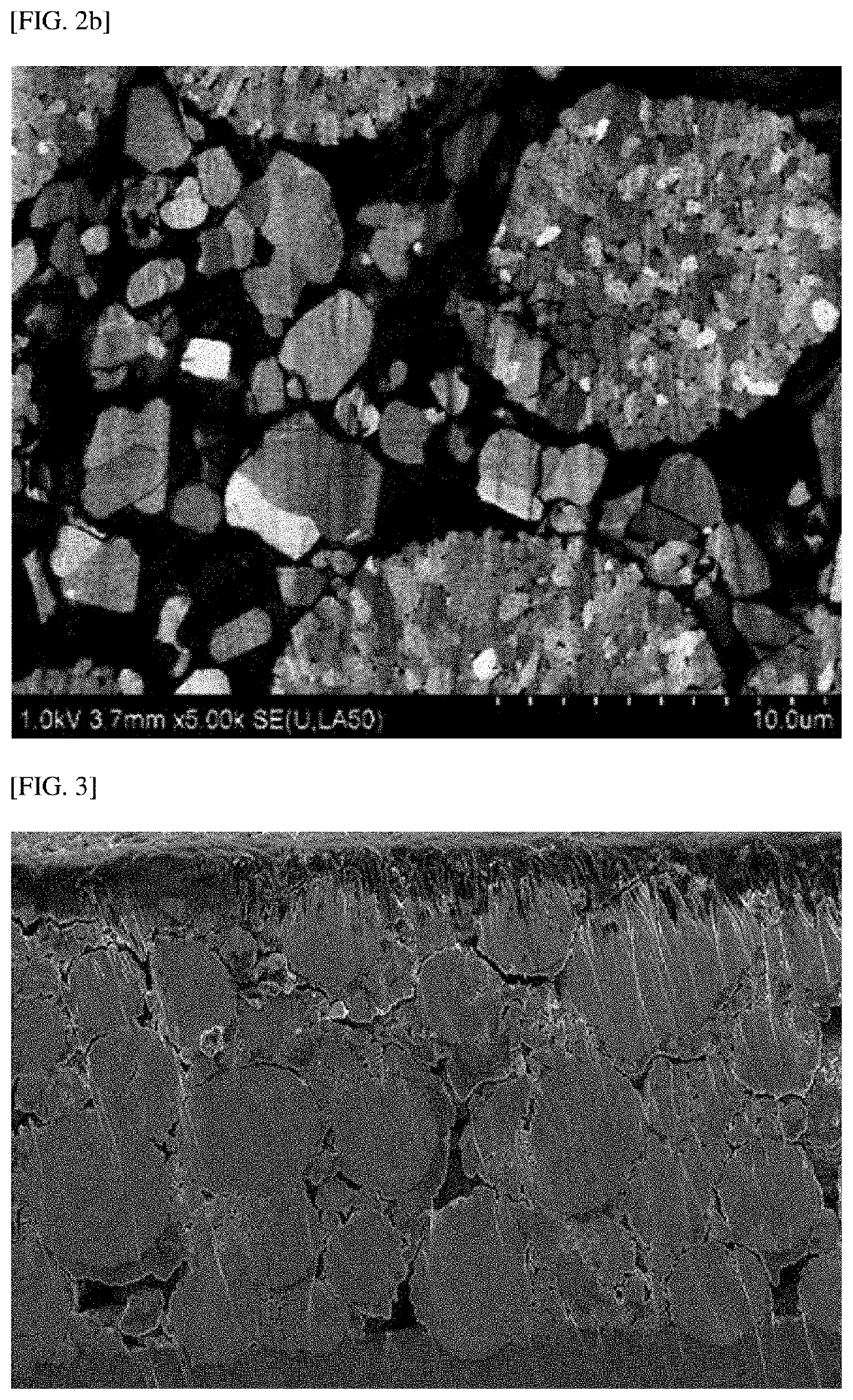
Figure 2 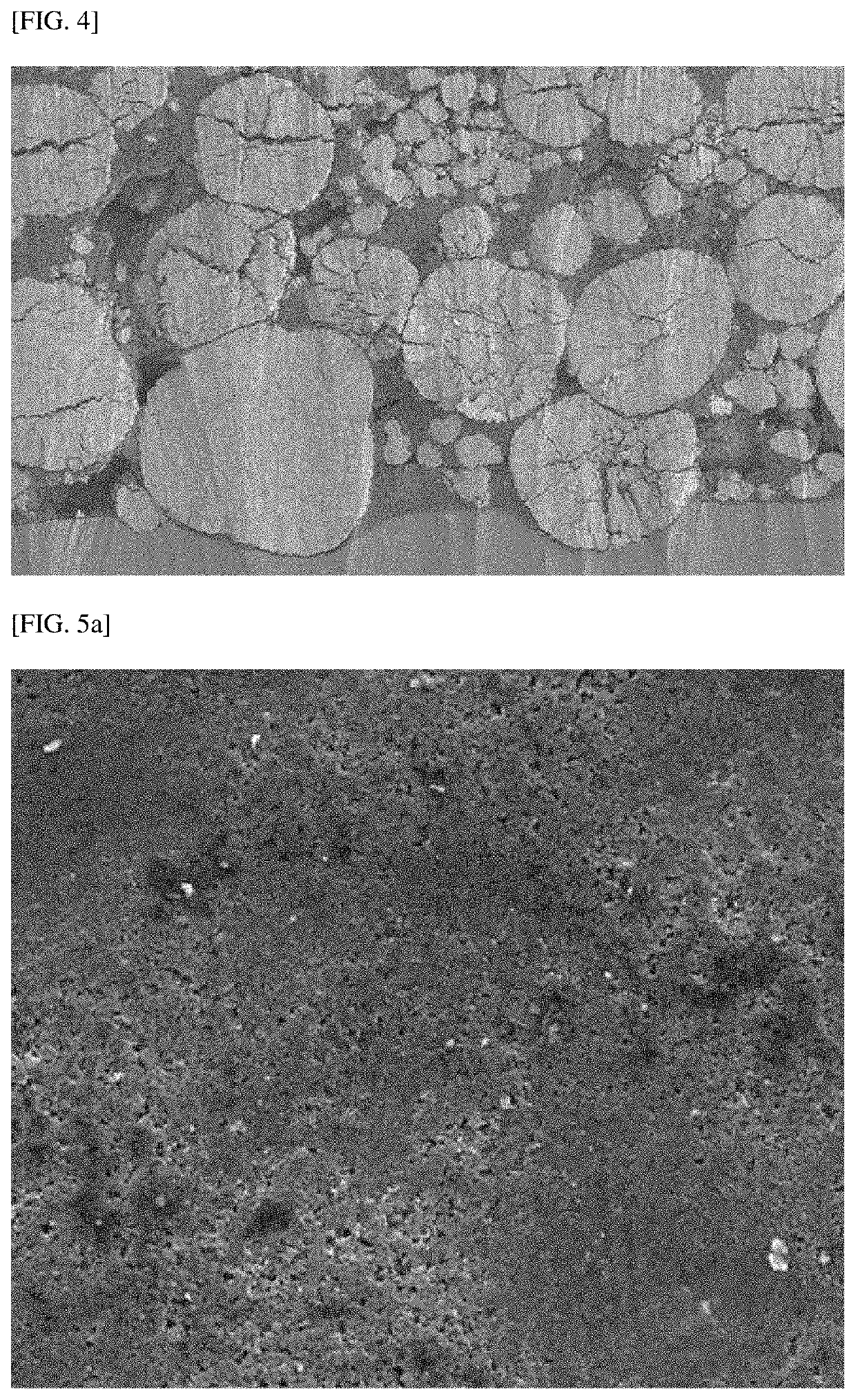
Figure 3
Abstract
Description
CROSS-REFERENCE TO RELATED APPLICATION
[0001] This application claims priority to and the benefit of Korean Patent Application No. 10-2019-0098426, filed on Aug. 12, 2019, the disclosure of which is incorporated herein by reference in its entirety.TECHNICAL FIELD
[0002] The present invention relates to a positive electrode for a lithium secondary battery and a lithium secondary battery including the positive electrode for a lithium secondary battery.BACKGROUND ART
[0003] As the technology for mobile devices is developed and the demand for mobile devices increases, the demand for secondary batteries as an energy source is rapidly increasing. Among secondary batteries, lithium secondary batteries having high energy density, a high voltage, a long cycle lifespan, and a low self-discharge rate have been commercialized and widely used.
[0004] Lithium-transition metal composite oxides have been used as a positive electrode active material for a lithium secondary battery, and among lithium-transit...
Examples
example 1
[0098]Li1.02Ni0.80Co0.10Mn0.1O2, which has an average particle diameter (D50) of 15 μm and is in the form of a secondary particle formed by agglomerating primary particles (average particle diameter: 1.5 m) having crystalline grains with a size of 120 nm to 150 nm, as a first positive electrode active material and Li1.04Ni0.80Co0.10Mn0.1O2, which has an average particle diameter (D50) of 6 μm and is in the form of a single particle formed of at most ten primary particles having crystalline grains with a size of 150 nm to 200 nm, as a second positive electrode active material were mixed in a weight ratio of 80:20, and the resulting mixture was used as a positive electrode material.
[0099]Meanwhile, the mixed positive electrode material, carbon nanotubes as a conductive material, and polyvinylidene fluoride (PVDF, KF1100) as a binder were mixed in a weight ratio of 97.5:1:1.5, and the resulting mixture was added to an N-methyl pyrrolidone (NMP) solvent to prepare a composition for form...
example 2
[0101]A positive electrode was manufactured in the same manner as in Example 1 except that a 10 μm-thick carbon nanotube coating layer was formed on a surface of a positive electrode active material layer by adjusting an interval between a coating device and a current collector.
experimental example 1
ence of Cracking During Roll Pressing
[0111]The positive electrodes manufactured in Examples 1 and 2 and Comparative Examples 1 to 5 were roll-pressed with a rolling force of 1,600 kgf / cm2, and then characteristics thereof were confirmed using a scanning electron microscope.
[0112]FIGS. 2A and 2B are scanning electron microscope (SEM) images of the cross section of particles after the positive electrode manufactured in Example 1 was roll-pressed with the above-described rolling force, and FIGS. 3, 4, and 6 to 8 are SEM images of the cross section of particles after the positive electrodes manufactured in Example 2 and Comparative Examples 1 and 3 to 5 were roll-pressed with the above-described rolling force, respectively. Also, FIGS. 5A and 5B are SEM images of the surface of the positive electrodes manufactured in Example 1 and Comparative Example 2, respectively.
[0113]First, referring to FIGS. 2A, 2B, and 3, it can be seen that even when the positive electrodes manufactured in Examp...