
Flexible surgical instruments for percutaneous and neurosurgical applications
a surgical instrument and percutaneous technology, applied in the direction of surgical forceps, application, vaccination/ovulation diagnostics, etc., can solve the problems of not being able to test for buckling resistance, hematoma evaluation percentage is often limited, and the procedure is prone to serious complications, so as to minimize the chance of damage to healthy tissue, bending large, and varying the stiffness
Patent Information
- Authority / Receiving Office
- US · United States
- Patent Type
- Applications(United States)
- Current Assignee / Owner
- Publication Date
- 2022-07-21
Smart Images
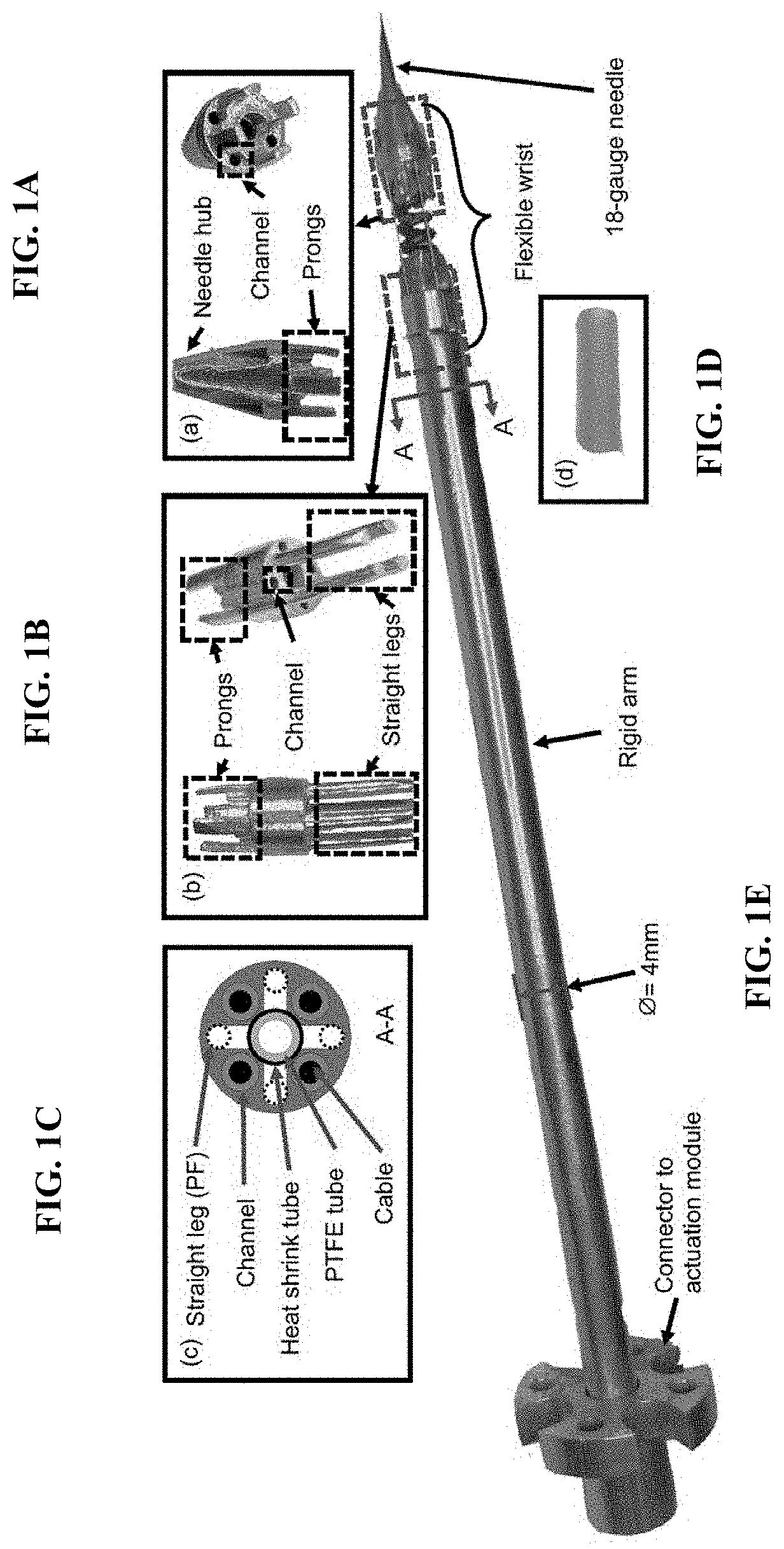
Figure 1 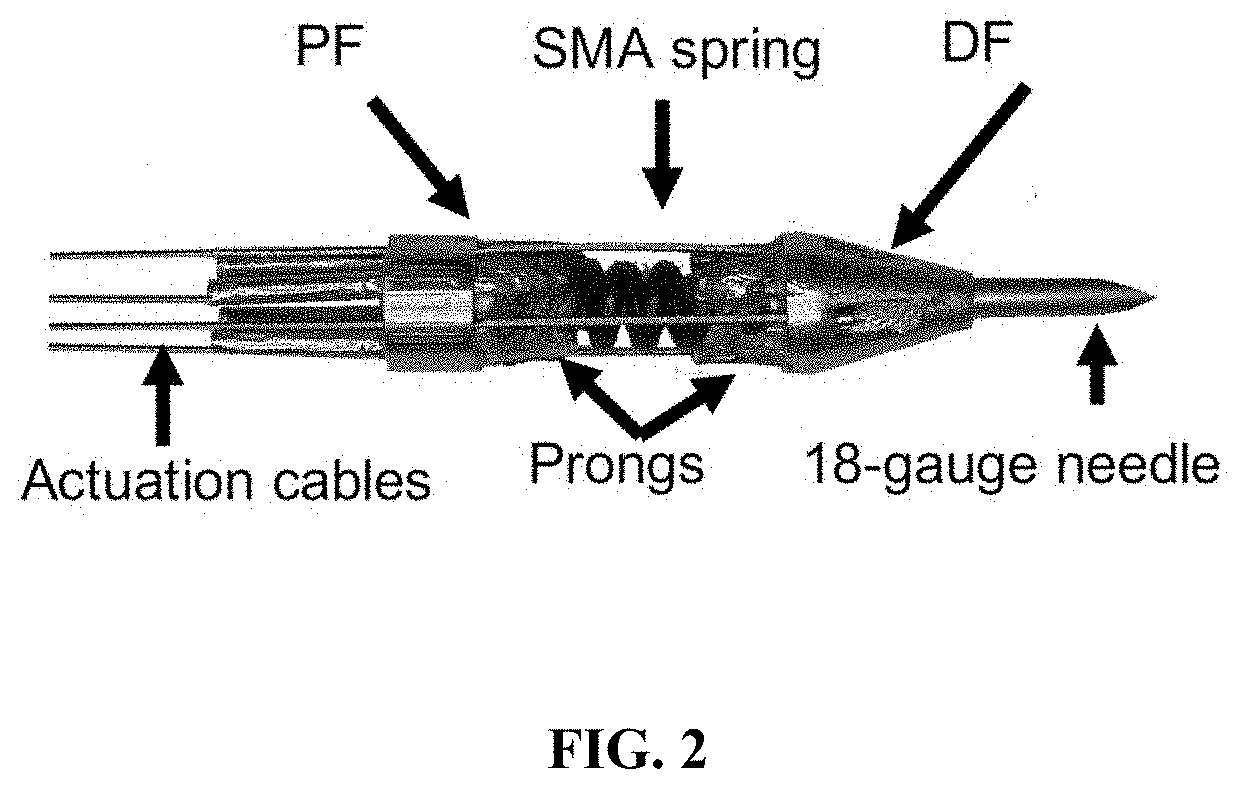
Figure 2 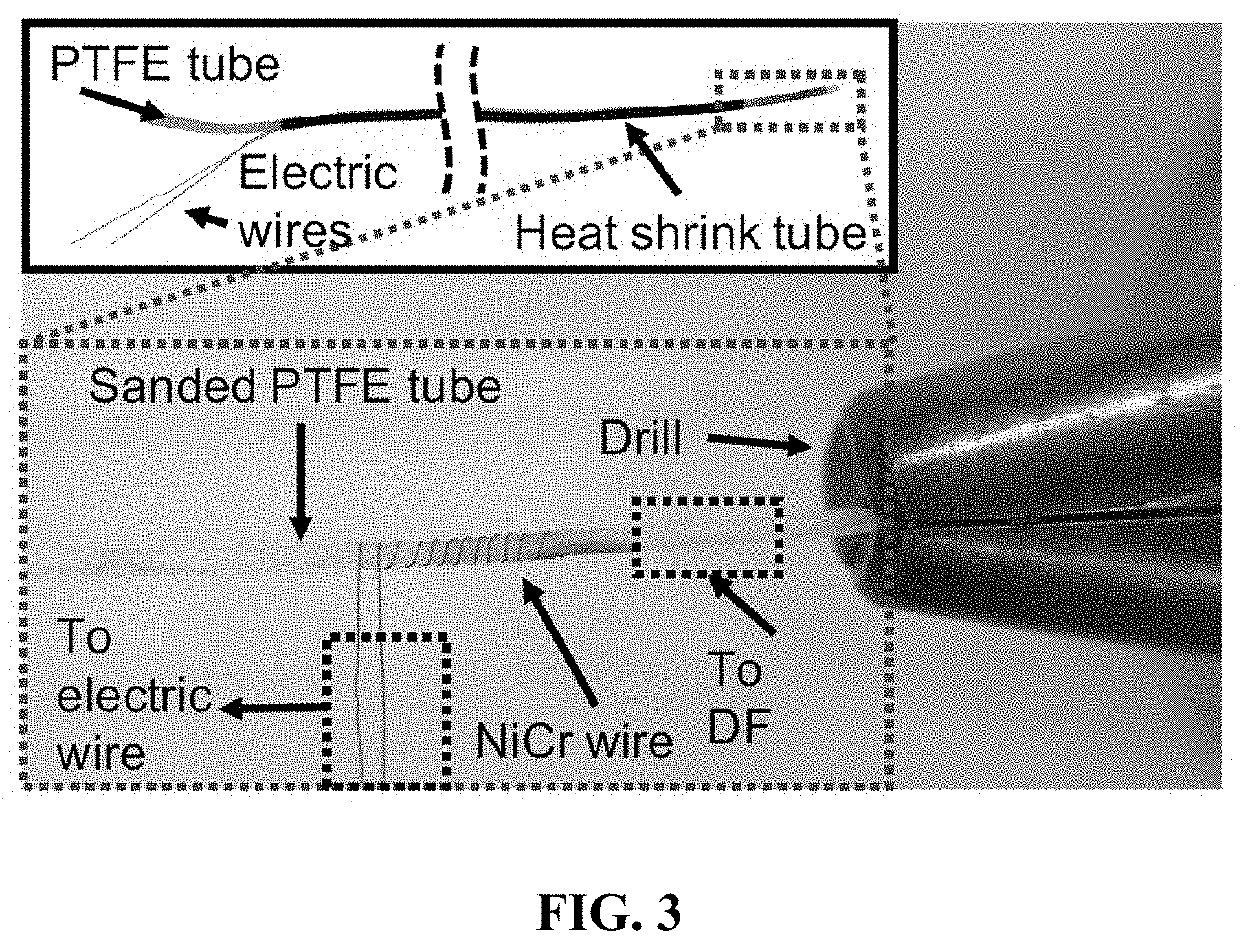
Figure 3
Abstract
Description
BACKGROUND OF THE INVENTION
[0001] Percutaneous surgical procedures involve the insertion of a surgical instrument via needle-puncture of the skin to access internal tissues, organs, and other biological structures. Pericardiocentesis is an example of percutaneous surgical procedure to drain pericardial effusion surrounding the heart that may cause cardiac tamponade, which is a life-threatening medical condition. The procedure involves the insertion of a needle to the pericardium, which is a fluid-filled sac around the heart under ultrasound guidance. A guidewire is passed through the needle to the pericardium before the needle is removed. Several dilators are inserted and removed over the guidewire to increase the wound size before a drainage catheter is inserted over the guidewire as the drainage channel. The removal of the guidewire with the drainage catheter staying on completes the pericardiocentesis. The procedure carries the risk of serious complications such as cardiac perfora...
Examples
example 1
d Fabrication
[0099]A steerable percutaneous device was developed as a surgical robot to perform robotic percutaneous insertion towards the heart and produce distal bending in the pericardial space. The following design requirements were met by the percutaneous robot generated: 1) The robot had a maximum outer diameter of 4 mm, matching the diameter of the dilator that is used in existing procedures after the initial needle puncturing. 2) The inner diameter of the robot was large enough to accommodate a tubing of 0.5 mm diameter and a guidewire of around 0.2 mm. The tubing allowed drainage of fluids through suctioning once the robot reached the pericardiac cavity while the guidewire was passed through the robot to facilitate the insertion of a cannula in the final step of the procedure. 3) The robot was able to bend at its distal tip to steer the tip away from the beating heart and facilitate the guidewire to stay inside the pericardial space after passing through the robot lumen. Th...
example 2
ube
[0102]Methods that could heat and stiffen the SMA spring were limited due to the small dimension of the robot. Because a soldering joint between a Nitinol and a copper electrical wire was relatively weak; it was highly challenging to create a soldering spot joint that did not increase the overall diameter of the spring, and routing a NiCr wire along the SMA wire turns of such a miniature SMA spring uniformly could lead to non-uniform distribution of the NiCr wires and therefore non-uniform heating along the SMA spring. Thus, a different design was generated. A heating element in the form of a compact tube that could be inserted into the lumen of the SMA spring and act as a controlled heat source was generated. The heating tube made of a PTFE tube wound with NiCr wire on its external surface is shown in FIG. 3.
[0103]As shown in FIG. 3, the heating tube consisted of two parts, namely the high resistance NiCr 2080 enameled coil of 30 mm diameter and 80 mm length, and a PTFE tube of ...
example 3
on of the Robot
[0105]The fabrication of the robot, which consisted of many miniature components, was a highly complex process. This was mainly due to the difficulty in fusing the SMA spring material, Nickel Titanium (Nitinol), with other metals and in structurally connecting a spring with other cylindrical structures. These challenges were compounded by the need to be structurally robust during both robot insertion into biological tissues and active bending. Besides, the need to heat the miniature SMA spring using hardware that did not further increase the diameter of the robot also complicated the overall design. Consequently, a few fabrication and assembly approaches that ensured the structural robustness of the robot were employed.
[0106]Because the SMA spring was the most critical component in the design since it allowed smooth percutaneous insertion in its stiff state and omnidirectional bending in its flexible state, it was critical that the SMA spring was strongly and rigidly ...