
System and method for reducing NOx emissions during transient conditions in a diesel fueled vehicle
Patent Information
- Authority / Receiving Office
- US · United States
- Current Assignee / Owner
- Publication Date
- 2005-03-08
- Estimated Expiration
- Not applicable · inactive patent
Smart Images
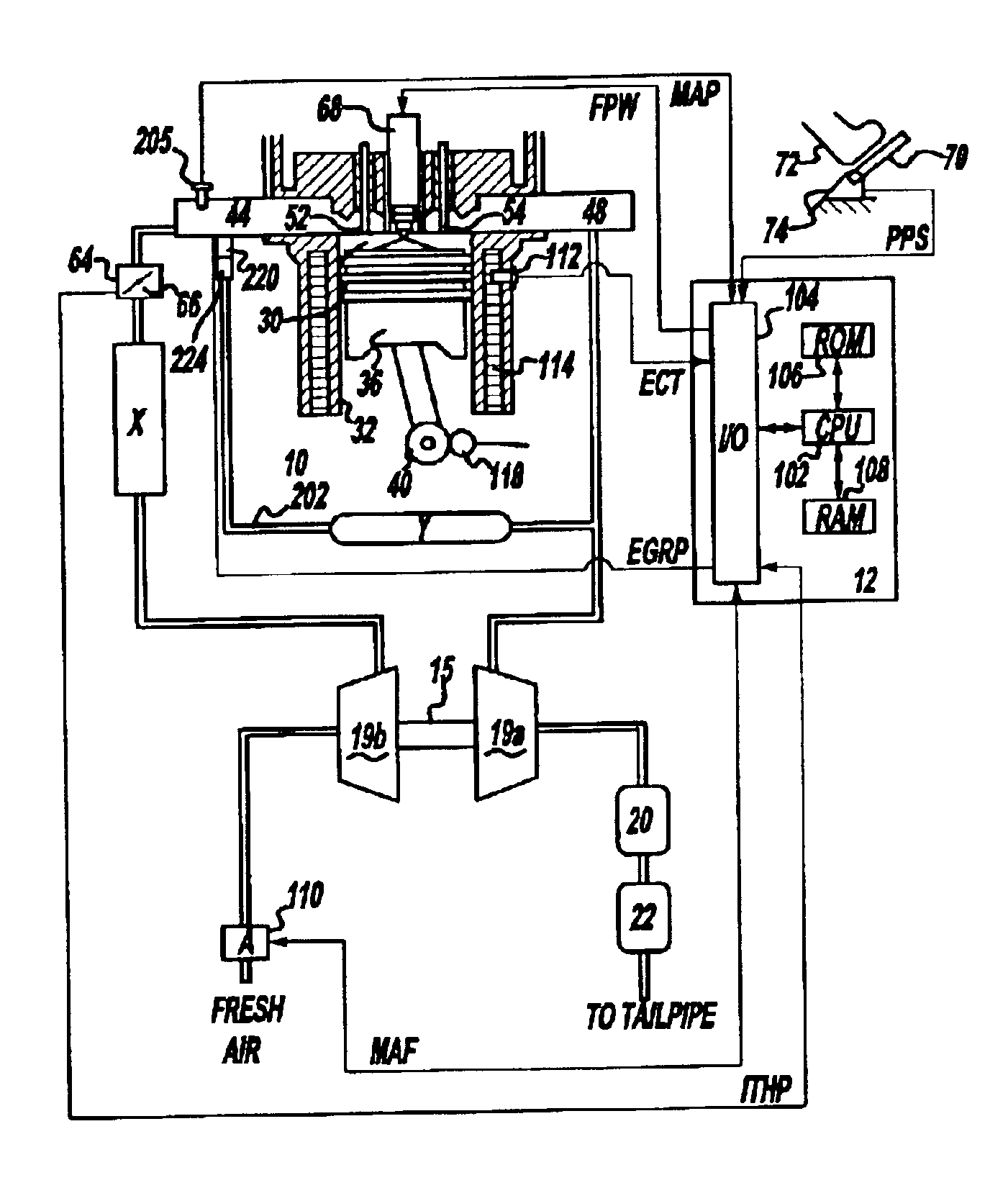
Figure 1 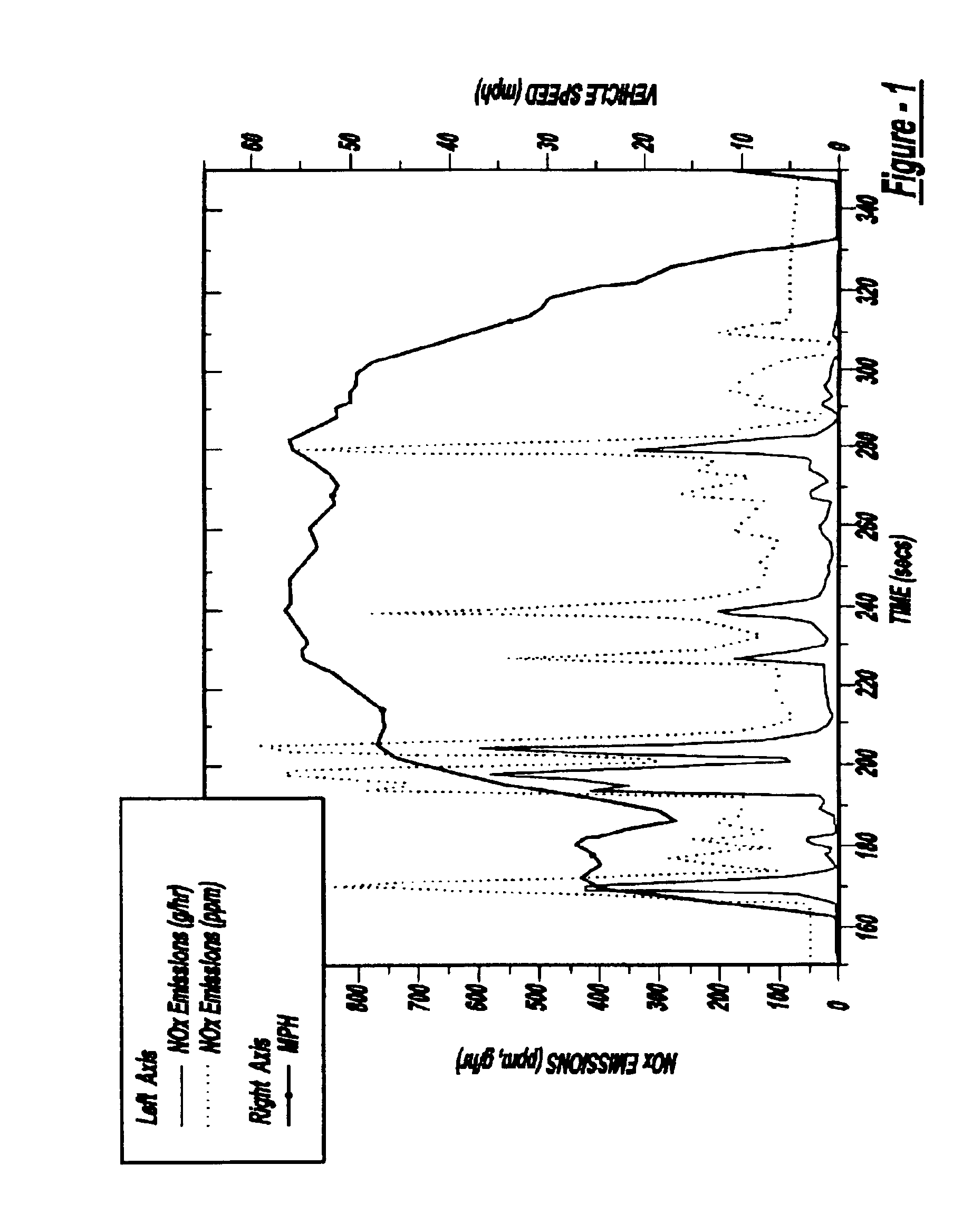
Figure 2 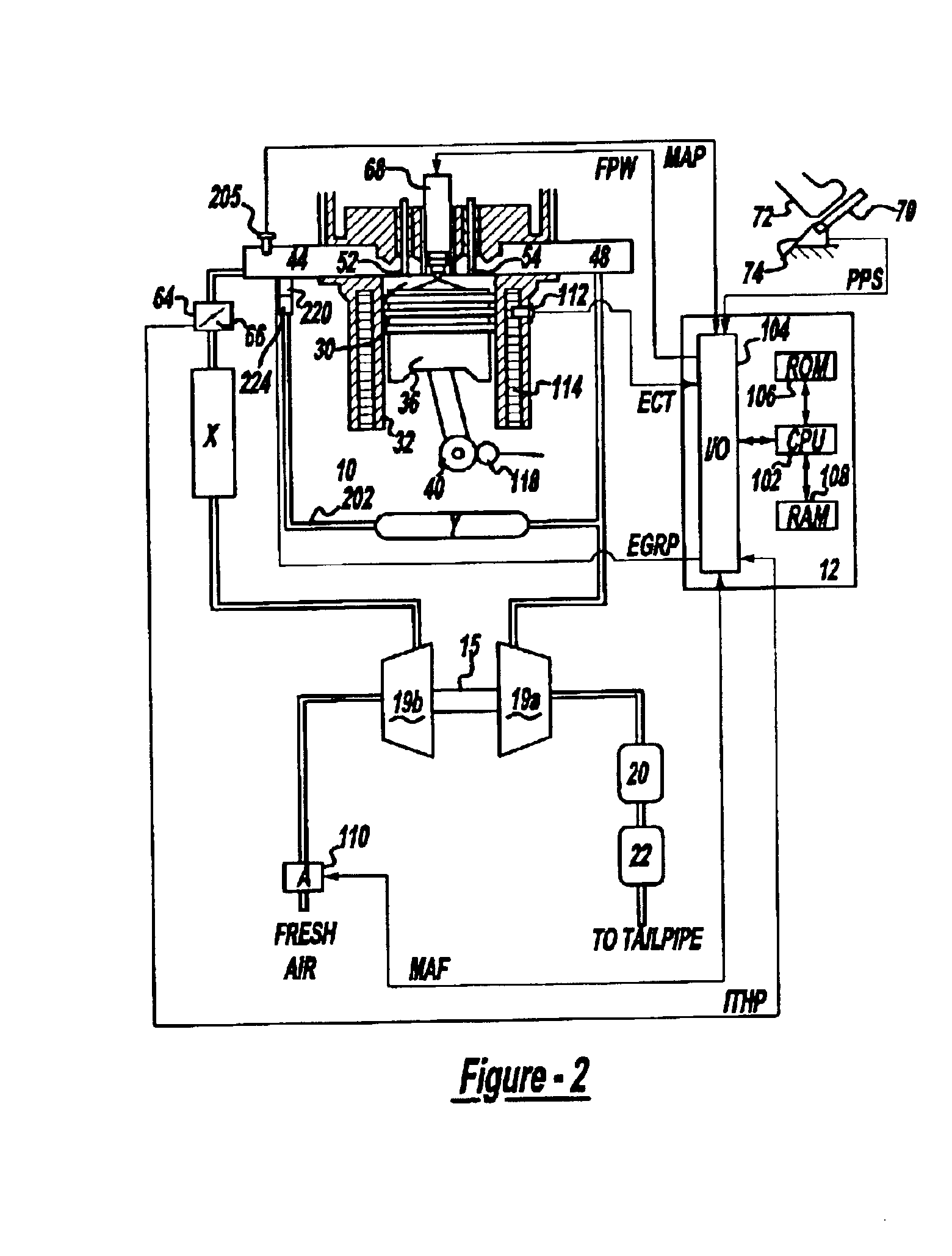
Figure 3
Abstract
Description
BACKGROUND OF INVENTION1. Field of the InventionThe present invention relates generally to the control of an internal combustion engine powered by diesel fuel, and more specifically to reducing transient NOx generation produced by such a vehicle.2. Background of InventionControlling NOx emissions in diesel engines has posed significant challenges to the automotive industry. While emission control devices, such as NOx catalysts, can be used, these devices may be insufficient to meet ever-increasing emission standards.A method to reduce NOx in diesel engines is the use of exhaust gas recirculation (EGR). EGR works very well during steady, or near steady, engine operation because there is typically an abundance of air at those conditions.However, under transient engine operation in which a vehicle is required to accelerate, EGR can limit the performance of the vehicle by reducing the amount of airflow through the engine. EGR reduces airflow by displacing air in the combustion chamber, ...
Examples
Embodiment Construction
FIG. 1 shows NOx emissions during a transient emissions cycle of a vehicle powered by a typical turbocharged diesel engine. The Figure demonstrates that spikes in NOx emissions occur at various times during transient operation. Those spikes typically occur during hard acceleration and the primary reason for their existence is the interaction between the turbocharging system and the typical high pressure EGR system. During hard acceleration, the use of EGR is suspended in order to both divert exhaust flow through the turbine, which allows the turbocharging system to create boost, and increases airflow through the engine. However, without EGR, NOx emissions (concentration) increase dramatically. This comes at a time when the air and thus exhaust mass flow rate are very high, causing NOx production to spike dramatically.
During the a typical urban driving cycle, the time in which the engine is operated under conditions that produce these spikes accounts for only about 4-5% of the total ...