
Thermally pliable and carbon fiber stents
a carbon fiber and stent technology, applied in the field of stents, can solve the problem that the blood supply of the vessel cannot be increased, and achieve the effect of improving the blood supply of the vessel
Patent Information
- Authority / Receiving Office
- US · United States
- Patent Type
- Patents(United States)
- Current Assignee / Owner
- Publication Date
- 2006-03-07
- Estimated Expiration
- Not applicable · inactive patent
Smart Images
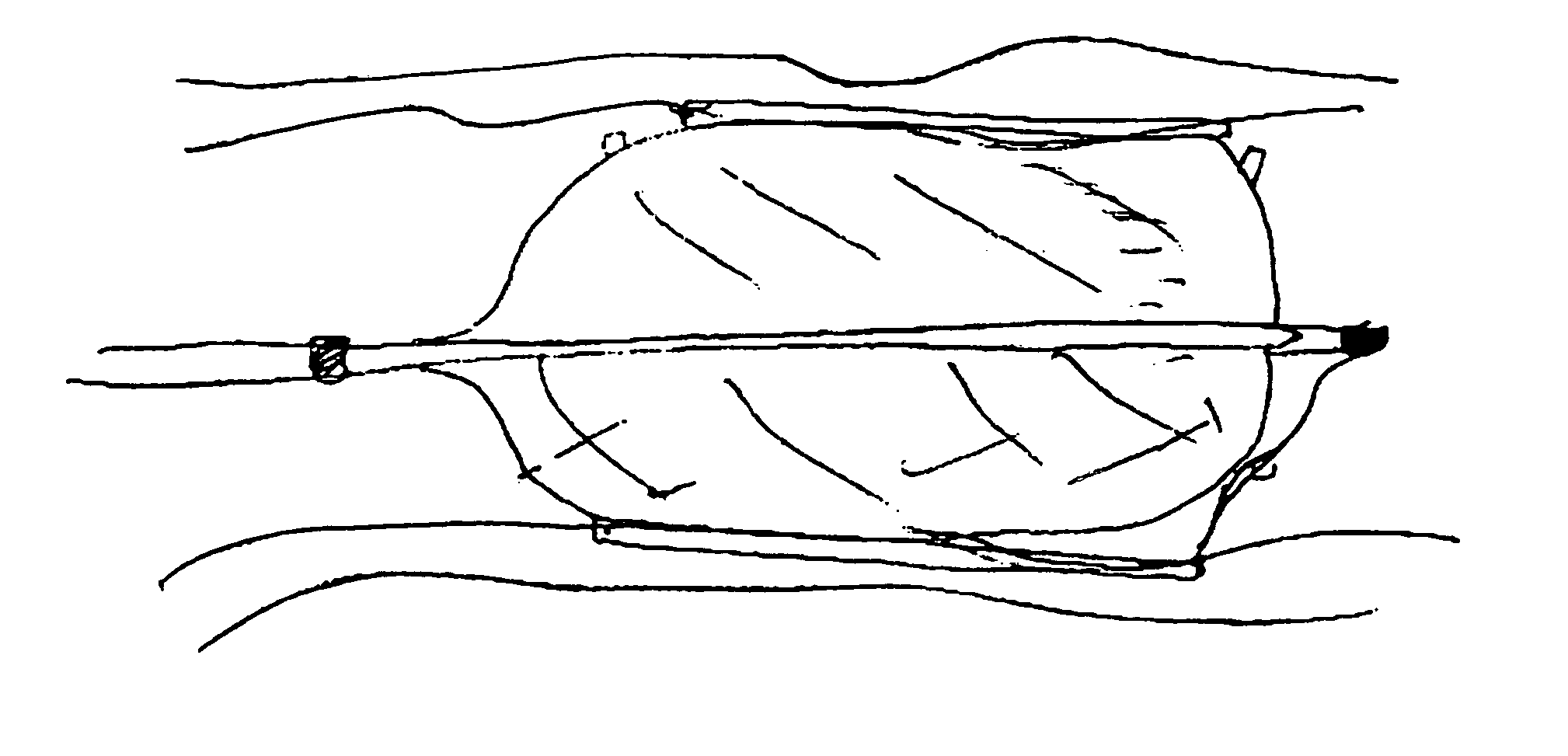
Figure 1 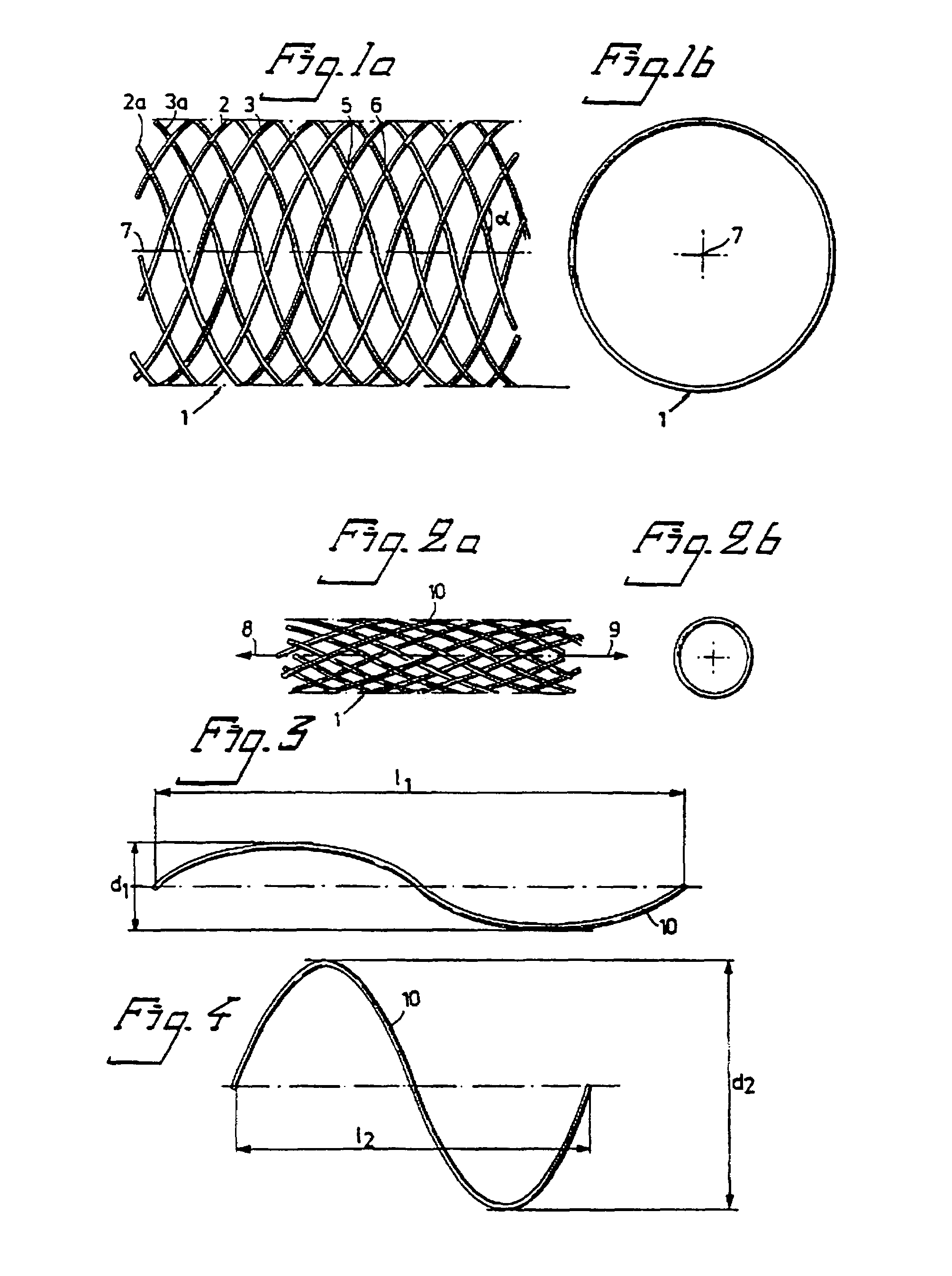
Figure 2 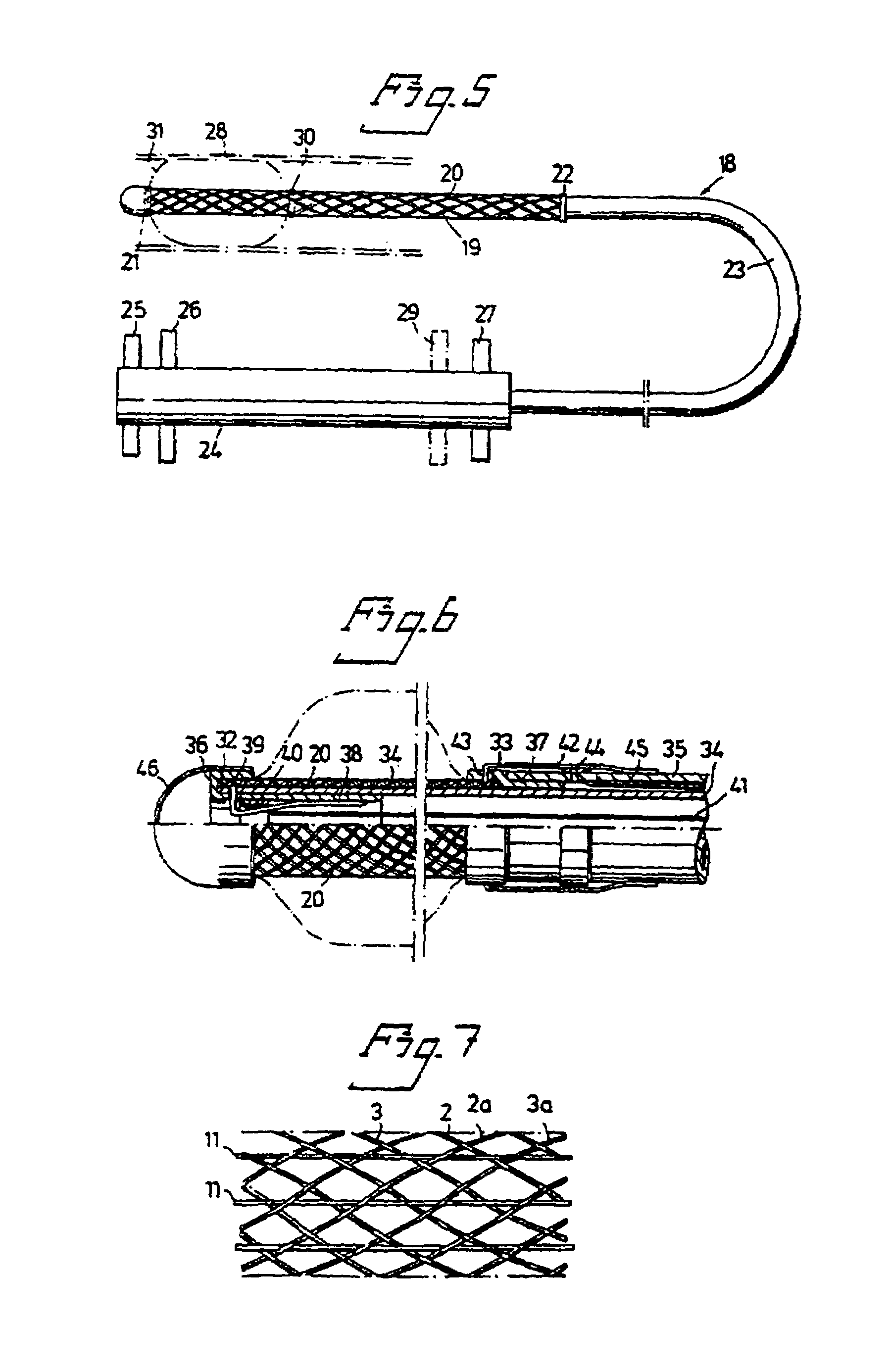
Figure 3
Abstract
Description
[0001] This application claims the benefit of U.S. Provisional Application No. 60 / 313,284, filed Aug. 17, 2001, the entire contents of which are incorporated herein by reference.BACKGROUND OF THE INVENTION
[0002] 1. Field of the Invention
[0003] The present invention relates generally to medical devices and, more particularly, stents.
[0004] 2. Description of Related Art
[0005] In recent years a number of minimally invasive techniques have been developed to treat occlusive vascular disease, and to repair aneurysms occurring in the circulatory system, vessels, and other organs. In occlusive vascular disease, such as arteriosclerosis, plaque accumulates within a vessel and gradually narrows the vessel to a degree that the vessel can no longer supply an adequate flow of blood. A number of vascular prostheses have been developed to re-expand and retain the patency of such afflicted vessels, for example, after atherectomy or angioplasty.SUMMARY OF THE INVENTION
[0006] Prostheses are disclosed which...
Examples
Embodiment Construction
[0051]The following disclosure references figures from U.S. Pat. No. 4,655,771, which patent is incorporated herein in its entirety by reference.
[0052]A flexible tubular body according to the present invention has been found to be suited for use as a prosthesis for transluminal implantation in blood vessels or other similar organs of the living body. The tubular body is inserted into place in the organism in a contracted state, i.e. with reduced diameter. After the tubular body has been inserted into position it is subjected to expansion and can stay in place in an expanded state by self-fixation if the diameter of the body in unloaded condition is selected somewhat larger than the diameter of the surrounding wall. This construction results in a certain permanent pressure of engagement against the inner wall so as to ensure good fixation.
[0053]To obtain the desired function the axially directed angle between crossing elements cam be greater than about 60 degrees, and can in some emb...