
Sensor device and method for qualitative and quantitative analysis of gas phase substances
Patent Information
- Authority / Receiving Office
- US · United States
- Current Assignee / Owner
- Publication Date
- 2008-02-12
- Estimated Expiration
- Not applicable · inactive patent
Smart Images
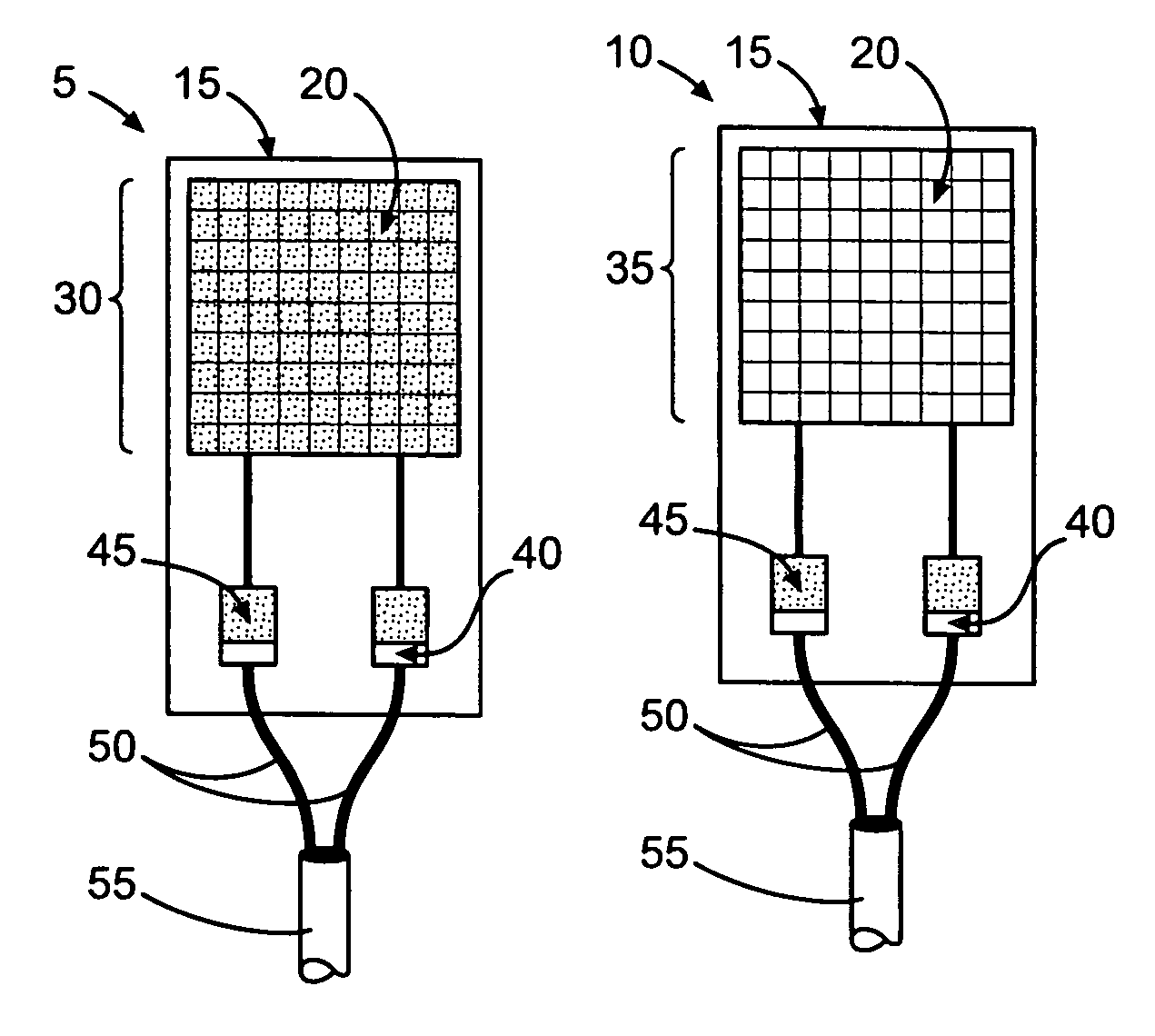
Figure 1 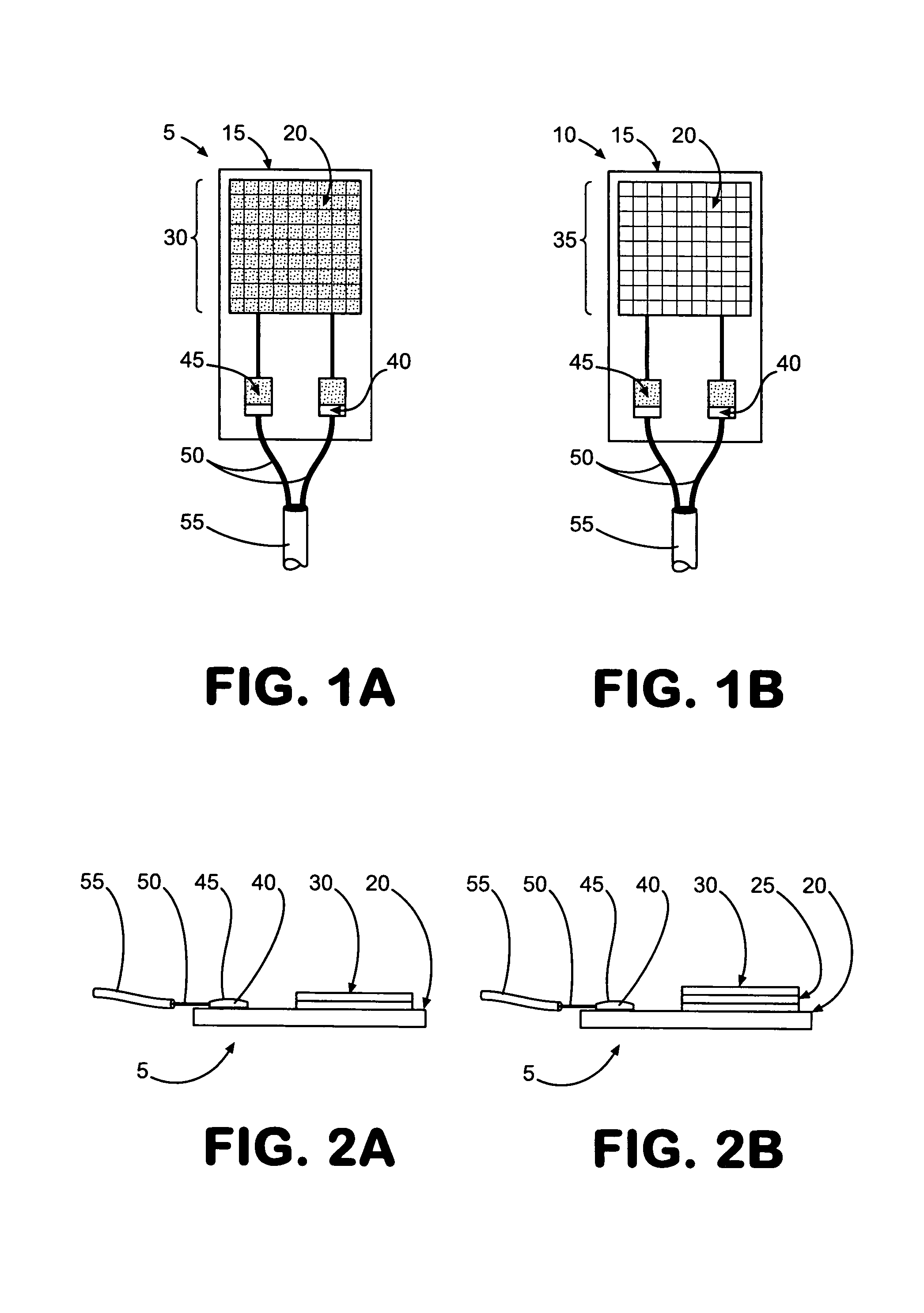
Figure 2 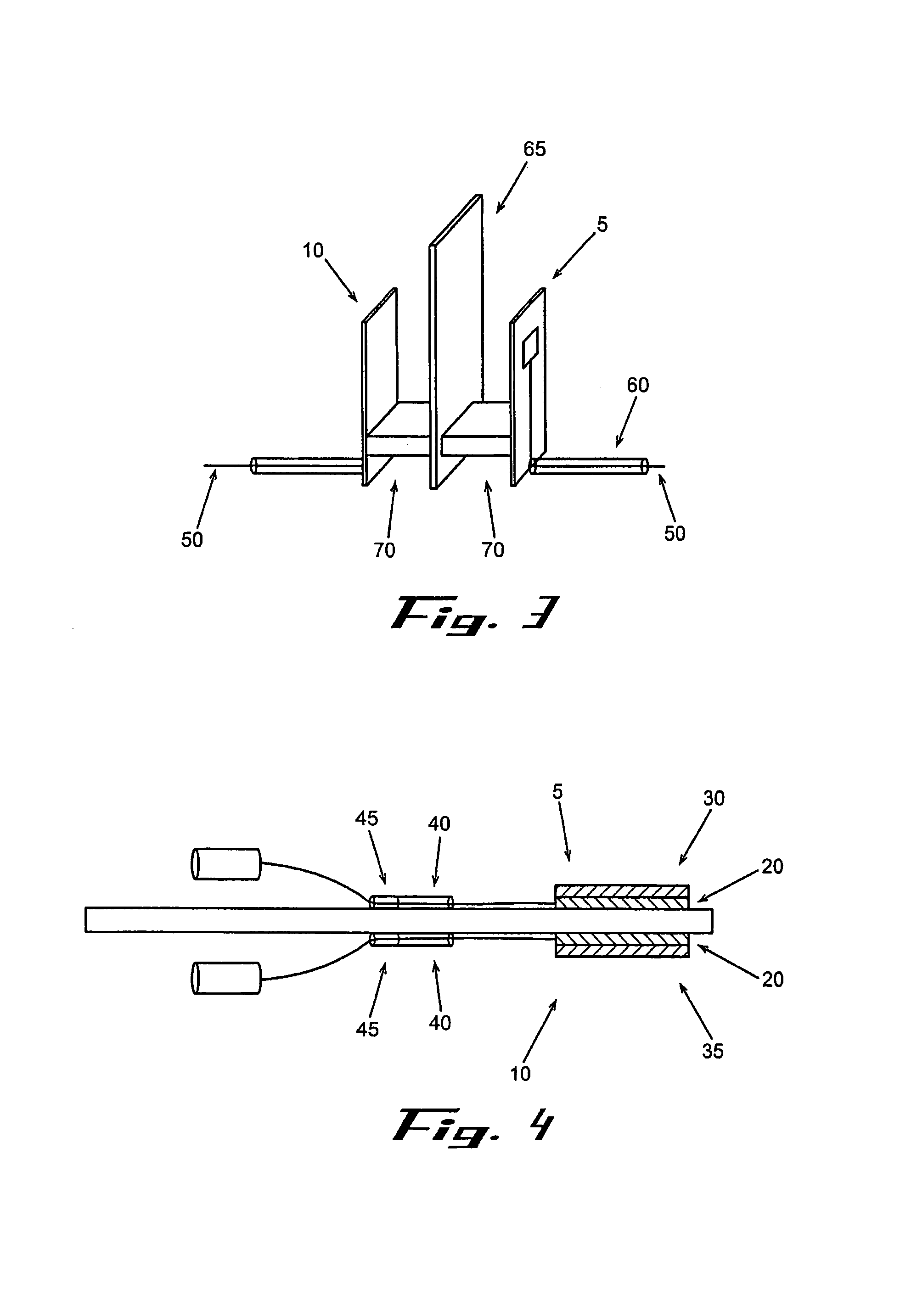
Figure 3
Abstract
Description
PRIOR RELATED U.S. APPLICATION DATA
[0001] This application claims priority to U.S. provisional patent applications Ser. No. 60 / 305,190, filed Jul. 16, 2001, and Ser. No. 60 / 317,129 filed Sep. 6, 2001, which are incorporated herein by reference.TECHNICAL FIELD OF THE INVENTION
[0002] The present invention provides new sensors and methods for detecting, identifying, and quantifying multiple gaseous substances simultaneously and selectively. This invention is applicable to any substance that can be induced to form a gas phase molecule or material, whether that substance is a gas under ambient conditions, a liquid that can be vaporized, or a solid that can be sublimed. Further, this device provides for the discrimination of a single molecular species while ignoring others, making it particularly useful in numerous analytical, medical, environmental, safety, and security applications where both sensitivity and selectivity are required.BACKGROUND OF THE INVENTION
[0003] Despite recent advances...
Examples
example 1
Construction of a VRH Sensor Element Using a Powder Catalyst
[0174]A VRH sensor was prepared using a preformed, powder catalyst as follows. This sensor can be operated using either the offset or null-balance measurement strategy and in either the single channel (single-ended) mode or the dual channel (differential) mode. The VRH consisted of a single filament, 12 volt Sylvania #53 lamp. The filament was exposed by carefully cracking and removing the glass from the bulb assembly. Once exposed, the filament was coated on all sides with M Bond 600 strain gauge adhesive (Vishay Measurements Group, Raleigh, N.C.), freshly prepared according to product directions. Immediately after coating, the surface of the filament was covered completely with a 360 Mesh catalyst powder. Therefore, the M Bond adhesive serves the dual functions of passivating the filament and adhering the catalyst coating to the filament. All powdered catalysts tested in this manner were applied as 360 mesh size for consi...
example 2
Construction of a VRH Sensor Element Using Electroplating to Produce a High Temperature Resistant Coating
[0175]A VRH sensor element was prepared using an electrolytic solution to produce a high temperature resistant coating as follows. This sensor is most useful where adhesives for catalyst powders can not withstand high operating temperatures. The sensor described here can also be operated in either the single channel mode or the dual channel mode. A VRH consisting of a single filament, 12 volt Sylvania #53 lamp, was obtained as described in Example 1. Using a length of 24 gauge copper wire as an anode, a conduction wire from the coil was connected to a constant voltage source (Cole-Palmer Instrument Co. Insteck DC power supply, #PS-18300) via the ground connection. The copper wire was similarly connected to the constant voltage source at the positive voltage connection. Both the electrically connected filament coil and the copper wire were placed in contact with an aqueous solutio...
example 3
Construction of a VRH Reference Element
[0176]A VRH reference element was prepared as follows. A VRH consisting of a single filament, 12 volt Sylvania #53 lamp, was obtained as described in Example 1. This filament was then passivated by applying a coating of M Bond 600 to the filament, then immediately coating the M Bond film with 360 mesh aluminum oxide (Alfa Aesar #42572). Its application is identical with the application of catalyst powder as described in Example 1. Aluminum oxide powder as applied with M Bond 600 is used to help the filament resist higher operating conditions. When filament coating was complete, this reference VRH with attached electrical leads was placed in a preheated, 120-125° C. oven and cured for 3 hours. The oven was turned off and allowed to equilibrate to room temperature for about 30 minutes.