
Efficient transactional messaging between loosely coupled client and server over multiple intermittent networks with policy based routing
a transactional messaging and loosely coupled technology, applied in the field of clientserver computing over multiple intermittent networks, can solve problems such as inability to achieve, and achieve the effects of reducing bandwidth, increasing the chances of getting messages, and simplifying the typical separate development and deployment process
Patent Information
- Authority / Receiving Office
- US · United States
- Patent Type
- Patents(United States)
- Current Assignee / Owner
- Publication Date
- 2010-04-20
- Estimated Expiration
- Not applicable · inactive patent
Smart Images
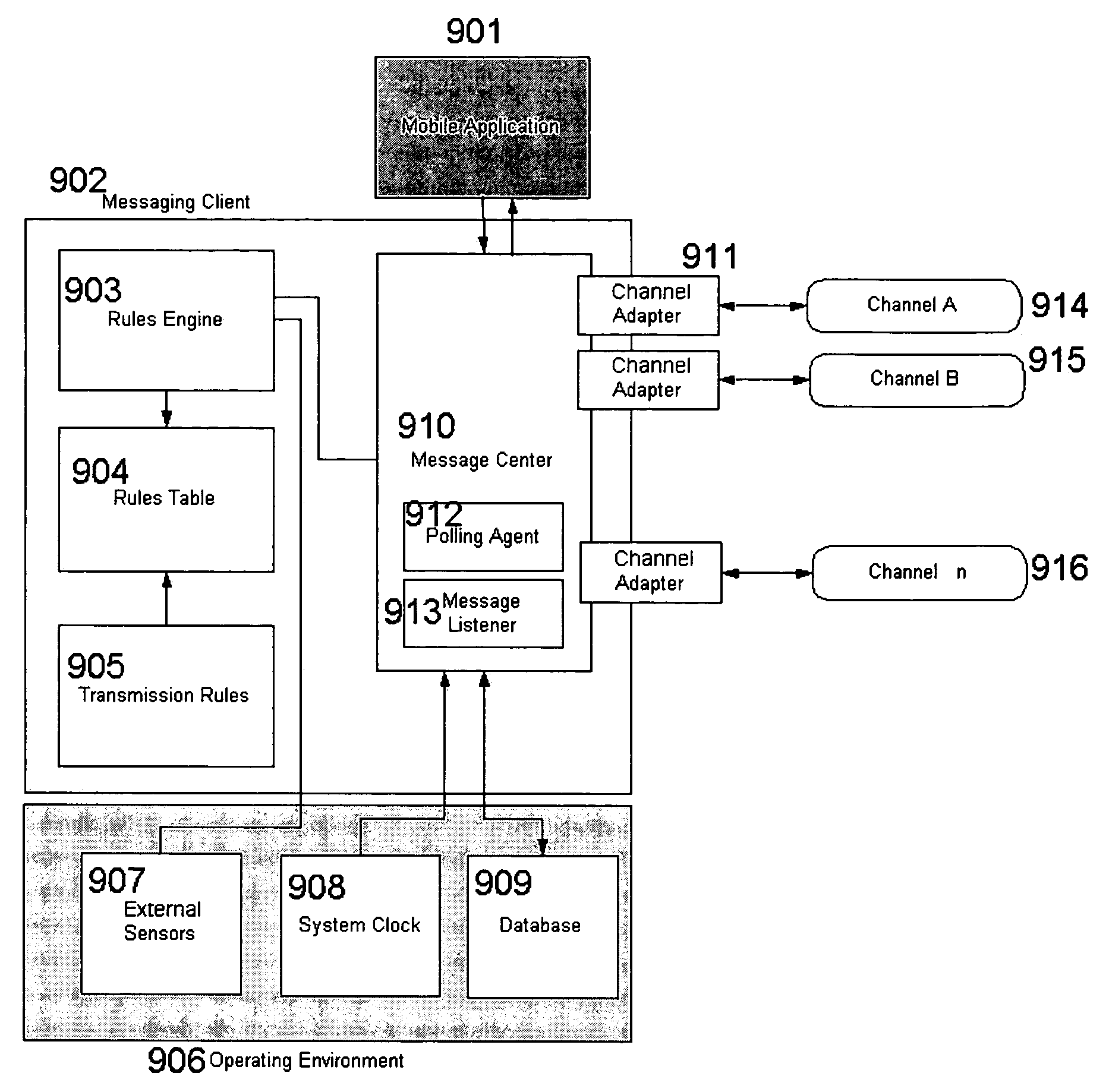
Figure 1 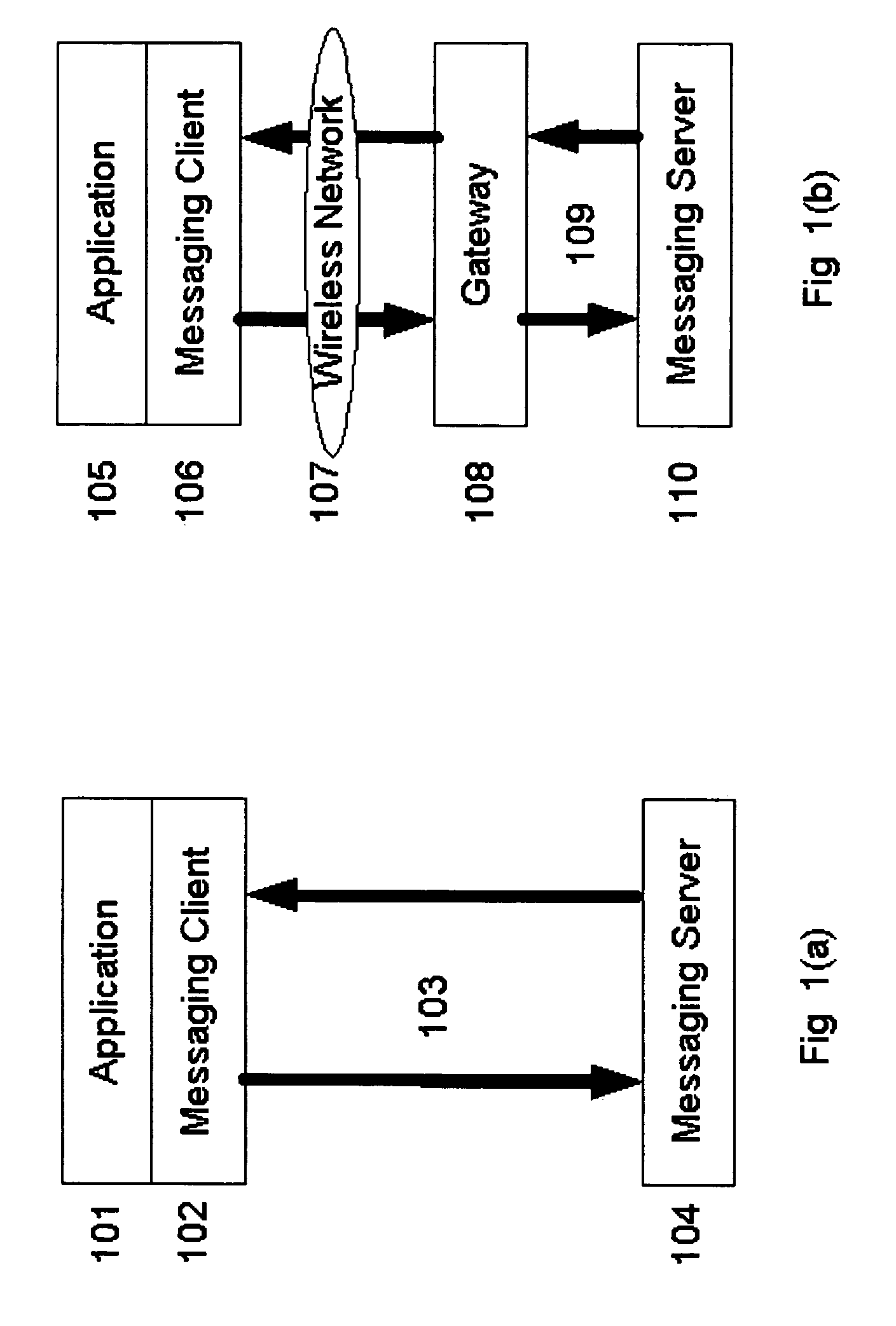
Figure 2 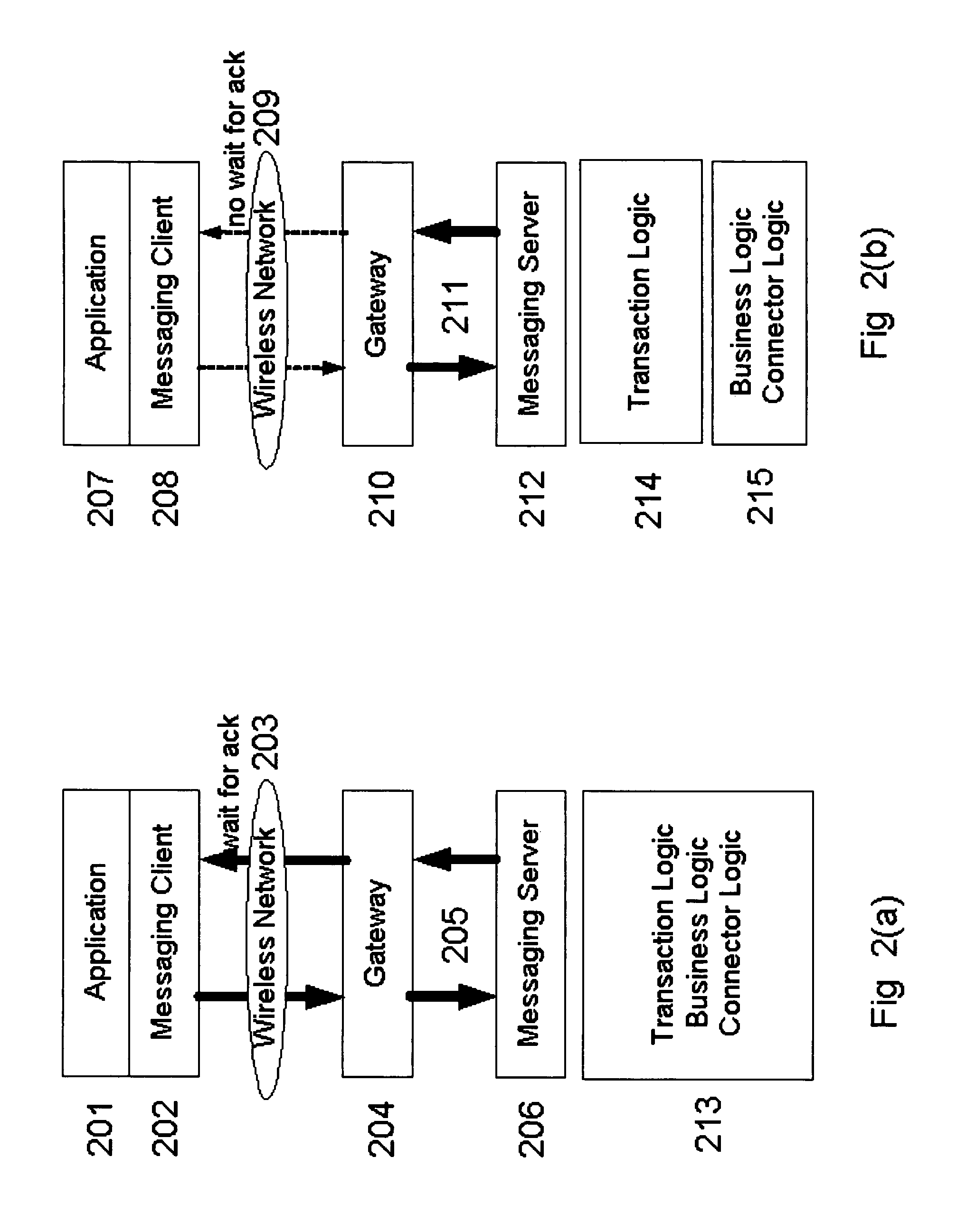
Figure 3
Abstract
Description
CROSS REFERENCE TO RELATED APPLICATIONS
[0001] This application claims priority to U.S. Provisional Patent Application No. 60 / 415,546 entitled DATA PROCESSING SYSTEM filed Oct. 1, 2002 which is incorporated herein by reference for all purposes.FIELD OF THE INVENTION
[0002] This invention relates generally to client-server computing over multiple intermittent networks.BACKGROUND OF THE INVENTION
[0003] Nature of the problem—Achieving efficient and transactional messaging between client and server applications over multiple intermittent networks.
[0004] Client-Server is an architecture that has long been in use within computing. It became popular with the advent with the Personal Computer (PC), which was used to access data on a central server. The simplest case of this is the File Server configuration where a set of files is stored on the server and accessed by the PC. Novell Netware and Sun's Network File System (NFS) are examples of technologies that were used to share files. Another popul...
Examples
examples
[0243]
RULEACTIONm.size > 500003:C = S,XIf message size is > 50 KbytesSend using serial channel,compressed(t > 0700) * (t = 62:C = WIf current time is between 7 am and 6 pm,Send using wireless WANand message priority >= 6channel or cheaper
[0244]Aging is defined as the process by which a message's priority is increased over time such that it is not stuck in the queue for too long.
Aging rules:
[0245]Do not set aging[0246]Increase the priority of a message by 1 every:[0247]XX minutes (set by administrator), or[0248]XX sends (set by administrator)[0249]Maximum priority (default: 9)[0250]Do not apply aging when:[0251]File size is >XX (set by administrator)
[0252]The Transmission Rules are sent to the target User and Device 801 by placing a system message with the rule in the Messaging Server 812. When the Messaging Client 803 picks up the system message, it automatically, without manual user intervention, updates its Transmission Rules 804. This enables the Administrator to update the Rules...