
Regenerative sulfur sorption
a sulfur sorption and sorbent technology, applied in the direction of sulfur compounds, hydrogen sulfides, separation processes, etc., can solve the problems of high pore volume and high crush strength, conflicting requirements, and limited loading capacity of 1050 mg of zno per insup>3
Patent Information
- Authority / Receiving Office
- US · United States
- Patent Type
- Patents(United States)
- Current Assignee / Owner
- Publication Date
- 2011-06-21
Smart Images
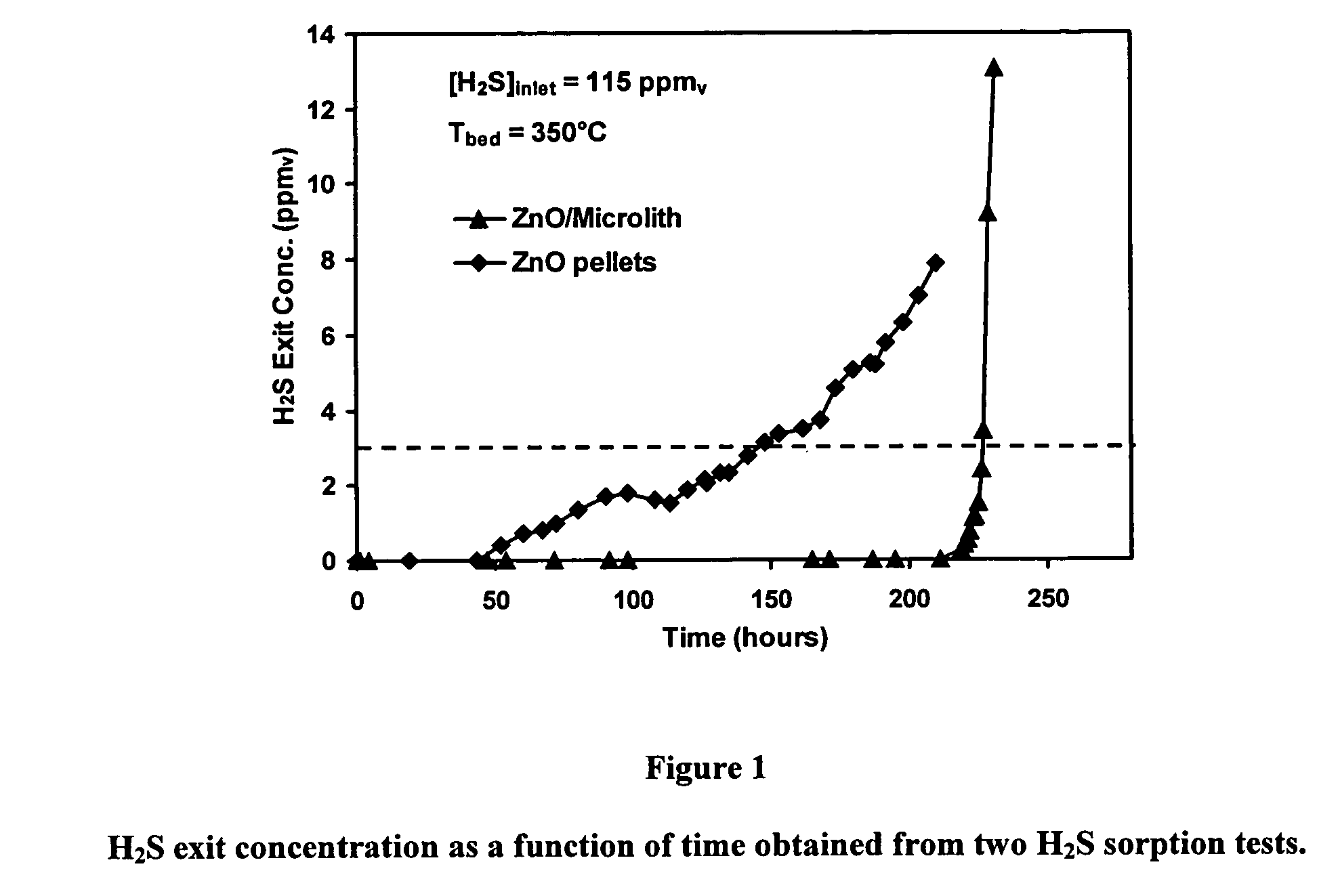
Figure 1 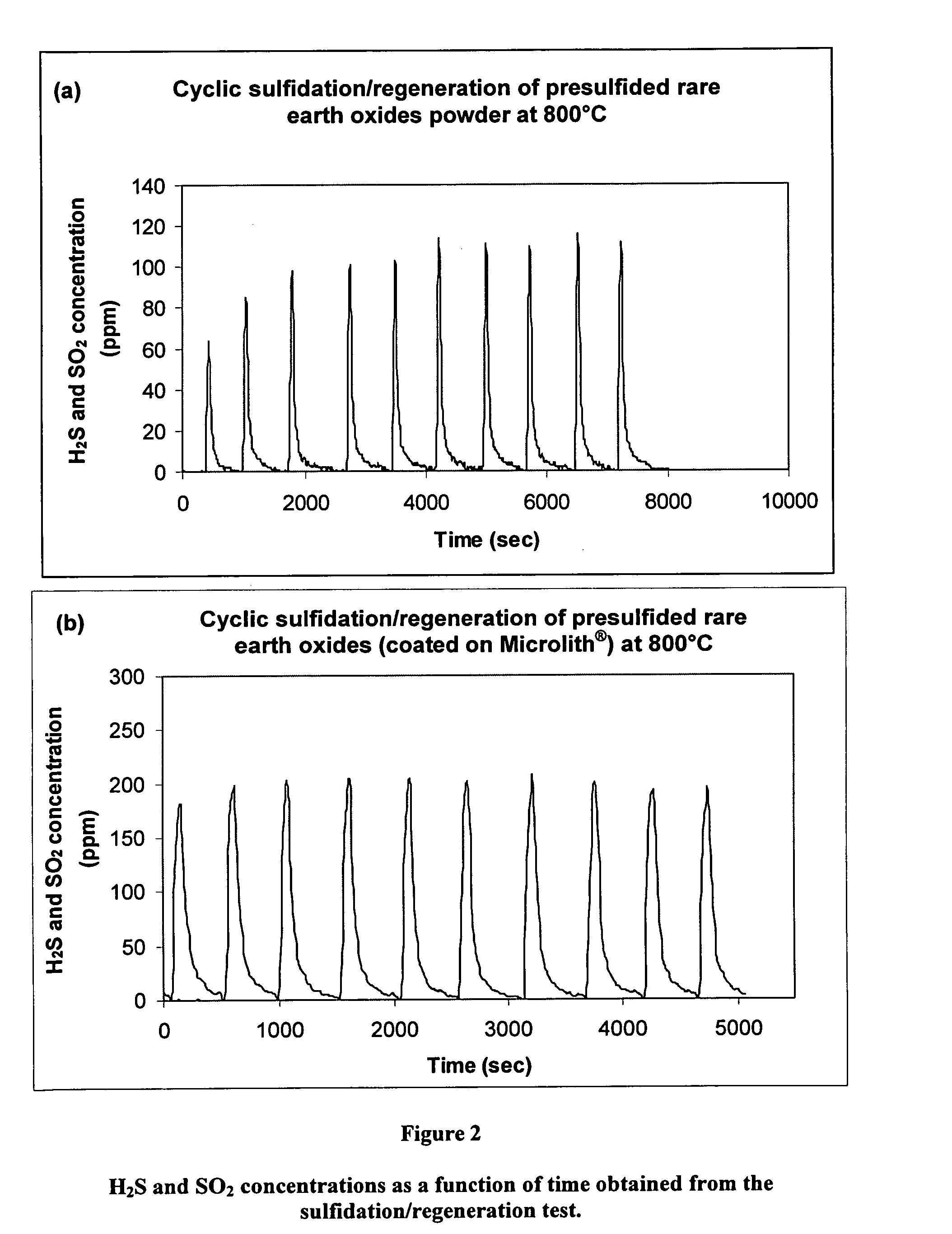
Figure 2
Abstract
Description
CROSS-REFERENCE TO RELATED APPLICATION
[0001] This application claims the benefit of U.S. Provisional Application No. 61 / 001,148 filed on Oct. 31, 2007.GOVERNMENT RIGHTS
[0002] This invention was made with government support under U.S. Army Contract No. W15P7T-07-C-P431. The U.S. government holds certain rights in this invention.BACKGROUND OF THE INVENTION
[0003] 1. Field of the Invention
[0004] The present invention is generally directed to a substrate or method for a more efficient removal of sulfur compounds from the outlet of a fuel processor. In particular, this invention provides an improved sorption capacity which enables the sulfur clean-up unit to operate for a longer duration. Additionally, this invention provides for a regenerable, energy efficient, and lightweight sorption system for the removal of sulfur in fuel cell applications.
[0005] 2. Description of the Related Art
[0006] Absorption, in chemistry, is a physical or chemical phenomenon; a process in which atoms, molecules, or i...
Examples
Embodiment Construction
[0022]Conventional sulfur sorbents are usually based on pellets or extrudates. For example, zinc oxide (ZnO)-based pellet or extrudate is commonly used as H2S sorbent. The ZnO pellet performance strongly depends on pore and lattice diffusion, and is low at low temperature (<350° C.) due to the high activation energy of the lattice diffusion process. One way to improve the low temperature activity is to adjust the pore structure and the surface area of the pellet. On the other hand, sorbent regeneration requires the pellet / extrude be able to survive frequent adsorption / desorption cycles; thus, it requires high crush strength and low dusting. High pore volume and high crush strength are conflicting requirements. Therefore, sorbent design often has to balance these issues.
[0023]It has now been discovered that coating an ultra-short channel length mesh with a sulfur-sorbent formulation can produce a significant improvement in volumetric sorption capacity while also enabling lower sorben...